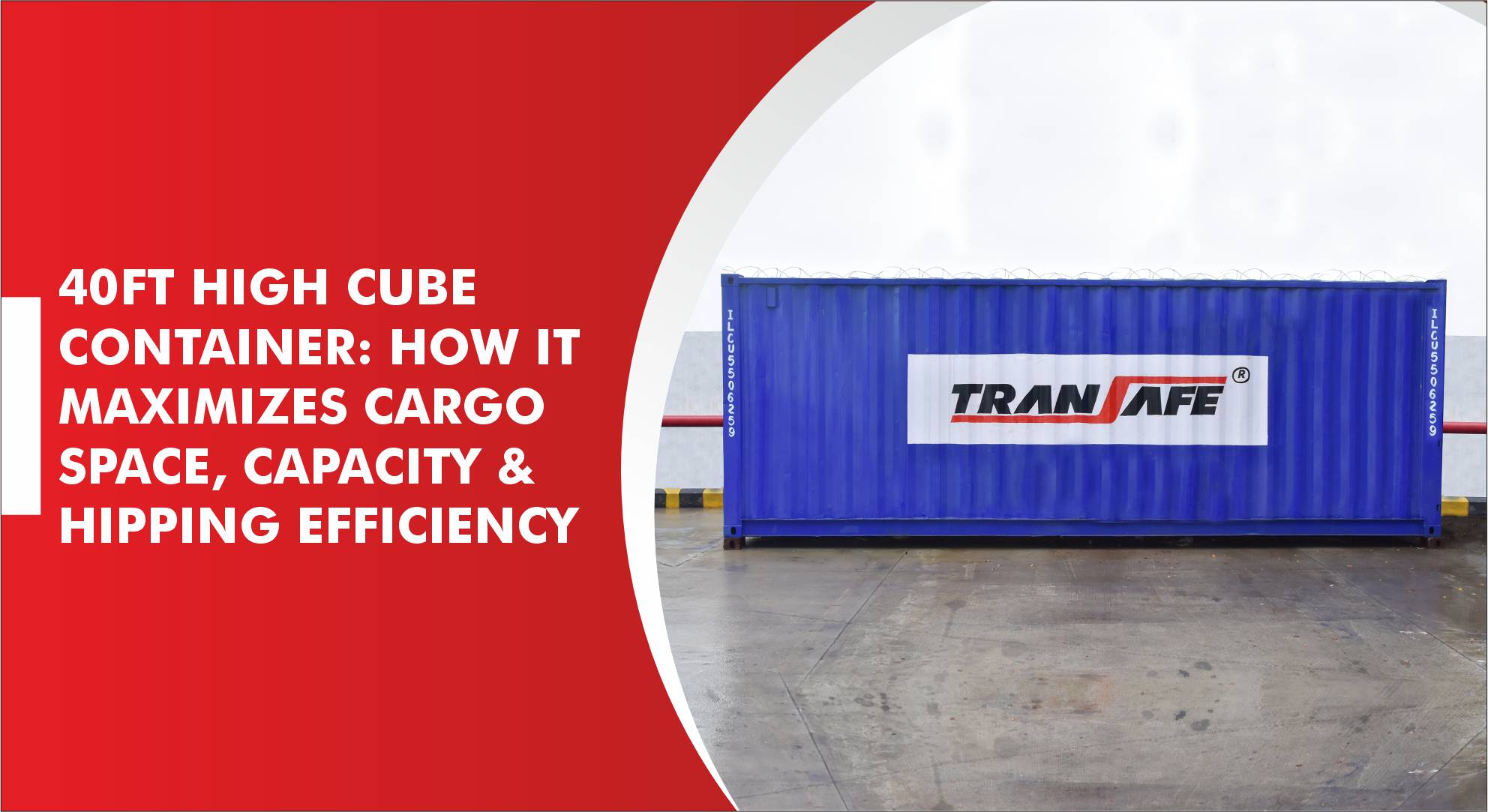
Global trade runs on standardisation, precision and space optimisation. In this ecosystem, the 40ft high cube container has emerged as a strategic asset for shippers handling voluminous or lightweight cargo. Designed to offer additional vertical clearance without altering the footprint, this container format delivers measurable gains in cargo capacity and shipping efficiency across industries.
What Is a High Cube Container?
A high cube container follows ISO standards while offering extra internal height compared to a conventional container. The structure remains compatible with existing handling equipment, ports and transport infrastructure.
An additional one foot of internal height may appear incremental. In practice, it unlocks substantial cubic volume. This makes the 40 ft. HC container suitable for cargo where space utilisation defines cost efficiency rather than weight limits.
Overview of 40 ft. High Cube Container Applications
The 40 ft. high cube container supports sectors where volume optimization is critical.
Common applications include:
-
FMCG and retail distribution
-
Automotive components and assemblies
-
Consumer electronics
-
Textiles and apparel
-
Furniture and modular structures
-
Industrial machinery with tall profiles
Industries focused on export-heavy operations rely on high cube formats to reduce shipment frequency and improve container utilisation ratios.
40 ft High Cube Container Dimensions Explained
Understanding physical specifications is central to cargo planning.
External Dimensions
|
Parameter |
Measurement |
|
Length |
40 feet |
|
Width |
8 feet |
|
Height |
9 feet 6 inches |
Internal Dimensions (Approx.)
|
Parameter |
Measurement |
|
Internal Length |
12.03 m |
|
Internal Width |
2.35 m |
|
Internal Height |
2.69 m |
The 40ft high cube container dimensions allow an extra 305 mm of height over standard units. This additional clearance supports higher stacking and improved load geometry.
Understanding Cargo Capacity of High Cube Container
Cargo capacity extends beyond payload limits. It includes usable volume and stacking efficiency.
Key Capacity Metrics
-
Cubic Capacity: ~76–78 CBM
-
Maximum Gross Weight: ~30,480 kg
-
Payload Capacity: ~26,000–27,000 kg
For lightweight but bulky goods, the effective cargo capacity of a high cube container exceeds that of a standard 40 ft container, even when weight remains unchanged.
Difference Between 40 ft Container and 40 High Cube Container
The distinction lies in vertical optimisation.
|
Parameter |
40 ft Container |
40 ft. High Cube Container |
|
External Height |
8’6” |
9’6” |
|
Internal Height |
~2.39 m |
~2.69 m |
|
Cubic Volume |
Lower |
Higher |
|
Ideal Cargo |
Dense, heavy |
Voluminous, light |
A 40 ft. HC container offers clear advantages where product dimensions dictate load planning.
Benefits of Using a 40 ft. HC Container for Cargo Optimization
Operational efficiency improves when cargo fits better.
Key Benefits:
-
Higher stacking potential
-
Reduced dead space
-
Improved pallet utilisation
-
Lower cost per cubic metre
-
Fewer container movements
Supply chains focused on cost control and throughput efficiency increasingly favour high cube containers for export and domestic movements.
How High Cube Containers Improve Shipping Efficiency
Shipping efficiency reflects space usage, handling time and cost per unit moved.
A 40ft high cube container improves efficiency through:
-
Better container fill ratios
-
Lower shipment frequency
-
Reduced handling and documentation cycles
-
Optimised warehouse-to-port transitions
This container format aligns well with modern distribution models built around consolidation and scale.
40 Feet Container Price and 40ft Container Price Factors
The 40 feet container price varies based on multiple commercial and technical parameters.
Price Influencing Factors
-
Steel grade and corrosion treatment
-
New vs used condition
-
CSC certification status
-
Market demand and logistics costs
The 40ft container price typically remains lower than high cube variants. However, pricing must be evaluated against usable volume rather than unit cost alone.
Cost Comparison of 40 HC Container vs 40 ft Container
|
Cost Aspect |
40 ft Container |
40 ft. HC Container |
|
Purchase Cost |
Lower |
Slightly higher |
|
Volume Efficiency |
Standard |
Superior |
|
Cost per CBM |
Higher |
Lower |
|
Long-term Value |
Moderate |
High |
Despite a marginal premium, the 40 high cube container often delivers better ROI for volume-driven cargo flows.
Choosing the Right High Cube Container for Your Cargo Needs
Container selection should align with cargo geometry, weight profile and shipping routes.
Consider:
-
Cargo height and stacking needs
-
Volume-to-weight ratio
-
Handling infrastructure compatibility
-
Export regulations and ISO compliance
A high cube container is ideal where dimensional efficiency drives freight economics.
Maintenance and Safety Guidelines for High Cube Container
Operational reliability depends on routine checks and compliance.
Maintenance Practices
-
Structural inspection of corner castings
-
Door seal and locking mechanism checks
-
Floor integrity assessment
-
Corrosion monitoring
Safety Considerations
-
Even weight distribution
-
Secure lashing and blocking
-
Adherence to gross weight limits
Proper upkeep extends container lifecycle and ensures safe cargo movement.
Conclusion
The 40ft high cube container represents a practical response to modern shipping demands. Additional height delivers measurable gains in cargo capacity, space optimisation and shipping efficiency without disrupting existing logistics infrastructure. For businesses prioritising cost-per-cubic-metre performance, the 40 ft. HC container stands as a strategic logistics asset rather than a simple container variant.
Frequently Asked Questions About 40ft High Cube Container
Is a 40ft high cube container suitable for heavy cargo?
Yes, within specified payload limits. Volume benefits apply mainly to lighter goods.
Does a high cube container require special handling equipment?
No. Standard port and transport equipment supports high cube operations.
Is the 40 feet container price significantly higher for high cube units?
The difference exists but remains commercially justified for volume-intensive shipments.