Enterprises managing large volumes of low-density cargo often encounter challenges tied to space utilization, load balance and cost efficiency. A highly targeted answer to these operational gaps comes through dwarf containers—purpose-built, low-height logistics containers engineered to optimize transport for oversized yet lightweight commodities. Their compact form factor, ISO-aligned specifications and exceptional structural durability position them as a specialized freight container category gaining traction across multimodal supply chains.
What Is a Dwarf Container?
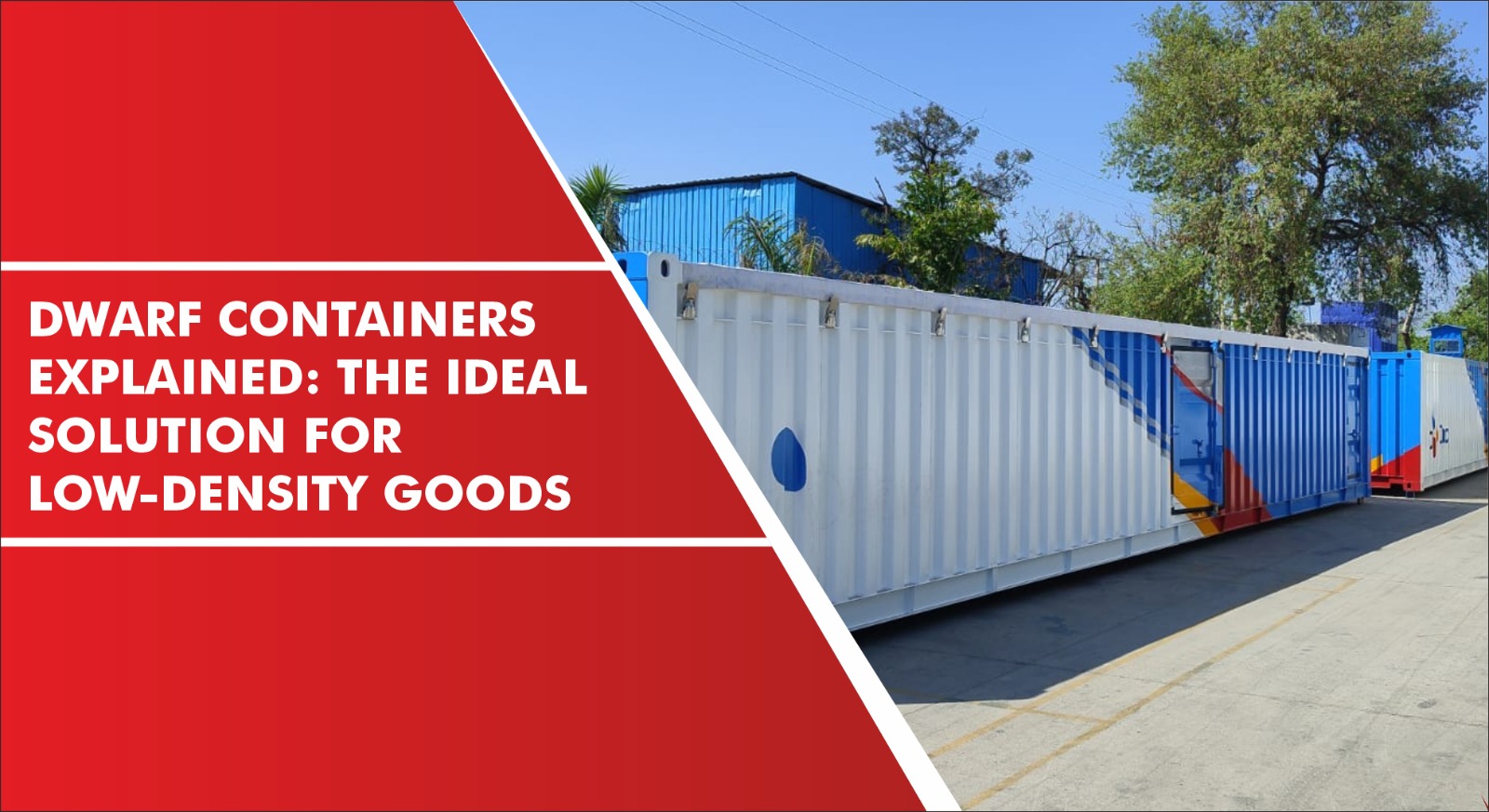
A dwarf container is a specialized, shorter freight container (6 ft 4 inches high) introduced by Indian Railways to run in double-stack formations on electrified tracks, allowing for higher, more cost-effective cargo loads. Its reduced vertical dimension supports operations in environments with overhead constraints such as tunnels, bridges and restricted rail corridors.
A dwarf container, also referred to as a low-height container or dwarf ISO container, is a compact, short-profile freight unit designed for cargo that requires significant floor space but does not demand full-height clearances. These containers fall within the scope of ISO 1496-1 standards governing Series 1 freight containers, ensuring compatibility across road, rail and maritime operations.
Their shorter vertical dimension differentiates them from standard dry cargo units, making them ideal for goods that are voluminous but low in density. Structural strength, strengthen flooring and efficient weight distribution mechanisms allow them to serve as viable solutions for heavy or bulky cargo that cannot fully utilize standard container dimensions.
Why Are Dwarf Containers Used for Low-Density Goods?
Low-density commodities such as foam products, automotive accessories, textile-based components or large molded assemblies often occupy substantial cubic space without contributing proportional weight. Transporting such materials in standard high-cube or GP containers typically leads to:
-
Excess unused vertical space
-
Increased freight cost per unit
-
Suboptimal pallet and load arrangement
-
Strain on weight distribution due to uneven stacking
Dwarf containers bridge this gap through a reduced height profile, enabling better volume-to-cost alignment. Their design supports:
-
Efficient cargo consolidation
-
Optimized space utilization across transport legs
-
Reduced risk of load shifting during transit
-
Improved stacking and handling dynamics in constrained environments
For businesses handling lightweight yet bulky SKUs, the deployment of dwarf containers becomes a direct lever toward operational efficiency.
How Dwarf Containers Are Designed & Built
Engineering for dwarf containers aligns with ISO freight standards to ensure interoperability and safety across multimodal networks. Their construction emphasizes strength, transport compliance and long-term durability. Several aspects define their build profile:
Structural Attributes
-
Low-profile frame: Designed to maintain structural efficiency in reduced vertical space.
-
Enhanced structural corner posts: Ensures stacking capability and crane handling compatibility.
-
High-strength flooring: Supports heavy cargo loads common in machinery and industrial shipments.
-
Weather-resistant steel panels: Preserves performance during marine and overland transit.
-
ISO-standard fittings: Seamless integration with global transportation systems.
Manufacturing Standards
The container builds upon ISO 1496-1 requirements, which govern general-purpose freight containers. These parameters ensure:
-
Consistency in dimension and handling
-
Standardized testing for structural endurance
-
Safety thresholds for stacking and lifting
-
Compatibility with global container handling equipment
Dimensional Characteristics (Typical Range)
|
Component |
Standard Container |
Dwarf Container (Typical) |
|
External Height |
~2591 mm (20 ft) |
~1,930 mm |
|
Width |
8 ft (2,438 mm) |
2,600 mm (approx. 8.5 ft) |
|
Length |
20 ft or 40 ft |
20 ft or 40 ft |
|
Stacking |
Single or limited double-stacking |
Double-stackable under wires for dense cargo |
Values may vary based on manufacturer specifications and cargo requirements.
Key Benefits of Using Dwarf Containers
Organizations handling high-volume, low-density goods draw measurable value from integrating dwarf containers into their logistics architecture. Key advantages include:
Optimized Transport Economics
-
Eliminates unnecessary cost tied to unused container height
-
Improves load planning efficiency
-
Facilitates higher shipment frequency at controlled cost levels
Better Handling in Constrained Facilities
Low-height containers maneuver easily in yards or warehouses where vertical clearance is limited.
Enhanced Cargo Protection
The shorter vertical span restricts cargo movement, reducing the risk of tipping, shifting or compression damage during multimodal transitions.
Intermodal Compatibility
ISO-compliant design ensures smooth handling across rail wagons, long-haul trucks and sea vessels without requiring special equipment.
Stacking Efficiency
The compact design supports efficient yard stacking, often allowing better layout planning and space utilization.
Common Industries & Cargo Types Using Dwarf Containers
A broad spectrum of industries deploys dwarf containers to streamline their logistics workflows:
Automotive Components
Bumpers, dashboards, insulation material, molded parts, items that occupy large cubic space but remain light in weight.
FMCG & Consumer Goods
Bulk plastic packaging, display units, foam inserts and non-perishable lightweight items.
Retail & E-commerce
Voluminous packaging materials and large-format promotional items.
Engineering & Industrial Manufacturing
Low-density machinery covers, ducts, composite assemblies, or oversized housings.
Textile & Apparel
Large rolls of fabric, non-compressed fibers and lightweight protective padding.
Furniture & Fixtures
Modular furniture parts, foam-filled goods and lightweight decor items.
How to Choose the Right Dwarf Container for Your Business
Selecting the right dwarf container involves a structured assessment of operational, dimensional and cargo-specific requirements.
1. Evaluate Cargo Profile
Understand your cargo density, packaging format and floor space utilization patterns. Low-density, bulky commodities gain the most value.
2. Check Height Restrictions
Assess whether warehouse docks, loading bays or transport corridors impose vertical limits.
3. Determine Handling Equipment Compatibility
Ensure forklifts, reach stackers, cranes and container lifting machines align with ISO specifications used for dwarf units.
4. Review Transport Mode Mix
Organizations using rail corridors with restrictive tunnel heights or road routes with overhead limitations will benefit significantly.
5. Assess Durability Requirements
Depending on your cargo frequency and load type, evaluate whether standard or strenthened flooring and wall structures are appropriate.
6. Consider Vendor Capabilities
Containers aligned to ISO freight container manufacturing processes deliver greater reliability across global logistics routes. Ensure suppliers provide quality audits, testing documentation and compliance statements.
Conclusion
Dwarf containers represent a strategic asset for businesses managing lightweight, voluminous cargo. Their low-height structure, ISO-driven build quality and operational versatility provide measurable advantages in space optimization, handling efficiency and transport economics. As more supply chains push toward leaner, cost-efficient models, containers such as dwarf containers continue to consolidate their relevance as a specialized freight container category engineered for precision-driven logistics environments.
Frequently Asked Questions About Dwarf Containers
1. Are dwarf containers standardized?
Yes. They adhere to ISO 1496-1 guidelines for Series 1 containers, ensuring interoperability across handling and transport systems.
2. What is the typical use case?
They target low-density goods that demand greater floor area but do not require full vertical clearance.
3. Do they support intermodal transport?
Yes. Their ISO design supports seamless transition across ship, rail and road.
4. Are dwarf containers suitable for heavy cargo?
Their structural framework is robust enough to handle certain heavy cargo types, provided weight distribution guidelines are followed.
5. Can they be customized?
Options exist for doors, flooring, side openings and ventilation, depending on operational needs.