Table of Contents
-
Introduction
-
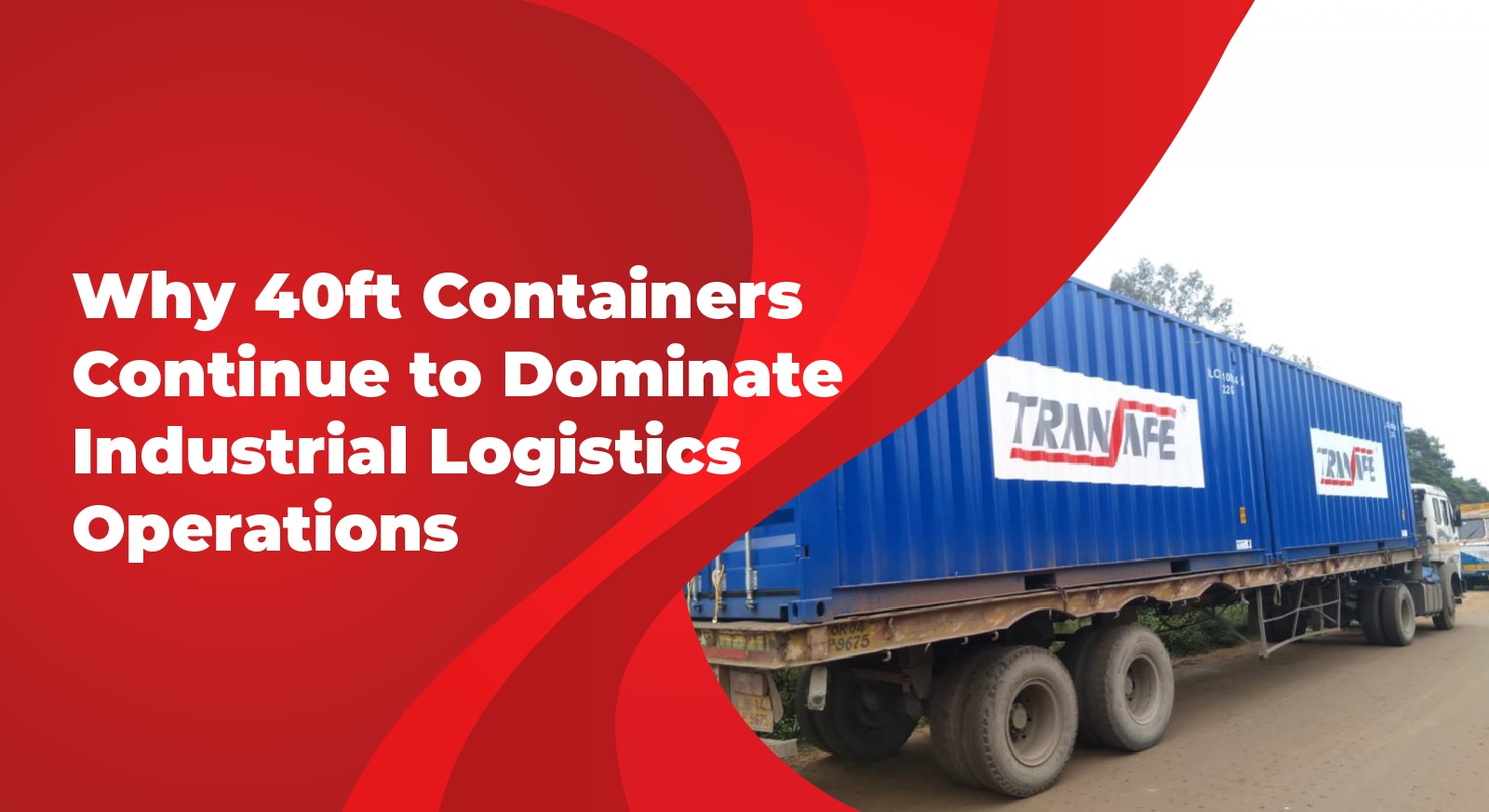
Why 40ft Containers Continue to Dominate Industrial Logistics Operations
-
Why 40ft Containers Fit Modern Industrial Cargo Movement
-
The Economics Go Beyond Basic Freight Rates
-
Why Warehouse Operators Prefer Consolidated Container Movement
-
Export Logistics Relies Heavily on 40ft Container Efficiency
-
The Hidden Operational Risk Companies Ignore
-
Why 40 Feet Container Price Should Not Be the Only Decision Factor
-
Infrastructure Changes Are Increasing 40ft Container Adoption
-
Final Thoughts
-
FAQs
For most businesses, logistics costs do not rise because of one major disruption. They rise quietly through inefficient cargo planning, underutilized transport capacity, repeated handling and poor consignment consolidation.
Container selection plays a bigger role in this than many companies realize. A manufacturing unit moving industrial goods from Pune to Mundra, an exporter dispatching cargo to Europe, or a warehouse operator handling retail inventory all face the same operational question at some stage: Should the cargo move in smaller loads or through larger consolidated movement?
In practical logistics environments, 40ft containers often become the preferred choice because they reduce operational friction across the supply chain. This is also why logistics partners like Transafe Services focus heavily on container planning and cargo consolidation strategies instead of treating transportation as a simple point-to-point activity.
Why 40ft Containers Fit Modern Industrial Cargo Movement
A 40 ft shipping container works well for industries that move recurring, high-volume cargo where transportation efficiency matters as much as freight cost.
The advantage is not extra space but the real value comes from reducing fragmentation.
When businesses split cargo into multiple smaller consignments, they usually create additional:
-
Loading cycles
-
Unloading coordination
-
Vehicle scheduling dependency
-
Documentation workload
-
Detention exposure
-
Warehouse handling pressure
Over time, these small operational inefficiencies increase overall logistics cost more than companies initially estimate. A properly utilized 40 ft container helps streamline movement and it matters in Indian logistics, where turnaround delays at warehouses, ICDs and transport hubs can affect dispatch schedules quickly during peak movement periods.
For companies handling regular industrial movement, experienced logistics operators often prioritize container optimization early in the planning stage because correcting inefficient cargo consolidation later becomes far more expensive.
The Economics Go Beyond Basic Freight Rates
One common mistake procurement teams make is comparing only the freight difference between a smaller container and a 40 ft container. Experienced logistics operators rarely evaluate movement that way.
The better question is:
“How much cargo can move efficiently in one cycle without increasing handling complexity?”
It changes the calculation completely.
For example, a company transporting lightweight industrial products may hit volume limits much earlier than weight limits. In such cases, multiple smaller containers often create:
-
Duplicate transportation movement
-
Additional loading manpower
-
Repeated unloading time
-
More inventory touchpoints
A 40ft container reduces these inefficiencies by improving cubic utilization.
This is especially useful for:
-
FMCG cargo
-
Textiles
-
Consumer products
-
Auto components
-
Packaging material
-
Retail inventory
-
Export-bound palletized cargo
In many large-scale supply chains, the savings do not come only from freight reduction. They come from smoother cargo flow, fewer interruptions and lower handling dependency across the logistics cycle.
Why Warehouse Operators Prefer Consolidated Container Movement
Warehouse efficiency is heavily linked to how cargo arrives. This is the part that often gets ignored during transportation planning.
If inventory reaches a warehouse through multiple fragmented consignments, receiving teams deal with:
-
Repeated gate entries
-
Dock congestion
-
Staggered unloading
-
Inventory reconciliation delays
-
Labor allocation challenges
One consolidated 40 ft shipping container is usually easier to process than several smaller inbound movements.
Large industrial warehouses already operate under tight dispatch and receiving timelines. During seasonal demand periods, repeated unloading activity slows throughput significantly.
Many warehouse managers prefer fewer, fuller containers because they improve:
-
Dock utilization
-
Unloading sequencing
-
Forklift movement efficiency
-
Staging area management
Operational flow becomes smoother.
That directly affects inventory turnaround time.
This is where integrated logistics support becomes important. Companies working with experienced service providers such as Transafe Services often benefit from better coordination between transportation, container movement and warehouse handling instead of managing each activity separately.
Export Logistics Relies Heavily on 40ft Container Efficiency
Export movement depends majorly on consignment consolidation.
Ocean freight economics reward efficient space utilization and it is one reason exporters moving cargo through Nhava Sheva, Mundra or Chennai often prioritize 40ft containers for regular outbound movement.
A poorly planned export consignment increases:
-
Freight cost per unit
-
Cargo handling exposure
-
Container stuffing delays
-
Port coordination complexity
During peak export cycles, container planning becomes even more critical because equipment shortages and vessel rollover risks increase. Businesses with disciplined container utilization strategies generally handle these disruptions better than companies relying on reactive dispatch planning.
This operational consistency becomes a competitive advantage over time.
The Hidden Operational Risk Companies Ignore
Many businesses assume larger containers automatically improve efficiency.
But not always. A 40 ft container works best only when the surrounding infrastructure supports it.
Companies sometimes overlook:
-
Narrow factory access roads
-
Unloading space limitations
-
Dock height mismatch
-
Forklift capacity restrictions
-
Uneven cargo weight distribution
These practical issues create delays during loading and unloading.
In several industrial clusters across India, transportation routes may support larger containers while the final unloading location may not. This is why experienced logistics teams assess the entire movement chain before finalizing container configuration.
Why 40 Feet Container Price Should Not Be the Only Decision Factor
The discussion around the 40 feet container price is often too narrow. The smarter metric is overall logistics efficiency.
A lower container cost means little if the consignment creates:
-
Additional handling cycles
-
Detention charges
-
Delayed unloading
-
Inventory mismatch
-
Transport duplication
Businesses that evaluate only container pricing often miss the hidden cost sitting elsewhere in the supply chain. However, strong logistics management focuses on total movement optimization.
For industrial cargo movement, the real objective is not finding the cheapest container. It is finding the most operationally efficient cargo movement structure.
Infrastructure Changes Are Increasing 40ft Container Adoption
India’s logistics infrastructure is gradually becoming more supportive of larger containerized movement.
Improved highways, multimodal parks, freight corridors and organized warehousing networks have increased the practicality of 40ft containers across domestic and export operations.
This shift is particularly visible in:
-
Manufacturing corridors
-
Automotive hubs
-
Industrial warehousing clusters
-
Export-oriented logistics zones
As cargo volumes increase, businesses are moving toward consignment consolidation rather than fragmented transport planning.
Final Thoughts
Industrial logistics is rarely about moving cargo from one point to another. It is about reducing inefficiency at every stage between dispatch and delivery. That is where 40ft containers continue to hold their value.
They simplify consolidation, improve transport utilization and reduce operational fragmentation across warehouses, ports and inland movement networks.
For businesses handling recurring cargo movement, that operational stability matters far more than choosing the cheapest immediate freight option. With experienced logistics support from companies like Transafe Services, businesses can also align container planning with warehousing, transportation and cargo handling requirements more effectively across the supply chain.
FAQs
Why are 40ft containers preferred in industrial logistics?
40ft containers improve cargo consolidation, reduce repeated handling and support better freight utilization for large-volume industrial movement.
Which industries commonly use 40 ft shipping containers?
Manufacturing, FMCG, textiles, retail distribution, engineering goods, auto components and export-oriented industries commonly use 40 ft shipping containers.
Is a 40 ft container always more cost-effective?
Not necessarily. The right choice depends on cargo type, infrastructure readiness, unloading conditions and consignment frequency.
How does a 40 feet container price affect logistics planning?
Businesses should evaluate overall operational efficiency instead of only comparing base container pricing. Handling and movement costs often have a larger long-term impact.