Table of Contents
-
Introduction
-
What "Heavy-Duty" Actually Means When You're Buying Containers for Business
-
Container Price in India Is Not the Only Number That Matters
-
Why Businesses Are Standardizing on Containers 40 Feet for Bulk Storage
-
Storage vs Mobility: Choosing the Right Containers for Business Operations
-
Why Transafe Services Gets This Right
-
The End Note
-
Frequently Asked Questions (FAQs)
Storage has become a real part of business planning now, not an afterthought. More companies are choosing containers for business use instead of paying for a permanent storage building and the reasons are pretty straightforward: they go up faster, cost less and can be moved when the business needs them moved.
From warehouses to construction sites, containers for business use let companies store equipment, materials and inventory safely without slowing down day-to-day operations. As more businesses look for storage that's flexible and doesn't tie up a big budget, containers for business are turning into the go-to option across industries, simply because they make everyday operations easier to run.
What "Heavy-Duty" Actually Means When You're Buying Containers for Business
Not every steel container is built to handle heavy-duty business use. The quality of the steel, strong flooring and durable welding all play an important role in how long containers for business can last. These features help containers withstand heavy loads, frequent forklift movement and harsh working conditions for many years.
Many buyers compare containers for business based only on price and overlook these important details. As a result, they often face costly repairs or need to replace their containers for business much sooner than expected, increasing long-term expenses.
Here's what actually separates a genuine heavy-duty unit from a repainted one:
-
Corner casting integrity- this is what takes the stacking load, not the side panels.
-
Floor rating- marine plywood rated for forklift and pallet-jack traffic, not foot traffic alone.
-
Weld consistency- visible bead quality at every joint, not just the ones facing outward.
If you skip these quality checks, containers for business may start showing signs of damage within a year. Weak floors can bend or crack when heavy equipment like loaded pallet jacks moves over them. Many buyers only understand what makes heavy-duty containers for business reliable after they have already experienced problems with a cheaper container.
Container Price in India Is Not the Only Number That Matters
Every procurement conversation starts with container price in India and honestly, that's fair– budgets are real. But the container price in India on a quote sheet rarely includes transport to site, unloading equipment, or the repair costs of a unit that was never built for continuous business use in the first place.
We've watched buyers chase the lowest container price in India, only to spend that saved margin twice over on floor repairs and door replacements within the first year. Comparing containers for business purely on the upfront number is how procurement teams end up back at the negotiating table sooner than planned.
The businesses that get this right treat containers for business purchases as a total-cost decision, not a single-line quote and they shop for containers for business use with that math already worked out.
Why Businesses Are Standardizing on Containers 40 Feet for Bulk Storage
Warehousing teams increasingly default to containers 40 feet in length when volume is the constraint, not floor space. A single 40-foot unit often beats two 20-footers on cost per square foot, but only when the business genuinely needs that much continuous storage in one place otherwise it's just one of many containers for business options that looks efficient on paper and sits half-used in practice.
40-foot containers are a good choice for storing large amounts of inventory, raw materials, or seasonal stock. However, they may not be the best option for businesses that load and unload goods more often in smaller quantities. In such cases, using two smaller containers for business can be more practical than keeping one large container half empty. The right containers for business should always be selected based on your daily storage and loading needs, not simply on which containers for business are available at the time.
Storage vs Mobility: Choosing the Right Containers for Business Operations
Not every business buying containers for business needs the same configuration. A warehouse operator wants static storage and minimal upkeep. A construction firm wants containers for business use that can be relocated site to site without structural fatigue. An exporter wants ISO-rated units that clear customs without a fight.
This is where a lot of procurement decisions go sideways, teams buy generic containers for business use, then discover mid-project that the unit isn't rated for the multimodal transport their operation actually requires. Different industries need different containers for business setups and treating them as interchangeable is where most of the wasted spend happens.
Matching the container to the operational use case, not just the storage need, is the step most buyers skip. It's also the single biggest difference between businesses that buy containers for business use once and never again and ones that come back for a second order. Get the containers for business fit right the first time and the second order becomes the easy decision instead of the frustrating one.
Why Transafe Services Gets This Right
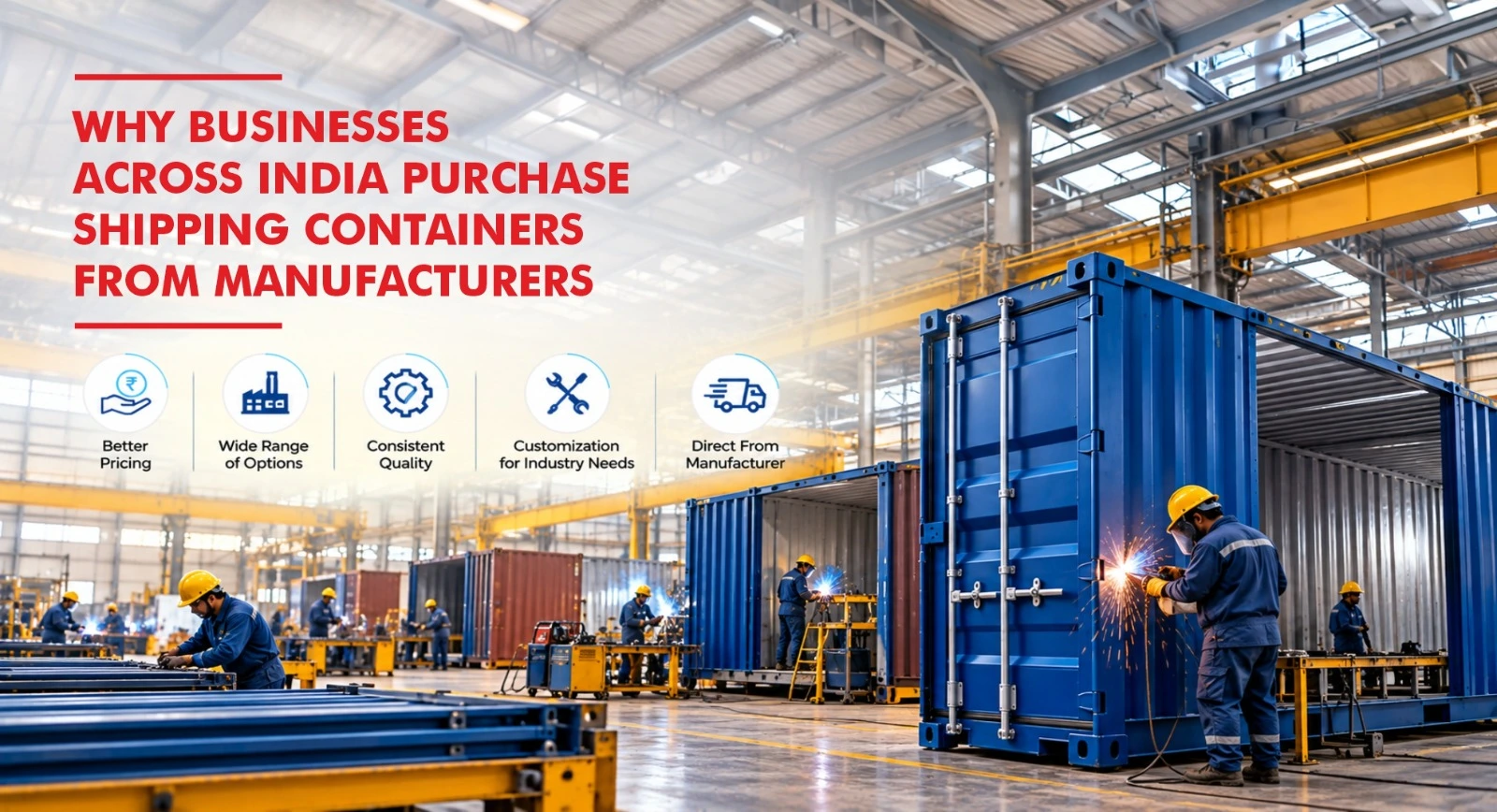
We build containers for business use at Transafe Services and we're an ISO 9001:2015 and ISO 45001:2018 certified manufacturer, not just a reseller repainting used stock. Manufacturing happens in-house across our own facilities in Kharagpur, Coimbatore and Dharuhera, so quality control on every batch of containers for business use isn't outsourced to whoever we bought the last batch from.
Our range covers standard ISO freight containers, refrigerated and insulated units, custom bunk houses that double as portable offices and special-purpose builds for control rooms and site operations alongside containers 40 feet for businesses that need bulk capacity.
Over three decades in the business, working with clients across manufacturing, power and logistics, has taught us that the cheapest containers for business use are rarely the ones businesses keep coming back for. When a business scales, the containers for business decisions they made early on either scales with them or turn into a replacement project nobody budgeted for.
The End Note:
There's a simple test behind all of this: would the business buy the same containers for business setup again tomorrow. Choosing containers for business storage and operations isn't just about container price in India anymore. It's about steel grade, weld quality and whether the unit actually matches how the business plans to use it day to day. Businesses that treat containers for business purchases as an operational decision, not a one-time expense, tend to avoid the repair bills that show up later.
At Transafe Services, each one of our containers for business use is built to hold up under real operational conditions, not just look good in a showroom because that's the standard we'd want if we were the ones buying containers for business use ourselves.
FAQs
1. What makes containers for business use different from standard shipping containers?
Heavy-duty containers for business use are built with reinforced flooring, better corner castings and consistent welding for repeated loading, not a single one-way shipping trip. Businesses buying containers for business purposes need units engineered for years of reuse, not one voyage.
2. Is container price in India the best way to compare vendors?
No. Container price in India varies by steel grade and certification and the cheapest quote often excludes transport, repairs and replacement costs down the line. Comparing containers for business options on price alone almost always costs more later.
3. When do businesses need containers 40 feet instead of standard 20-foot units?
Containers 40 feet suit high-volume, low-frequency storage needs. Businesses with smaller, frequent loading cycles are often better served by two 20-foot containers for business use instead of one long unit.
4. How long do quality containers for business use typically last?
A well-built, properly maintained container for business use can last 15 to 20 years, depending on steel grade, environment and how often it's relocated or reloaded.
5. What should a business check before buying containers for business use?
Ask for steel grade, welding standards, and certification proof and confirm the containers for business configuration actually matches the operational use case, not just the storage volume.