Table of Contents
-
Introduction
-
Verify the Actual Extra Height, Not Just the Label
-
Check the Steel Grade Before You Buy Any Container for Sale
-
Inspect the Floor for Hidden Damage
-
Confirm CSC Plate Validity for International Use
-
Test the Doors, Seals and Locking Rods
-
Ask Who Actually Manufactured It
-
Calculate the Total Landed Cost, Not Just the Sticker Price
-
Why Businesses Trust Transafe Services for High Cube Sea Containers
-
Frequently Asked Questions (FAQs)
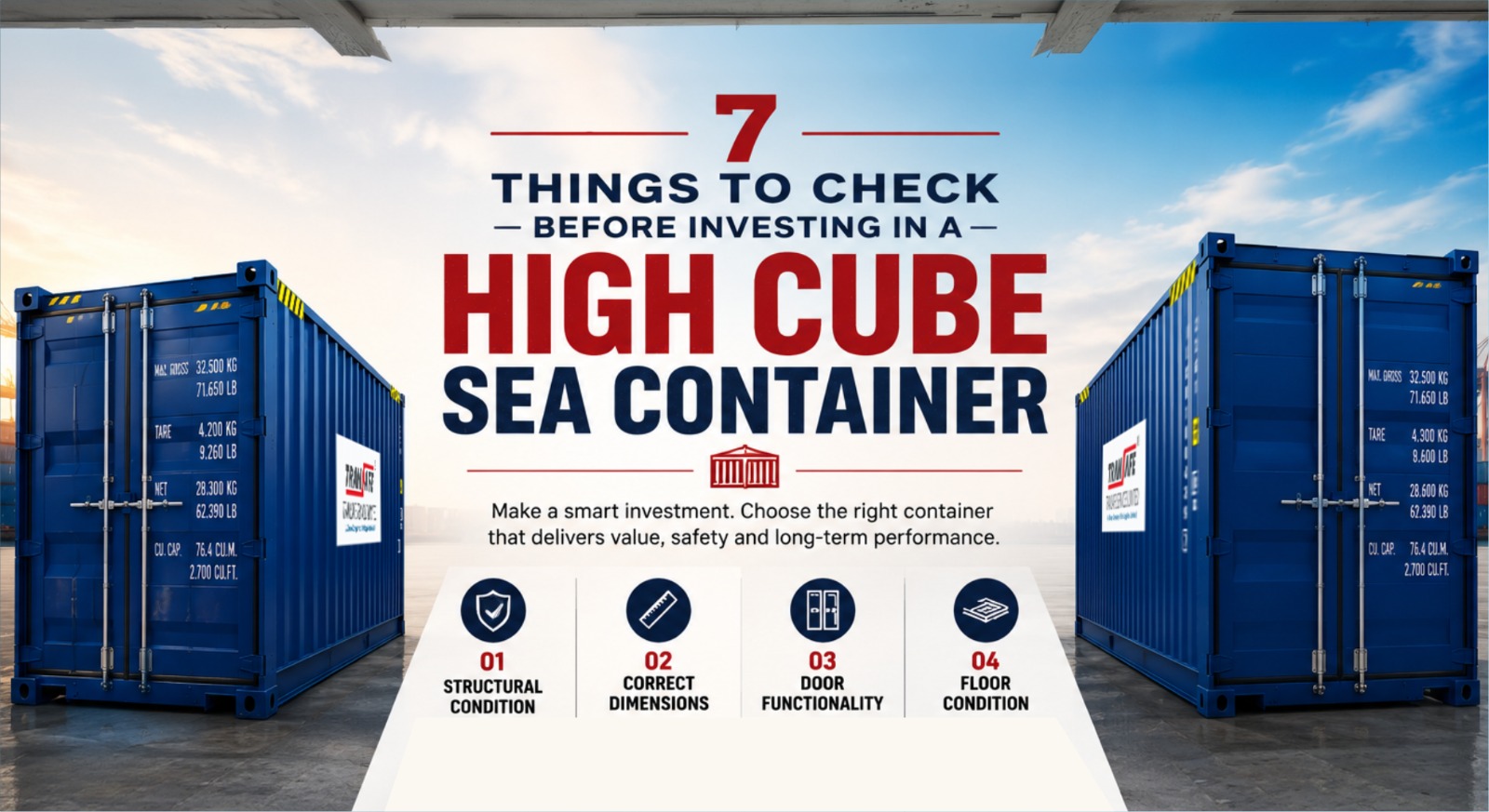
Buying a high cube sea container is more than choosing the right size or comparing prices. The quality, design and specifications of a high cube sea container can have a direct impact on storage, transportation and long-term operating costs.
Before making a decision, it's important to know what to look for. These seven checks will help you choose a high cube sea container that delivers long-term value instead of unexpected expenses. Getting them right ensures your high cube sea container becomes a smart investment for your business.
1. Verify the Actual Extra Height, Not Just the Label
A high cube sea container is supposed to give you roughly a foot of extra internal height over a standard unit. Sellers don't always measure this consistently and a high cube sea container listed at the right external dimensions can still fall short inside once insulation or flooring modifications eat into that clearance. Buyers who skip this step often discover their high cube sea container doesn't deliver the headroom they actually paid for.
Measure it yourself before signing. Don't take the listing's word for it.
2. Check the Steel Grade Before You Buy Any Container for Sale
Every container for sale looks the same in a photo. Corten steel resists corrosion far better than mild steel and a high cube sea container built with mixed-grade steel behaves very differently once it sits near a coastal yard for a season. Run a magnet test near the weld joints. It sounds excessive. It isn't and it's the fastest way to tell a genuine high cube sea container from one that just looks the part.
3. Inspect the Floor for Hidden Damage
Marine plywood flooring takes a beating from forklift traffic and moisture. A high cube sea container can look flawless above the floor line and still fail exactly where it counts. Press down at the corners and the center. Any give at all is a reason to walk, not to negotiate a soft floor on a high cube sea container only gets worse once real loading traffic starts.
4. Confirm CSC Plate Validity for International Use
If the high cube sea container is moving internationally, the CSC plate needs to be current, not expired. At times, cargo sits at customs for days because a buyer picked a high cube sea container assuming the certification would sort itself out later. It won't and the delay on a stuck high cube sea container costs far more than checking the plate date would have.
5. Test the Doors, Seals and Locking Rods
A high cube sea container with a sticky door in a cool showroom will jam completely after one season in the field. Open and close both doors several times before committing. Check that the locking rods drop cleanly into the floor sockets every time, not just on the first try, a high cube sea container that sticks in the yard will be far worse once it's sitting in the rain with a truck waiting.
6. Ask Who Actually Manufactured It
Not every container manufacturer grades the condition the same way and this is the step most buyers skip. A reliable container manufacturer will walk you through weld records and steel certification without getting defensive. If a container manufacturer hesitates when you ask detailed questions about a specific high cube sea container, treat that as information too– a manufacturer confident in their high cube sea container build quality won't dodge the question.
7. Calculate the Total Landed Cost, Not Just the Sticker Price
The price on a container for sale listing is never the whole number. Transport to site, unloading equipment and any repairs discovered after delivery all stack onto what a high cube sea container actually costs once it's ready for use. Budget for the full picture before you commit, not just the number on the invoice, the real cost of a high cube sea container only shows up once it's already on-site.
Why Businesses Trust Transafe Services for High Cube Sea Containers
Choosing a high cube sea container isn't just about finding one that's available. It's about making sure it suits your cargo, operating conditions and long-term business needs. At Transafe Services, we work closely with businesses to understand these requirements before recommending the right solution.
As an ISO 9001:2015 and ISO 45001:2018 certified container manufacturer, every high cube sea container is built in our own manufacturing facilities to maintain consistent quality standards.
Whether you need a standard design or a customised high cube sea container, our focus is on delivering a solution that performs reliably over the long term. Instead of recommending the biggest or most expensive option, we help businesses choose a high cube sea container that offers the right balance of durability, performance and value for their operations.
FAQs
1. What makes a high cube sea container different from a standard container?
About a foot more headroom inside than a standard unit. That extra space matters for stacking, insulation retrofits, or conversions. Measure it yourself before deciding, don't just trust the specification sheet.
2. How do I know if a container for sale is actually in good condition?
Check the steel grade, inspect the floor for soft spots, test the doors and locking rods and confirm certification is current before buying any container for sale, the same checklist applies whether it's a standard unit or a high cube sea container.
3. Why does the container manufacturer matter more than the price?
A cheap high cube sea container from an unreliable container manufacturer often costs more in repairs than a certified unit priced fairly from the start. The manufacturer behind a high cube sea container matters as much as the steel itself.
4. Is a used high cube sea container ever a good option?
Yes, for static storage use where certification requirements are lower. For international transport, a high cube sea container needs a current CSC plate regardless of age, so a used high cube sea container still needs that check before it ships anywhere.
5. What's the biggest mistake buyers make when choosing a high cube sea container?
Buying on price and appearance alone, then skipping the physical inspection that would have caught floor damage or corrosion before it became an expensive problem. Most regrets over a high cube sea container trace back to this exact shortcut and it's the one check a serious buyer should never skip when comparing a high cube sea container against cheaper alternatives.