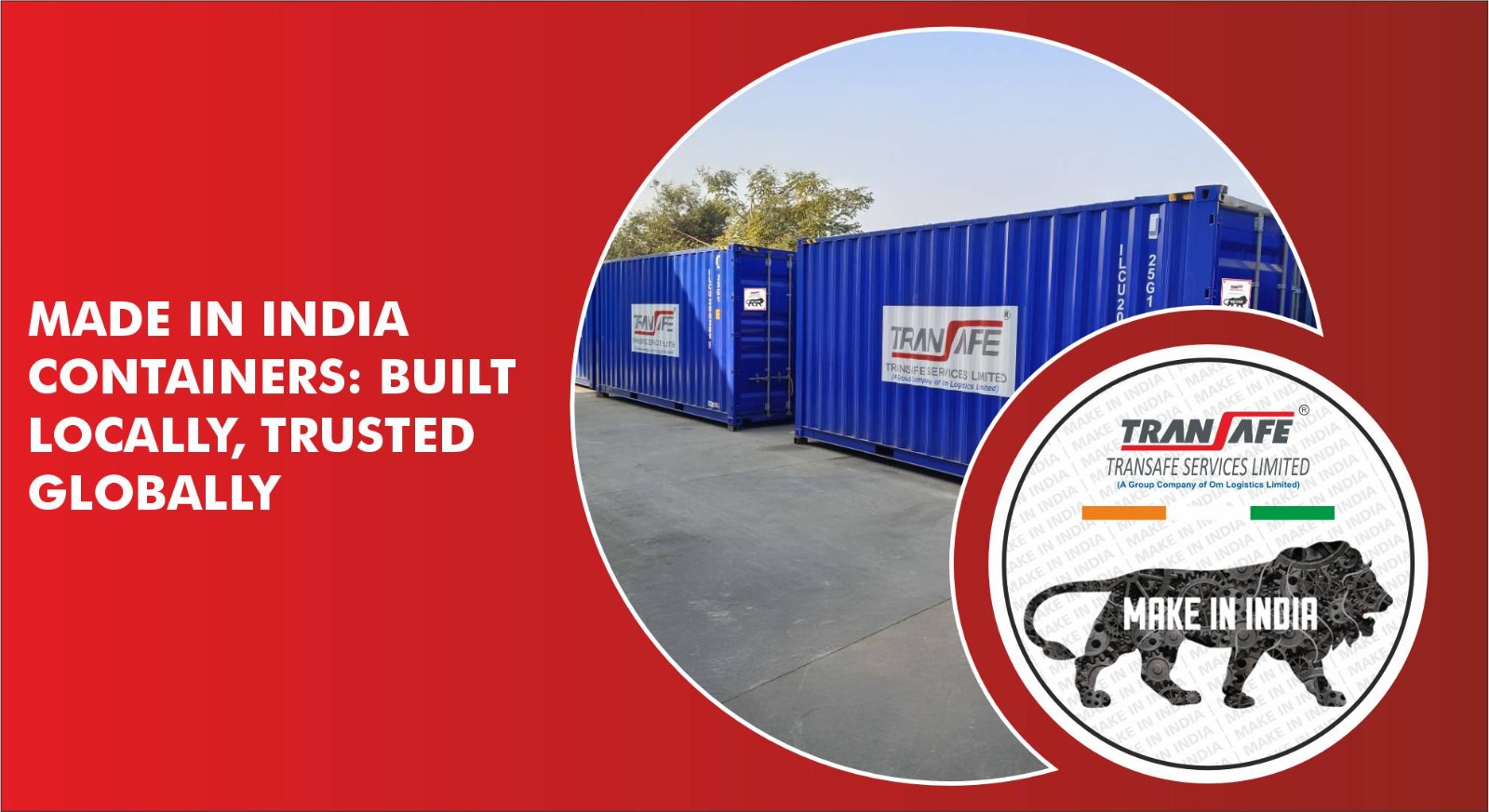
Indian container manufacturing has moved beyond basic fabrication and entered a domain defined by engineered precision, international compliance and sector-specific customization. The shift reflects the country’s growing competency in industrial design, material engineering and global logistics integration.
What Does “Made in India” Mean for Containers?
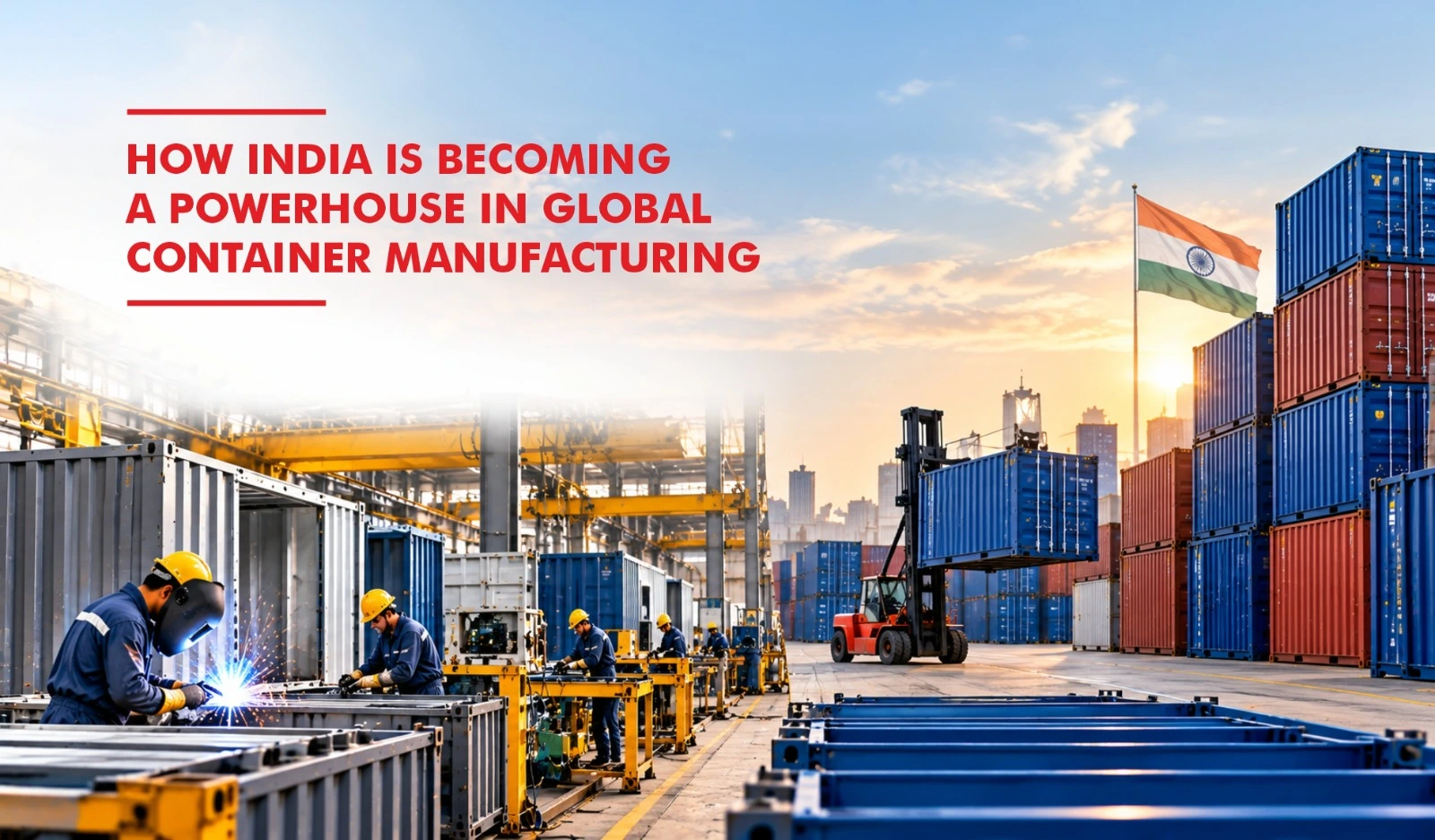
“Made in India” in the container industry signals a manufacturing ecosystem capable of delivering globally compliant, export-ready and application-specific units. Indian manufacturers are not merely supplying domestic demand; they are addressing global logistics, offshore operations, energy infrastructure and specialized sectors that require consistent quality.
The narrative is no longer about cost competitiveness alone. It now represents local fabrication backed by advanced welding processes, structural design validation, ISO adherence and customization aligned to multi-industry usage. Indian-built containers serve road, rail, marine and intermodal requirements across continents, strengthening India’s emerging role in international supply chain infrastructure.
Why Indian-Manufactured Containers Are Trusted Globally
Indian manufacturers have strengthened their position through a matrix of quality, engineering consistency and operational discipline. Several factors influence global acceptance:
1. Compliance with ISO and Industry Norms
Global buyers rely on standardized specifications. Manufacturers in India operate within ISO 1496-1 standard parameters for freight containers, including dimensional accuracy, structural integrity and intermodal compatibility.
2. Material and Structural Reliability
Units are built using corrosion-resistant steel grades and high-precision fabrication. This ensures durability in varied environments, such as tropical climates, offshore rigs, research sites and heavy-industrial zones.
3. Export-Ready Engineering
A significant share of output is tailored for export markets. Packaging, finishing, documentation and structural certification are executed to meet overseas compliance requirements.
4. Versatile Customization
Manufacturers cater to multiple industries such as oil & gas, telecom, scientific research, power utilities and FMCG supply chains. These industries demand high-performance units that maintain operational safety and longevity.
5. Superior Quality Control
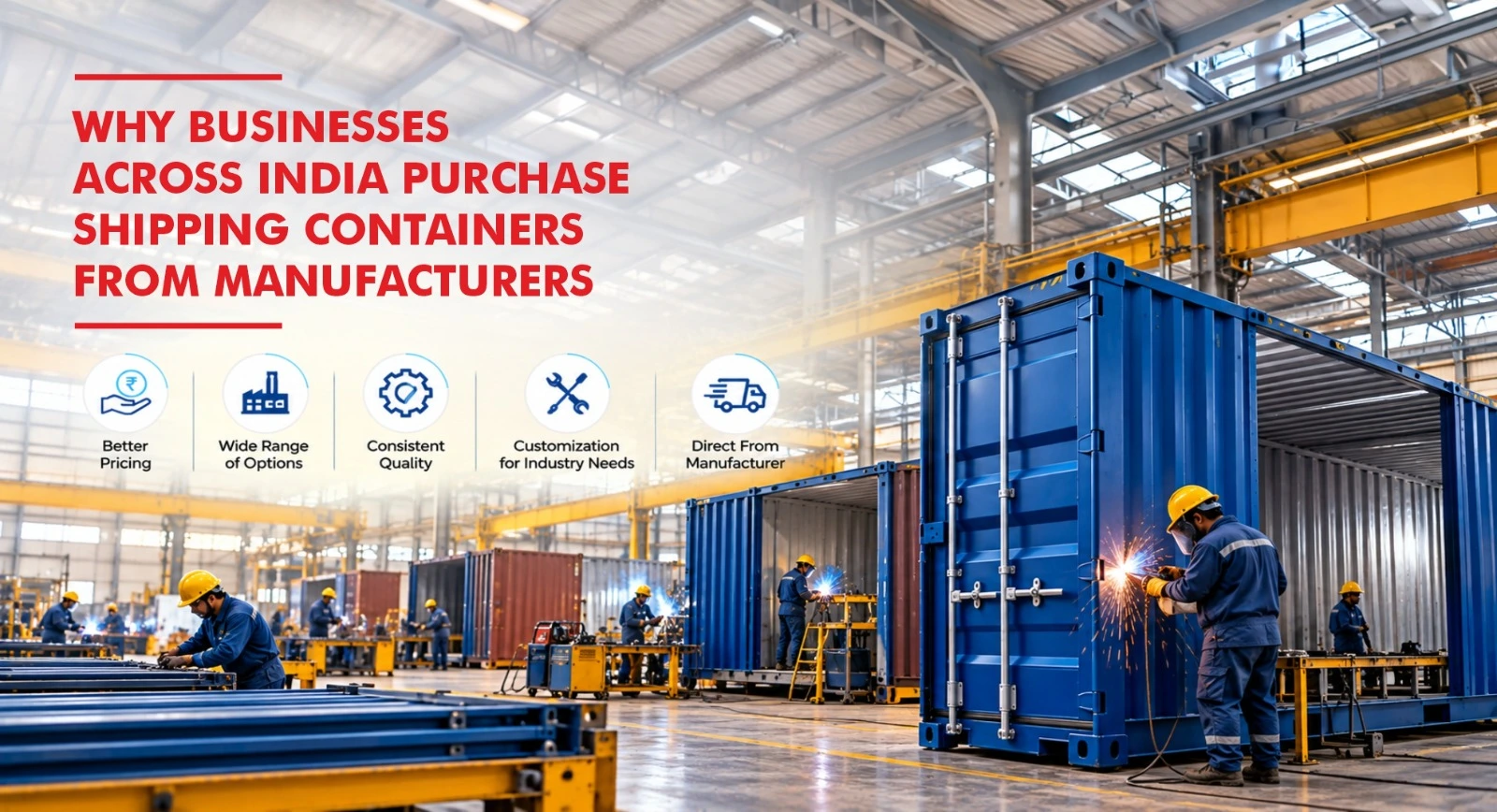
ISO freight containers manufactured in India follow strict superior quality control procedures to ensure safety, durability, and international compliance. Every container undergoes material inspection, welding quality checks, dimensional accuracy verification, and load-bearing tests as per ISO and CSC standards. Advanced testing methods like non-destructive testing (NDT), water-tightness, and stacking strength tests guarantee reliability during global transportation. This rigorous quality control ensures containers can safely withstand harsh weather, heavy cargo loads, and long shipping cycles.
Made-in-India Containers - ISO Standards
Conformance with ISO 1496-1 is the foundation for general-purpose intermodal containers manufactured in India. These standards define structural tests, dimensional norms and material boundary conditions.
Standard Dimensions:
|
Length |
Width |
Height - Standard |
Height - High Cube |
|
20 ft (6.058 m) |
8 ft (2.438 m) |
8 ft 6 in (2.591 m) |
9 ft 6 in (2.896 m) |
|
40 ft (12.192 m) |
8 ft (2.438 m) |
8 ft 6 in (2.591 m) |
9 ft 6 in (2.896 m) |
The compliance regime ensures compatibility across road, rail and marine systems globally. Structural tests include stacking, racking, lifting, floor strength and weather resistance. These validations create confidence among international logistics operators.
Key Advantages of Locally Manufactured Containers
Indian-built containers provide a value proposition anchored in engineering depth and multi-sector adaptability.
1. Shorter Lead Times
Local production reduces procurement cycles, enabling faster deployment for domestic and export operations.
2. Cost Efficiency Without Compromise
Competitive pricing is balanced with robust fabrication, ensuring reliability in demanding conditions.
3. Scalability and Volume Capability
Facilities across India are equipped to produce standard ISO units and advanced customized modules, supporting bulk orders and long-term supply programs.
4. Economic Benefits and Support for Local Industry: Purchasing locally supports regional economic growth and creates jobs in manufacturing, engineering and logistics.
Global Applications of Indian-Built Containers
Indian containers support a broad spectrum of applications across continents. Such as:
-
ISO Freight Containers
Aligned with ISO 1496-1, these units address worldwide cargo movement for dry and general goods across intermodal networks.
-
Offshore Containers
Designed for the oil and gas segment, they support transportation of equipment, consumables and waste on supply vessels operating in high-humidity, marine environments.
-
Containerized Substations
Engineered for electrical infrastructure, enabling deployment of switchgear, transformers, GIS/AIS systems and auxiliary power modules.
-
BESS/CSS Containers
Purpose-built for solar and hybrid energy systems, supporting energy storage, transmission and conversion requirements.
-
Genset Containers
Configured for domestic and export markets, ensuring safe installation, transport and protection of generators across capacities.
-
Bunk House Containers
Modular units providing housing solutions for remote workforce operations in mining, construction and oilfield environments.
-
Refrigerated & Insulated Containers
Maintaining consistent temperature control for perishable or temperature-sensitive cargo across long-haul routes.
-
Special Purpose Containers
Constructed for industry-specific applications where structural customizations are essential to serve specific functions beyond general storage and transportation.
How to Choose a Reliable Indian Container Manufacturer
Selecting the right supplier requires a structured evaluation framework:
1. Verify ISO Certification
Prioritize manufacturers compliant with ISO 1496-1 and related container standards.
2. Assess Engineering Capabilities
Look for in-house designing team and engineers, structural analysis, fabrication and advanced testing facilities.
3. Review Past Performance
Years of experience in manufacturing containers for diverse industries as per customer requirements.
4. Evaluate Customization Depth
Reliable manufacturers provide engineered solutions across different container modules.
5. Inspect Material Quality
Corrosion-resistant steel, premium coatings and high-strength flooring significantly influence lifecycle value.
6. Validate After-Sales Support
Spares availability, maintenance guidance and documentation should be part of the engagement.
Conclusion
Indian container manufacturing has reached a point where engineering quality, global compliance and sector-ready customization operate in complete alignment. Made-in-India containers now serve as dependable assets for intermodal transport, energy infrastructure, offshore operations and specialized industrial applications across global markets. The combination of ISO-standard fabrication, material durability and multi-format versatility positions India as a strategic contributor to the worldwide container ecosystem. Businesses seeking reliable, export-quality and application-specific solutions continue to view Indian-built containers as a practical and future-ready choice, highlighting the country’s growing influence in global logistics and infrastructure development.
FAQs on Made-in-India Containers
1. Do Indian mnufactured containers meet international standards?
Yes. Reputed Indian manufacturers produce ISO-compliant containers aligned with global intermodal logistics requirements.
2. Are customized containers available in India?
Yes. Specialized units such as offshore, BESS, substations, bunk houses and genset enclosures are widely produced.
3. Can Indian containers be used for export cargo?
Yes. Export-quality containers are designed to withstand global transport conditions.
4. Which industries commonly use Indian-built containers?
Oil & gas, power utilities, telecom, scientific research, construction, mining, FMCG and solar energy sectors rely on Indian-built units.
5. Are refrigerated and insulated containers manufactured in India?
Yes. Temperature-controlled units are available for perishable logistics and pharmaceutical supply chains.
6. Are ISO tank containers produced locally?
Yes. Indian manufacturers deliver ISO tank containers for liquid cargo applications.