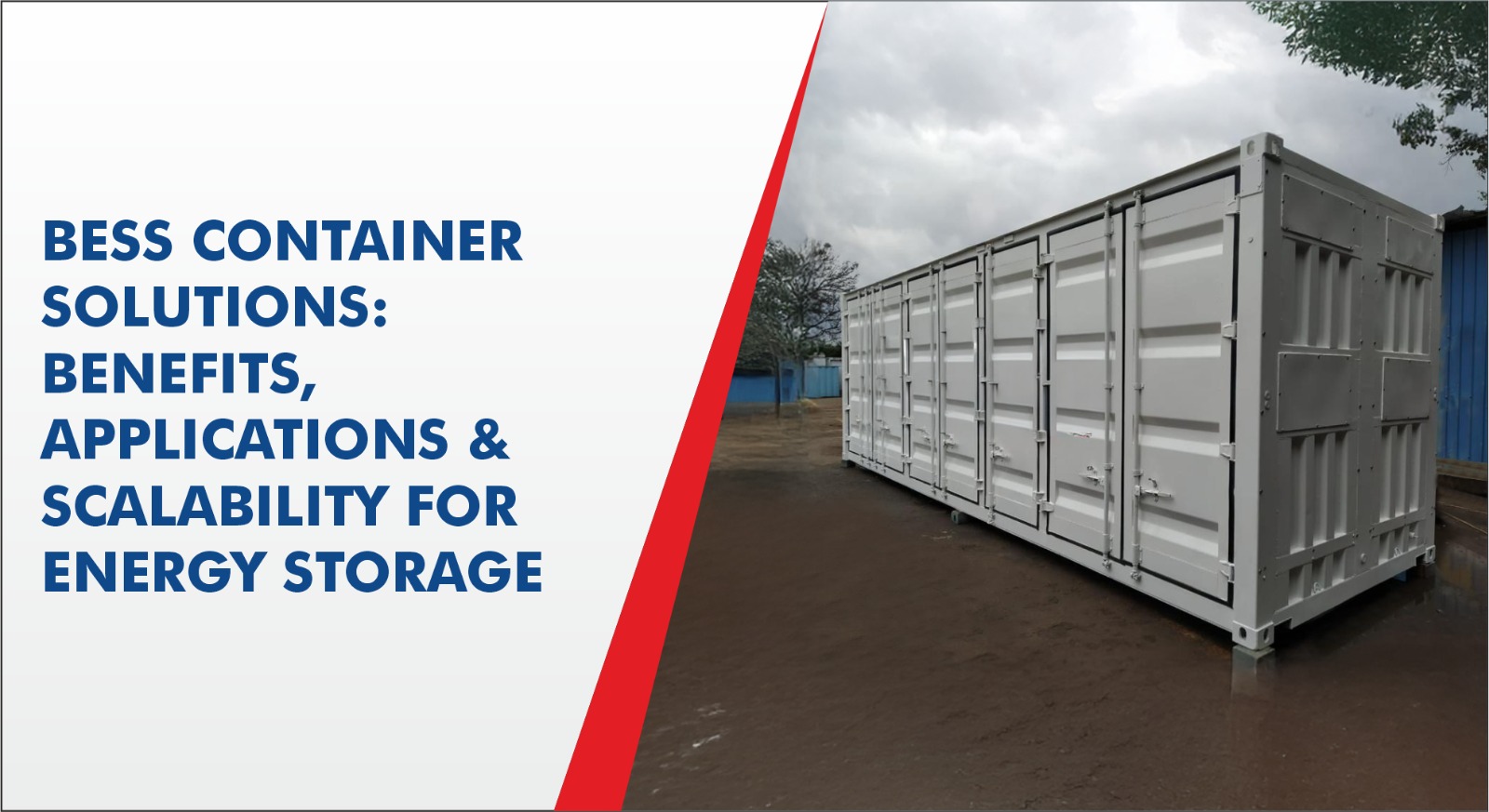
Battery Energy Storage Systems (BESS) have become essential assets in modern power infrastructure. Rising renewable adoption, evolving grid demands and the need for flexible storage architectures have made containerized energy storage systems an efficient and strategic choice. These modular BESS containers deliver compact, scalable and grid-ready energy storage capabilities suitable for both utility-scale and distributed environments.
What Is a BESS Container?
Definition & Core Components
A BESS container is a pre-engineered, containerized structure equipped with batteries, inverters, cooling systems and energy management software. It stores and dispatches power generated from sources such as solar and wind, ensuring smooth and stable energy delivery.
Core Components:
-
Battery Packs – Lithium-ion or other chemistries depending on project requirements.
-
Power Conversion System (PCS) – Converts stored DC energy to usable AC power.
-
EMS (Energy Management System) – Optimizes charge–discharge cycles and system health.
-
Thermal Management System – Maintains safe operating temperatures.
-
Fire Suppression & Safety Controls – Meets global BESS safety and standards.
These containerized energy storage systems are engineered to function as plug-and-play units, enabling seamless grid integration.
How BESS Works in a Containerized Design
Energy generated from photovoltaics, wind turbines or the grid is directed to the battery modules inside the container. The PCS regulates power flow, allowing stored energy to be discharged during peak demand or whenever load balancing is required. The EMS continuously monitors system performance, ensuring safe operation and optimized battery lifecycle.
This integrated structure creates a closed, controlled environment where storage assets operate at maximum efficiency, regardless of external conditions.
Why Containerized BESS Is Becoming Popular
Modular & Scalable Architecture
Modular BESS containers enable staged deployment. Utilities, industrial facilities and energy developers can scale capacity simply by adding additional containers. This supports both small microgrids and large grid-connected plants without requiring a redesign of the overall system.
Deployment Versatility
Engineered for mobility, these containers suit diverse terrain—remote villages, industrial parks, construction sites or utility substations. Their ISO container footprint simplifies transport and installation.
Cost & Efficiency Benefits
Containerization reduces on-site civil work, engineering hours and time-to-commissioning. Pre-integrated systems also shorten project cycles and minimize unexpected installation costs. Operators benefit from centralized maintenance access and streamlined monitoring.
Key Benefits of BESS Containers
Grid Stability & Peak Shaving
BESS containers stabilize grid frequency and voltage by absorbing excess energy during low-demand periods and releasing it during peak hours. This ensures improved grid reliability and optimized energy consumption patterns.
Renewable Energy Integration
Solar and wind farms experience intermittent output. Scalable battery energy storage solutions store surplus renewable generation and discharge when production drops, ensuring continuous supply. This strengthens the overall value proposition of renewable energy storage solutions.
Backup Power & Load Management
Sites sensitive to outages, such as digital infrastructure, manufacturing units and healthcare facilities, gain consistent backup power. Load shifting capabilities also reduce strain on critical assets and optimize energy usage profiles.
Portability & Rapid Installation
Pre-configured units accelerate deployment timelines. Mounted within robust containers, they can be relocated as operational needs evolve, supporting dynamic project environments and temporary sites.
Typical Applications
Commercial & Industrial Sites
Enterprises leverage BESS containers to reduce peak demand charges, smooth load fluctuations and ensure continuity during grid disturbances. Energy savings and operational resilience form key outcomes.
Microgrids & Utilities
Microgrids rely on these systems for storage, frequency regulation and islanding capabilities. Utilities deploy them at substations to manage local constraints and support distribution stability.
Renewable Farm Integration (Solar/Wind)
Solar gardens and wind parks integrate BESS containers to maximize energy capture, reduce curtailment and enable effective time-shifting of renewable output.
Emergency & Remote Power Solutions
Remote communities, mining operations and disaster-prone regions benefit from portable, fast-deploy storage units. These systems operate independently or alongside generators to deliver stable and clean power.
Safety & Compliance Considerations
A containerized BESS solution must adhere to stringent safety certifications covering electrical, fire and environmental standards. Key parameters include:
-
Battery chemistry compliance
-
Fire suppression and detection systems
-
Ventilation and thermal control performance
-
Short-circuit and overcharge protection
-
Standards such as UL 9540, IEC 62933 and NFPA guidelines
Structured adherence ensures safe long-term operation and regulatory approval.
Choosing the Right BESS Container Solution
Selecting an optimal solution requires evaluation of:
-
Required storage capacity and discharge duration
-
Application type (grid support, backup, renewable integration)
-
Battery chemistry and lifecycle performance
-
Environmental conditions and installation site constraints
-
Integration needs with existing power infrastructure
-
Compliance with BESS safety and standards
Comprehensive technical assessment avoids oversizing, performance issues or future scalability limitations.
Transafe Services & Evolving Energy Storage Opportunities
Transafe’s containerized solutions support efficient energy storage, conversion and transmission across the solar ecosystem. The compact design and optimized layout enhance performance while enabling streamlined grid integration. The design ensures operational reliability for sectors ranging from remote locations to dense urban deployments.
These systems deliver robust modular BESS containers engineered for renewable energy projects, industrial operations and distributed power networks. The approach aligns with emerging market needs for flexible, cost-effective storage infrastructure.
Conclusion
Containerized BESS solutions have emerged as reliable, scalable and application-ready energy storage assets. Their modular footprint, deployment flexibility and operational efficiencies make them suitable for utilities, commercial operations and renewable developers seeking dependable storage capabilities. As energy systems transition toward cleaner and more distributed models, BESS containers continue to play a pivotal role in shaping modern power resilience and sustainability.
FAQ
1. What is the main advantage of using a BESS container?
It offers modular, scalable and transportable storage that speeds up project deployment.
2. Can BESS containers support renewable integration?
Yes. They store excess solar and wind energy and release it during low-generation periods.
3. How long does installation typically take?
Pre-engineered units reduce installation schedules significantly, often to a few weeks depending on site readiness.
4. Are BESS containers safe?
They follow strict thermal, electrical and fire safety protocols aligned with global standards.
5. Where can containerized energy storage systems be used?
Industries, utilities, microgrids, remote operations and renewable farms commonly deploy them.