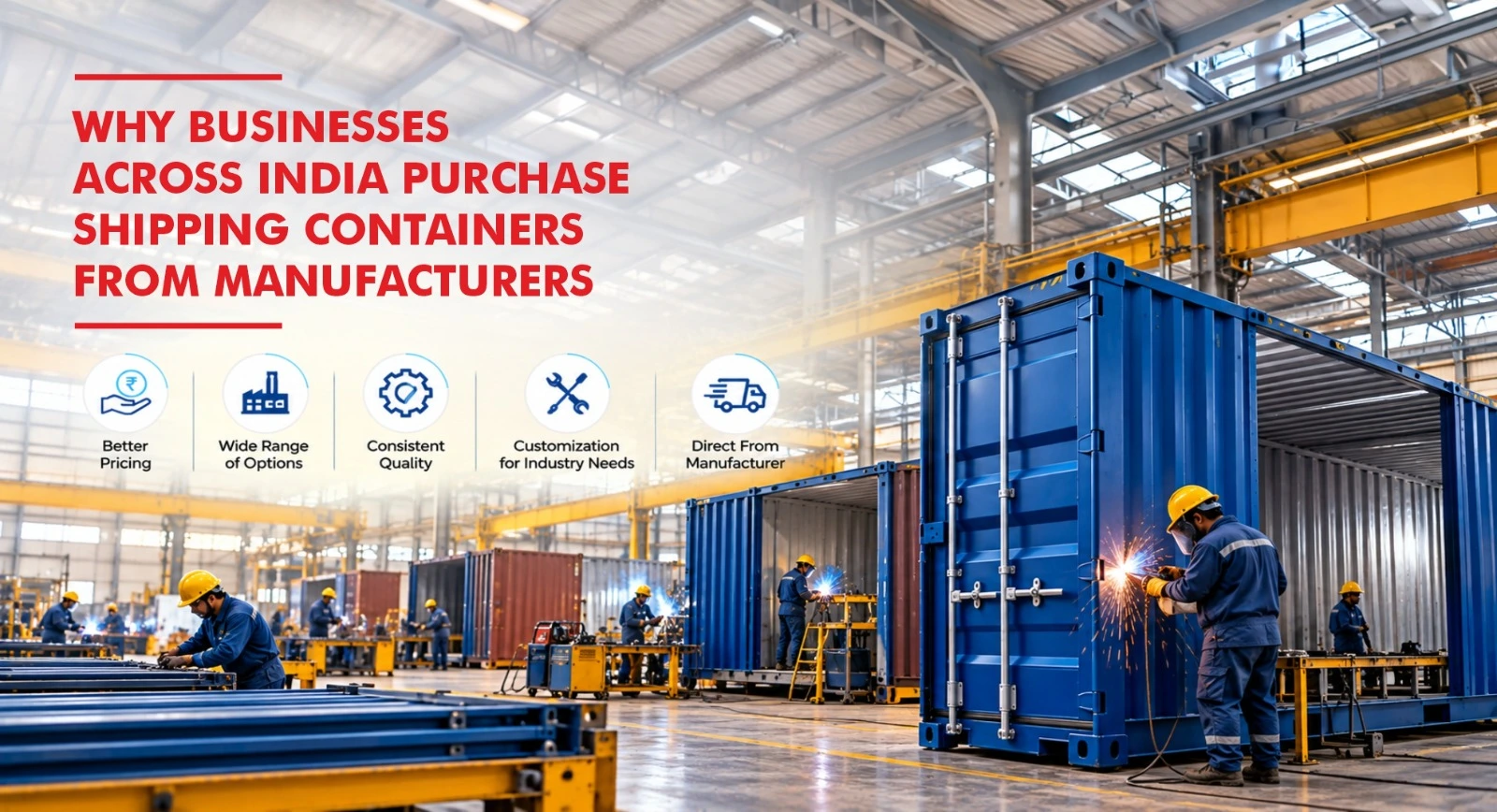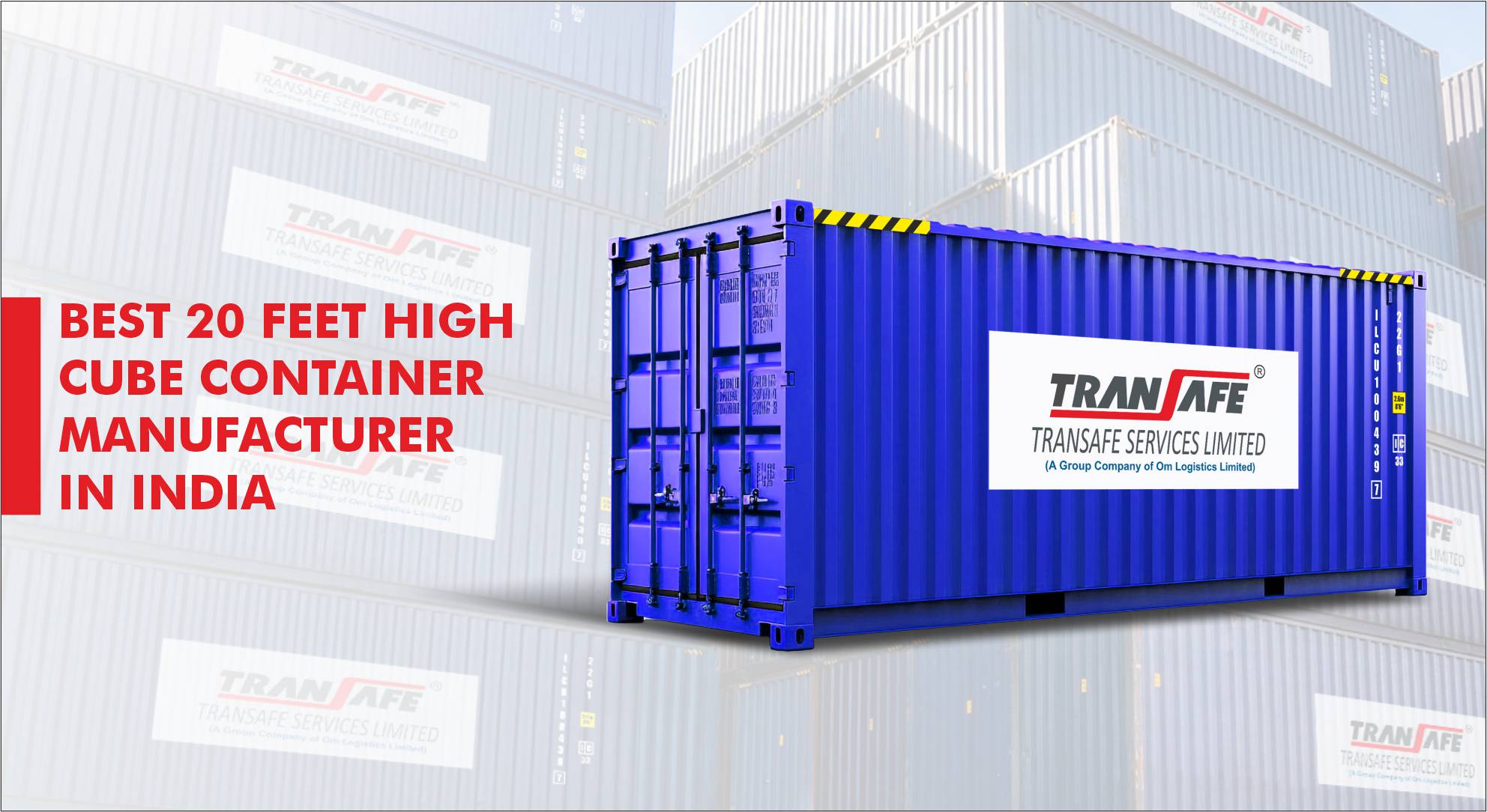
Container manufacturing has evolved into a precision-led industrial discipline. Demand today is not driven by volume alone. It is driven by compliance, durability, load performance and lifecycle value. Within this landscape, the 20 feet high cube container has emerged as a critical asset for sectors that require additional internal height without expanding the footprint.
Selecting the right container manufacturing company is a strategic decision. It directly impacts cargo integrity, operational continuity and long-term cost efficiency.
Overview of High Cube Container Manufacturing
High cube container manufacturing focuses on engineering containers with increased vertical clearance while retaining standard length and width. A high cube container offers an additional one foot of internal height compared to standard units. This design advantage supports high-volume, light-to-medium density cargo and modular installations.
In India, container manufacturing has aligned closely with global ISO frameworks to support domestic distribution and international trade. Manufacturers serving overseas markets must maintain dimensional accuracy, weld integrity, corrosion resistance and structural reliability across operating environments.
Why Choose a Professional Container Manufacturing Company
A professional container manufacturing company operates on defined quality systems, controlled fabrication processes and certified material sourcing. This discipline ensures that 20ft containers deliver consistent performance under repeated loading cycles.
Key differentiators include:
-
Compliance with ISO 1496-1 standards
-
In-house design and fabrication control
-
Capability to deliver standard and customized HC containers
-
Proven experience across industrial and defense applications
Such manufacturers support both domestic deployment and export-grade requirements without deviation in quality.
Applications of 20ft Containers in Industrial Logistics
The 20 feet high cube container is widely deployed across multiple sectors due to its adaptability and space efficiency.
Primary applications include:
-
Transportation of high-volume industrial goods
-
Secure storage for equipment and raw materials
-
Modular units for construction and infrastructure projects
-
Oil field operations and offshore installations
-
Telecom shelters and control rooms
-
Scientific research and space-related projects
-
Power sector infrastructure
-
Defence services and remote deployments
Modularized integrated containers have become standard assets where rapid deployment and structural reliability are non-negotiable.
Understanding High Cube Container Design and Performance
A high cube container follows standard ISO footprints while extending vertical height to 9 ft 6 inches. This design enhances internal cubic capacity without altering handling compatibility with existing logistics infrastructure.
Standard Dimensions
|
Parameter |
Specification |
|
Length |
20 ft (6.058 m) |
|
Width |
8 ft (2.438 m) |
|
Height – Standard |
8 ft 6 in (2.591 m) |
|
Height – High Cube |
9 ft 6 in (2.896 m) |
Structural components include reinforced corner castings, corrugated steel walls, high-tensile flooring and weather-sealed doors. These features ensure durability across transportation, stacking and long-term storage cycles.
Key Advantages of High Cube Container for Heavy-Duty Usage
High cube containers offer tangible operational advantages when compared to standard units.
-
Increased internal volume without increased land usage
-
Improved stacking efficiency for lightweight cargo
-
Better ventilation and airflow for sensitive goods
-
Flexibility for equipment mounting and modular fit-outs
-
Enhanced adaptability across industries
For heavy-duty and specialized applications, HC containers reduce the need for multiple units, improving overall logistics efficiency.
Role of Container Manufacturing in Delivering Best Containers
Container manufacturing is not limited to fabrication. It is an integrated process involving material science, structural engineering and compliance verification.
Delivering the best containers requires:
-
Use of certified corten or equivalent weathering steel
-
Precision welding and dimensional control
-
Surface treatment for corrosion resistance
-
Load testing and inspection protocols
-
Documentation aligned with international shipping norms
Manufacturers operating at this level ensure containers perform reliably across varied climates and operational stress conditions.
20 Feet Container Price Factors and Cost Considerations
The 20 feet container price is influenced by several technical and commercial factors.
Price evaluation should focus on total cost of ownership rather than initial procurement cost.
Key cost drivers include:
-
Steel grade and material thickness
-
Floor construction and load rating
-
ISO certification and compliance testing
-
Customization requirements
-
Export packaging and logistics
A competitively priced container that lacks structural integrity often results in higher maintenance and replacement costs over time.
Comparison of HC Containers and Standard Containers
|
Aspect |
High Cube Containers |
Standard Containers |
|
Internal Height |
9 ft 6 in |
8 ft 6 in |
|
Cargo Volume |
Higher |
Lower |
|
Best Use Case |
High-volume cargo, modular units |
Dense cargo |
|
Flexibility |
High |
Moderate |
|
Cost |
Slightly higher |
Lower |
HC containers provide operational leverage where vertical space directly impacts efficiency.
Quality Standards in Container Manufacturing Company Operations
ISO freight containers must comply with ISO 1496-1 standards.
This framework governs dimensions, load ratings, stacking strength and durability parameters.
A compliant container manufacturing company integrates these standards into every stage of production.
Quality assurance is reinforced through material testing, structural inspections and final certification prior to dispatch.
Such compliance ensures acceptance across ports, shipping lines and international logistics networks.
How to Select the Best Containers for Your Business
Selection should be guided by operational requirements rather than short-term cost savings.
Key evaluation criteria:
-
Intended application and load profile
-
Environmental exposure conditions
-
Domestic or overseas deployment
-
Customization needs
-
Manufacturer track record
Engaging a manufacturer with cross-sector experience reduces risk and enhances operational predictability.
Maintenance and Safety Guidelines for High Cube Container
Proper maintenance extends service life and ensures operational safety.
Recommended practices include:
-
Periodic inspection of corner castings and door seals
-
Surface coating checks for corrosion prevention
-
Floor integrity assessment under heavy loads
-
Ventilation and drainage maintenance
Adhering to these guidelines preserves container performance across extended usage cycles.
Conclusion
The 20 feet high cube container is a strategic logistics asset for modern industrial operations. Its design efficiency, application flexibility and compatibility with global transport systems make it indispensable across sectors.
Choosing the right container manufacturing company in India ensures access to ISO-compliant, structurally sound and application-ready containers. This decision directly supports cargo safety, operational efficiency and long-term value creation.
Frequently Asked Questions (FAQs)
-
What industries commonly use high cube containers?
Industries include logistics, construction, oil and gas, telecom, power, defence and scientific research. -
Are high cube containers suitable for overseas shipping?
Yes. ISO-compliant HC containers are designed for international transportation. -
How does a high cube container differ from a standard container?
The primary difference is increased internal height, offering higher cubic capacity. -
What affects the 20 feet container price the most?
Material quality, ISO compliance, customization and manufacturing standards.
5.Can high cube containers be customized?
Yes. Professional manufacturers support modular and integrated container solutions across applications.