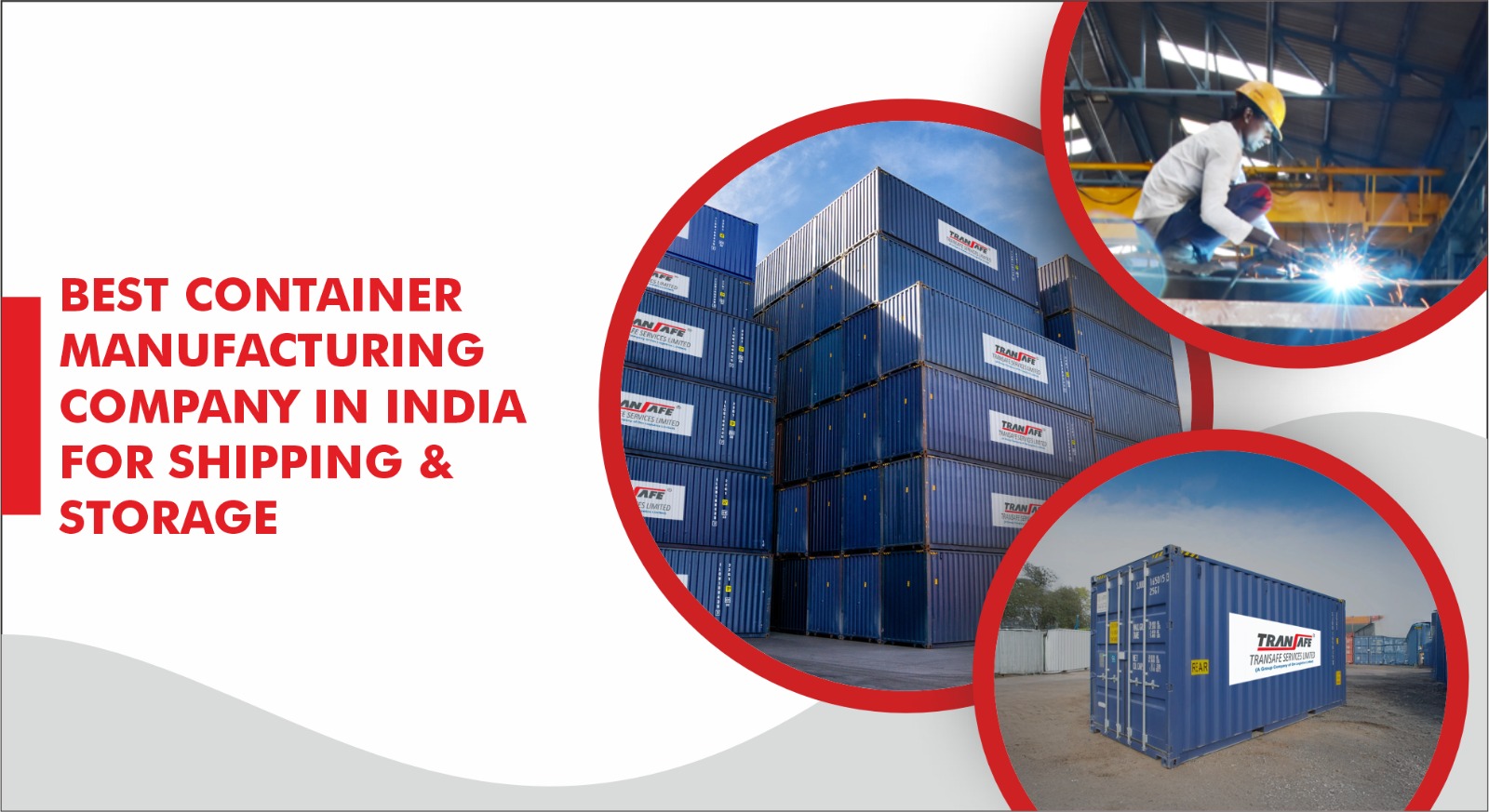
India’s logistics and infrastructure ecosystem continues to mature at scale. Container manufacturing plays a decisive role in this growth. Shipping, storage and multimodal movement depend on containers that perform under pressure, comply with global norms and deliver longevity across operating cycles.
Selecting the best container manufacturing company in India is no longer a procurement exercise alone. It is a strategic decision impacting cargo safety, operational uptime and total cost of ownership.
Let’s examines container manufacturing for shipping and storage, evaluates key quality parameters, highlights the top container makers in India and outlines how businesses can assess durability and customization options with confidence.
Container Manufacturing for Shipping and Storage
Container manufacturing in India has evolved beyond standard steel boxes.
Modern requirements demand engineered solutions aligned to domestic logistics, EXIM trade, industrial storage and infrastructure projects.
A reliable shipping container manufacturer in India focuses on:
-
ISO-compliant production standards
-
Structural integrity for rail, road and coastal movement
-
Adaptability for storage at factories, CFS locations, ports and project sites
Manufacturers now integrate container design with downstream usage.
Storage containers support inventory control.
Shipping containers enable secure, repeatable cargo movement.
Hybrid use cases bridge both requirements.
This convergence defines container manufacturing for storage in India today.
Key Features of Reliable Container Manufacturers
Not every container supplier qualifies as a long-term manufacturing partner.
Consistency, compliance and operational understanding separate leaders from vendors.
1. Engineering and Compliance
Top manufacturers adhere to ISO standards for Freight containers.
Welding quality, corten steel selection and load-bearing calculations remain non-negotiable.
2. Manufacturing Scale and Control
Large-scale production ensures uniform quality.
In-house fabrication, testing and finishing reduce dependency risks.
3. IICL-certified Design
Durable shipping containers must handle repeated loading cycles, stacking stress and environmental exposure without deformation.
4. Lifecycle Orientation
Leading container makers design for long service life, refurbishment and redeployment across multiple industries.
5. Market Understanding
Manufacturers aligned with logistics operators, EXIM players and infrastructure firms deliver solutions that work in real conditions.
These attributes define a top container maker in India.
How to Assess Quality and Durability
Selecting a durable shipping container requires structured evaluation.
Visual inspection alone is insufficient.
Structural Parameters to Review
-
Steel grade and thickness
-
Corner casting strength
-
Floor material and load tolerance
-
Door locking mechanisms
Manufacturing Controls
-
Welding certification
-
Surface treatment and corrosion resistance
-
Dimensional accuracy
Performance Indicators
-
Stacking test ratings
-
Payload capacity compliance
-
Weather resistance for long-term storage
Documentation and Traceability
-
ISO certification records
-
Production batch traceability
-
Inspection and testing reports
A professional assessment reduces downstream maintenance risk and operational disruption.
Customization Options for Storage Needs
Container usage has diversified. Manufacturers now offer customization aligned to storage, industrial and project-specific needs.
Common Customization Areas
-
Ventilation and insulation for temperature-sensitive storage
-
Internal shelving and partitions for organized inventory
-
Electrical fittings and lighting for operational access
-
Modified doors and access points for site efficiency
Industry-Specific Use Cases
-
Manufacturing plants requiring on-site storage
-
Construction sites managing tools and materials
-
Logistics hubs supporting buffer inventory
-
EXIM operators using containers as bonded storage
Customization transforms containers into operational assets rather than static units. This capability differentiates advanced container manufacturers from commodity suppliers.
Role of Leasing in the Container Ecosystem
While manufacturing defines quality, leasing defines flexibility.
Many businesses combine manufactured containers with leasing models to balance capex and scale.
Transafe’s container solutions demonstrate this alignment:
-
Availability across PAN India
-
Support for Domestic and EXIM movements
-
ISO-certified container formats in standard sizes
-
Containers suited for Rail,Road,Coastal and On-site storage
Leasing complements manufacturing by enabling scalability and operational agility.
FAQs on Container Manufacturing
What defines the best container manufacturing company in India?
Consistency in quality, ISO compliance, engineering depth and market understanding define leadership.
Are storage containers different from shipping containers?
Base structures remain similar. Storage containers often include customization for access, insulation and internal layout.
How long does a durable shipping container last?
With proper manufacturing and maintenance, containers deliver multi-year operational life across repeated cycles.
Can containers be customized after manufacturing?
Yes, many manufacturers and solution providers support post-production modifications.
Is leasing preferable to outright purchase?
Leasing suits variable demand and project-based usage. Ownership works for long-term, fixed operations.
Closing Perspective
Container manufacturing sits at the intersection of logistics, infrastructure and trade.
Quality decisions made at this stage ripple across supply chains.
India’s top container makers combine engineering discipline with operational awareness.
Durability, compliance and adaptability define long-term value.
Businesses seeking reliable shipping and storage solutions benefit from partners who understand containers not as products, but as performance enablers across the logistics lifecycle.