A Coil-Tainer stands at the center of high-performance industrial logistics where dense, high-value cargo demands precision control. Steel coils, heavy metal rolls and bulk industrial components carry concentrated weight loads that exceed the safe thresholds of conventional containers. The Coil-Tainer resolves this challenge through a purpose-built structure, engineered to support extreme point loads, stabilize coil geometry and streamline handling across multimodal transport. The solution supports industries operating in demanding production environments where speed, reliability and cargo integrity directly influence downstream efficiency.
What is a Coil-Tainer?
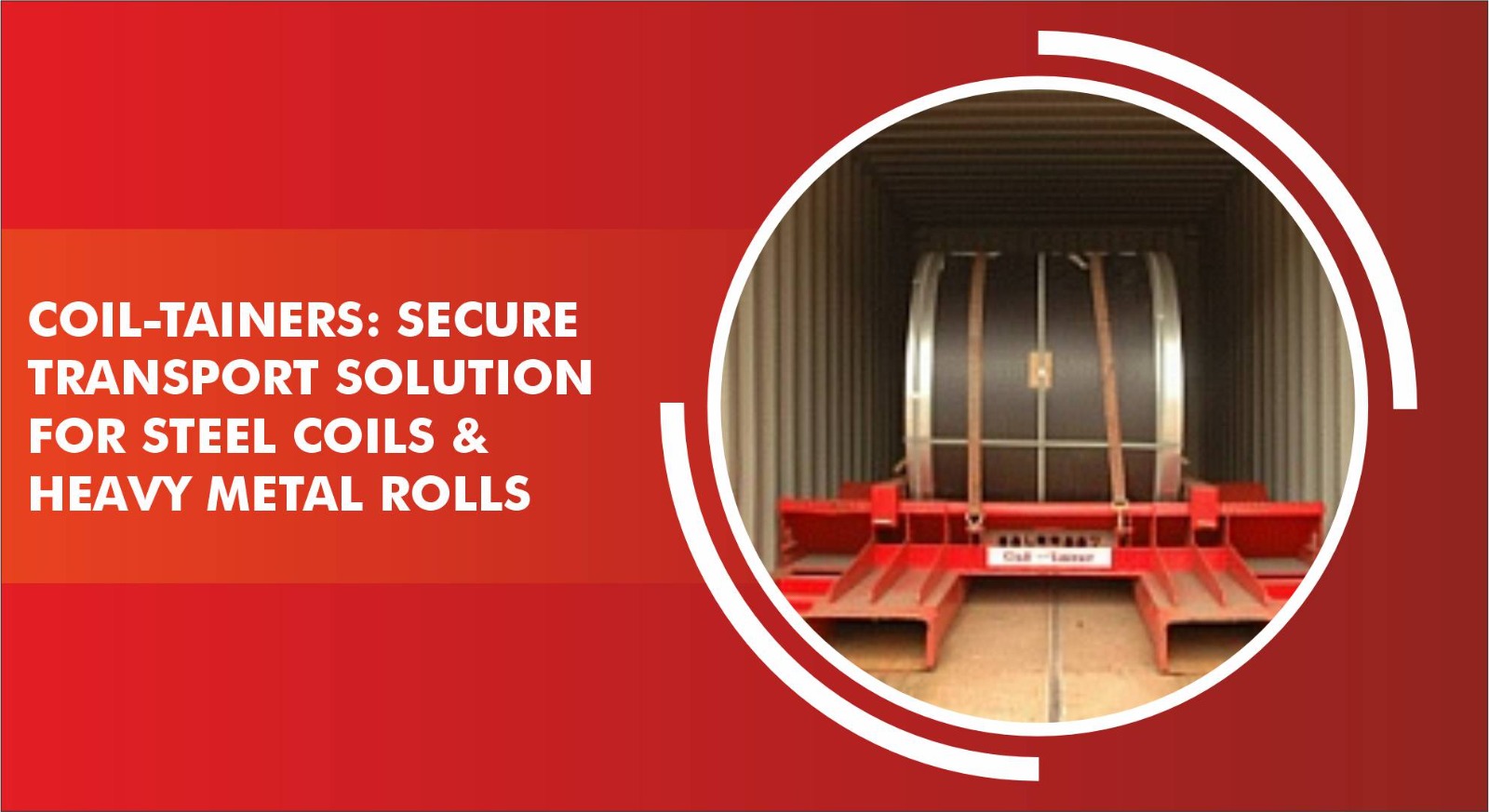
A Coil-Tainer is a specialized ISO-certified container configured to transport steel coils, metal rolls and other dense industrial materials. The design incorporates container floors, engineered troughs and heavy-duty coil cradles that disperse load pressure evenly, preventing deformation, slippage or structural stress during movement. This format eliminates the need for improvised blocking or bracing, ensuring predictable behavior even under dynamic conditions such as sharp braking, sea swell, shunting or incline handling.
The Coil-Tainer integrates seamlessly into existing logistics infrastructure. Ports, ICDs, factories and warehouse hubs treat it like any standard ISO container for lifting, stacking and conveyance. This compatibility reduces handling complexities and aligns shipments with standardized equipment, reducing dwell time and accelerating cargo flows.
Structural Design
A Coil-Tainer operates on engineered architecture, developed to absorb extreme static and kinetic forces generated by compact heavy-metal cargo.
-
Structurally upgraded flooring system: Designed to handle exceptionally high point loads without bending or structural fatigue.
-
Integrated coil cradles or saddles: Shaped to seat coils securely, maintaining center-of-gravity stability during movement.
-
Ribbed and strengthened sidewalls: Provide lateral resistance, shielding coils from impact shocks.
-
Multiple lashing rings and securing points: Aligned to global load-securing standards for chain locks, binders, belts and tensioners.
-
Fork pockets and spreader-lift compatibility enable safe lifting through standard ground-handling equipment.
-
Optional tarpaulin or cover assemblies for surface-sensitive metals, preventing contamination or moisture exposure.
What Are The Benefits Of a Coil-Tainer?
A Coil-Tainer extends strategic and operational advantages across the industrial logistics continuum.
Higher Cargo Security:
The cradle-based setup restricts coil movement, eliminating roll, slide or tilt under shifting forces. Damage incidents drop significantly, improving yield and product reliability at the receiver’s end.
Operational Efficiency:
Reduced handling stages, minimal repacking and direct compatibility with existing equipment allow faster throughput at ports, yards and plant locations.
Cost Optimization:
Lower damage rates and reduced need for specialized rigging bring down overall logistics expenditure. Enterprises also gain cost predictability by eliminating ad-hoc securing materials.
Universal Fit for Industrial Cargo:
The ISO-standard structure supports seamless transitions across trucks, rail wagons and sea vessels. No reloading or re-securing is required at interchange points.
Improved Safety Compliance:
Coils remains locked into engineered saddles, reducing the risk of load shift incidents. This aligns movement with safety guidelines often mandated by steel mills, OEM plants and maritime authorities.
Better Space Utilization:
Since coils sit in the cradle zones, remaining container space can accommodate packing materials, ancillary components or protective layers without compromising balance.
Used by Industries
A Coil-Tainer is a preferred solution across sectors handling large-scale metal production and heavy engineering components.
-
Steel Manufacturing & Rolling Mills: Ideal for HR/CR coils, galvanized coils and slit coils moving between mill stages or distribution hubs.
-
Automotive & Auto Ancillary Units: Supports movement of steel rolls used in body panels, chassis components and stamping operations.
-
Metal Fabrication Plants: Ensures safe transit for raw metal rolls feeding fabrication lines.
-
Heavy Engineering Firms: Facilitates high-density cargo required for machinery, infrastructure components or industrial frameworks.
-
Export Manufacturing Clusters: Enables compliant load movement for coils shipped overseas under ISO and maritime codes.
-
OEM Supply Chains: Maintains product integrity for precision-sensitive applications dependent on consistent coil quality.
Safety & Securing Transportation
Coil-Tainer logistics follow rigorous safety protocols built around international cargo-securing frameworks.
Engineered Lashing Systems:
Chains, tensioners and binding straps connect to integrated lashing points designed to withstand heavy dynamic loads. Each securing device remains aligned to certified load limits, preventing breakage or slack.
Friction Enhancement Layers:
Rubber mats or friction pads placed under coils limit micro-movements, especially during longitudinal acceleration or braking.
Optimized Load Angles:
Coils are positioned at calculated angles to reduce structural stress and prevent tipping. These angles follow recognized engineering guidelines for heavy-metal loading.
Compliance with ISO Standards:
Load distribution adheres to ISO container norms, ensuring the container’s structural integrity is never compromised.
Routine Inspections:
Condition monitoring at each stage—yard, terminal, port and destination—ensures securing hardware remains tensioned and locking mechanisms stay intact.
This structured approach safeguards not only the cargo but also personnel, handling equipment and other shipments sharing the transit environment.
How to Select Coil-Tainer - Complete Guide
A precise selection process ensures maximum performance from a Coil-Tainer deployment.
Cargo Dimensions & Weight: Coil diameter, width and individual coil weight determine the cradle configuration and load distribution strategy.
Number of Coils per Shipment: Operations involving multiple coils require multi-saddle or extended-trough designs to maintain center-of-gravity accuracy.
Surface Sensitivity: Coils with anti-rust coatings, galvanized layers or high-finish surfaces may require protective covers or additional padding.
Route and Mode Analysis: Rail routes with shunting, road corridors with gradients and maritime routes with swell exposure influence the securing methodology.
Handling Equipment Availability: C-hooks, coil grabs, forklifts or cranes used at origin and destination must align with container specifications.
Regulatory & Export Compliance: Shipments intended for international movement must follow maritime, port and customs guidelines specific to heavy-metal transport.
A well-aligned selection ensures the container delivers predictable outcomes, reducing transit risk and stabilizing production pipelines.
FAQs
1. What size coils can a coil-tainer carry?
Most units support a wide diameter range, with load capacities designed for heavy-density steel and metal rolls.
2. Can a coil-tainer be used for multimodal transport?
Yes. The ISO structure supports road, rail and sea movement without repacking.
3. Do coil-tainers reduce cargo damage?
Yes. The cradle-based design stabilizes weight concentration, significantly lowering transit-related damage.
4. Is special equipment required for loading?
Only standard coil-handling tools such as C-hooks, coil grabs or slings, depending on plant infrastructure.
5. Are coil-tainers suitable for export shipments?
Yes. They meet global ISO specifications, making them compliant for cross-border and maritime freight.