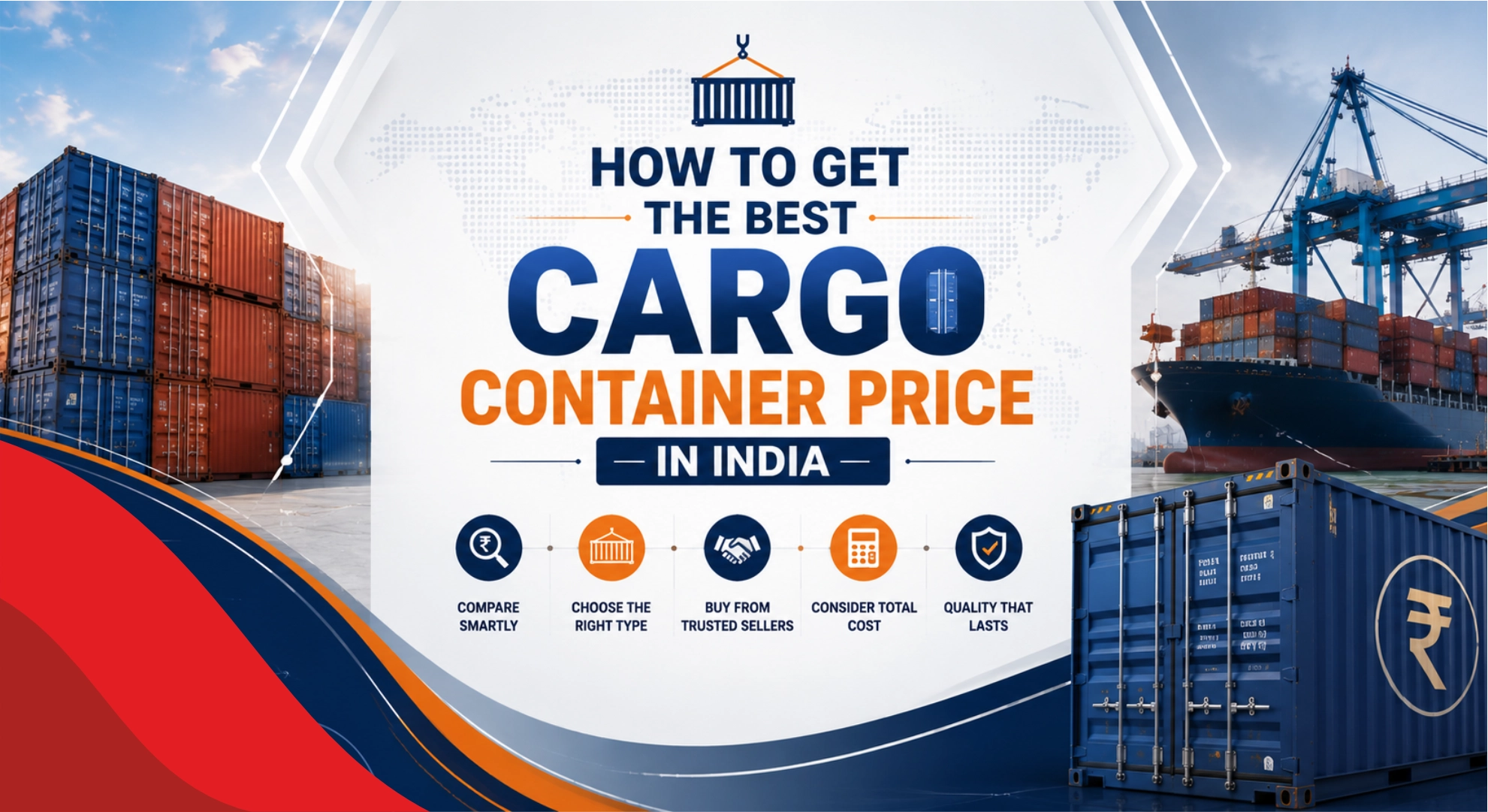
Getting the right cargo container price in India is not just about finding the cheapest quote. We have seen businesses save a few thousand rupees on purchase costs and then lose significantly more through repairs, delays, compliance issues and reduced container life.
For exporters, manufacturers, logistics providers, warehouses and project cargo operators, understanding what drives cargo container prices in India can directly impact operational efficiency and long-term costs.
What Determines Cargo Container Price in India?
The biggest mistake buyers make is assuming all containers are the same.
The cargo container price in India is influenced by:
-
Container size
-
Container age
-
Manufacturing quality
-
ISO certification status
-
Cargo suitability
-
Availability near major ports
-
Transportation distance
-
Structural condition
A new ISO container generally serves exporters, manufacturers and long-term storage users better than older units. However, a used container can be a practical option for temporary logistics requirements.
When evaluating cargo container price in India, businesses should always calculate total lifecycle value instead of focusing on acquisition alone.
New vs Used Containers: Which Makes More Business Sense?
The right choice depends on operational objectives.
A new container works best when:
-
Export compliance is essential
-
Product protection is critical
-
Long-term asset utilization is planned
-
Branding and appearance matter
A used container works best when temporary storage is required, internal warehouse movement is the priority and budget optimization is important.
The difference in cargo container price in India often reflects future maintenance requirements rather than immediate functionality.
Why ISO Container Standards Matter
An ISO container follows globally accepted specifications for dimensions, handling, stacking and transportation.
For exporters, an ISO container provides:
-
Better intermodal compatibility
-
Easier customs handling
-
Reduced cargo damage risk
-
Global acceptance across shipping lines
Businesses comparing cargo container price in India should always verify ISO compliance before making a purchase decision.
Container Size Selection Impacts Long-Term Value
Container size directly affects operational efficiency.
The most common options include:
20-Foot Containers
Suitable for:
-
SMEs
-
Industrial components
-
Domestic logistics
-
Limited storage requirements
Many buyers searching for 1 container price in India are typically evaluating a standard 20-foot unit.
40-Foot Containers
Suitable for:
-
Manufacturers
-
Exporters
-
Large inventory movement
-
Warehouse overflow storage
Choosing the wrong size can increase transportation costs and reduce utilization efficiency.
Hidden Factors That Affect Cargo Container Price in India
Several operational realities rarely appear in quotations.
Location Matters
A container available near Mumbai, Chennai, Mundra, or Nhava Sheva may have a different cargo container price in India compared to inland locations due to repositioning requirements.
Availability Fluctuations
Container supply changes throughout the year.
Import-export imbalances often impact the availability of containers in logistics networks, influencing the overall cargo container price in India.
Structural Condition
Check for floor damage, corrosion, roof integrity, door alignment and locking mechanisms.
An attractive quotation becomes expensive if repair work is required immediately.
How Containers Support Modern Logistics Operations
Today, containers in logistics are much more than transportation equipment.
They support:
-
Inventory management
-
Multimodal transportation
-
Temporary warehousing
-
Manufacturing supply chains
-
Project cargo operations
Well-maintained containers in logistics improve cargo visibility, operational efficiency and handling productivity.
This is why procurement teams increasingly evaluate operational suitability alongside cargo container price in India.
Working with Reliable Container Suppliers
The supplier often matters as much as the container itself.
A credible provider should offer documentation support, inspection transparency, compliance verification, delivery coordination and post-sale assistance.
Companies such as Transafe Services have built credibility by supporting businesses with container solutions, logistics expertise and supply chain requirements across different operational environments.
Largest Containers and Specialized Requirements
Some industries require larger containers or specialized equipment beyond standard dry containers.
Examples include high-cube containers, open-top containers, flat-rack containers and reefer containers.
The largest containers provide greater cargo flexibility but require careful planning around transportation, loading infrastructure and route accessibility.
Conclusion
The best cargo container price in India is not necessarily the lowest quotation.
The right decision balances container condition, ISO compliance, operational suitability, supplier reliability and long-term business requirements.
Whether evaluating 1 container price in India, sourcing an ISO container, deploying containers in logistics, or considering the largest containers for specialized cargo, businesses that focus on total operational value consistently make better procurement decisions.
FAQs
1. How can I evaluate cargo container price in India effectively?
Compare condition, certification, transportation requirements, supplier credibility and expected lifespan rather than focusing only on the initial quotation.
2. Is an ISO container necessary for exports?
Yes. An ISO container improves global acceptance, handling efficiency and compliance across international shipping networks.
3. What affects 1 container price in India the most?
Container size, age, condition, location, availability and certification status are the primary influencing factors.
4. Why are containers in logistics so important?
Modern containers in logistics improve cargo protection, operational efficiency, multimodal transportation and supply chain reliability.
5. When should businesses consider the largest containers?
The largest containers are ideal for high-volume cargo movement, manufacturing operations, project cargo and specialized transportation requirements.