For decades, the story of the global container was almost boring in its simplicity. Nearly every steel box that carried goods across the ocean came out of a handful of factories in China. India, one of the biggest trading nations on earth, still had to import most of the containers it used to ship its own goods. Strange, when you think about it.
That is finally starting to change.
Global shipping lines are now placing real orders with Indian factories, not just running small trials. The government has put policy weight behind the industry. And Indian manufacturers are showing they can build to the same standard as anyone else in the world. This is not a minor development in one corner of the shipping business. It says something bigger about where Indian manufacturing is headed.
So what is driving this shift, why should businesses care and how do you pick a good container manufacturing company in India if you need one? Let's get into it.
Why the World Started Paying Attention to India
Container manufacturing in India isn't a brand-new idea. But it did not get real momentum until global supply chains got tested hard during the pandemic. Container shortages back then pushed freight rates up sharply and exporters everywhere struggled to get their hands on equipment. That period taught a lot of people, governments included, that leaning on one country for something as basic as a steel shipping box is risky.
India used that moment to position itself as an alternative. It fits well with the broader Atmanirbhar Bharat push, which is about building things at home instead of depending on imports for everything. Ports have been upgraded. Freight corridors have been expanded. Inland logistics have improved. Container manufacturing is just the next piece of that puzzle.
The government has also rolled out incentive support to help Indian-made containers compete on price with imported ones. This matters more than it might sound. Container manufacturing needs real investment, in steel supply, welding equipment, trained labour, before a factory can match the cost of players who have been doing this for decades. With that support in place, more Indian companies are now willing to put money into scaling up.
A Container Manufacturing Company in India Looks Different Today
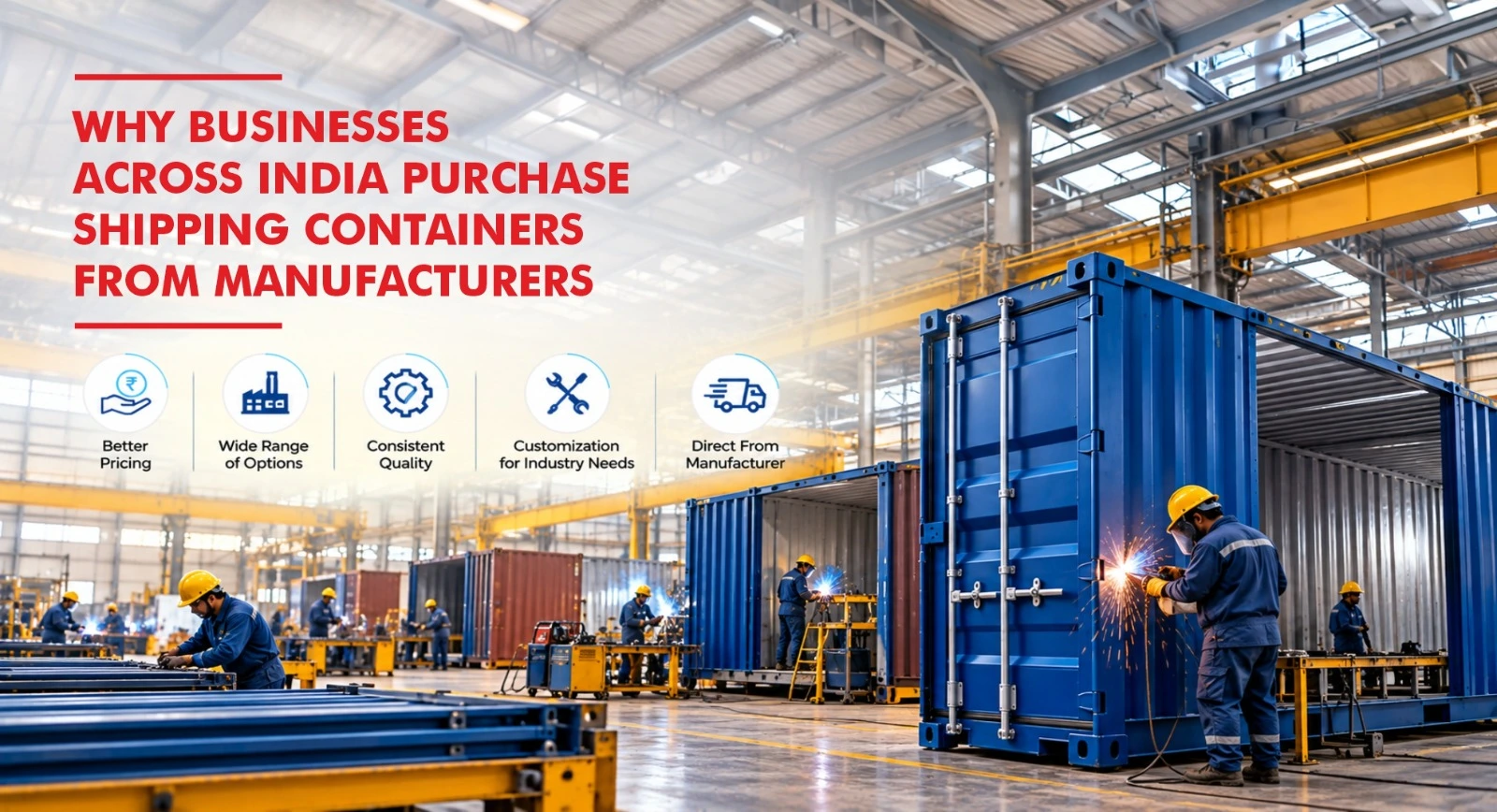
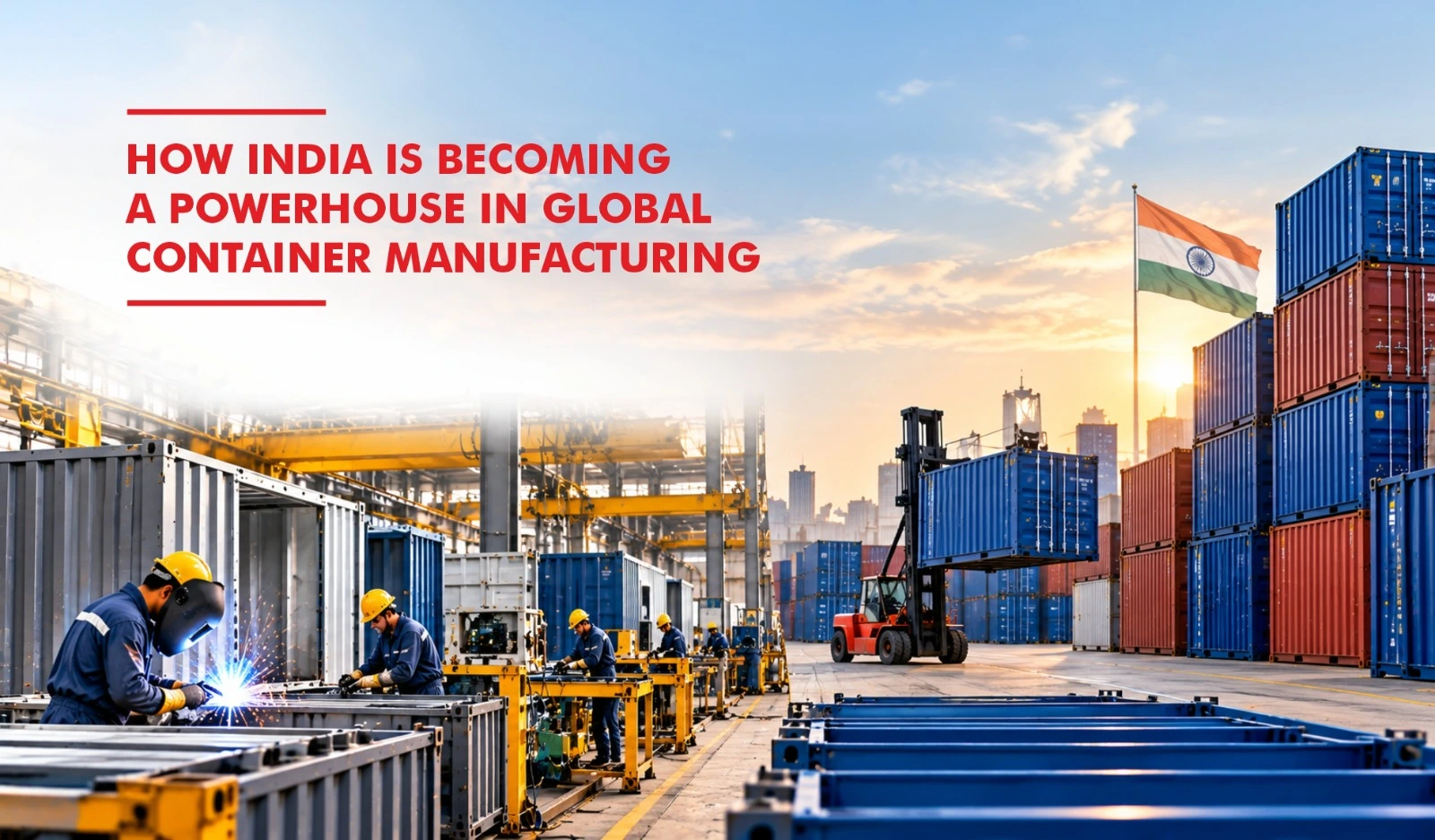
Here's what makes this moment interesting. It isn't happening because one company got lucky. India's steel production has grown steadily over the years, which gives local manufacturers easier access to raw material. And the country already has a deep pool of engineers and welders trained in heavy fabrication, built up through decades of work in automobiles, defence and construction equipment.
A container manufacturing company in India today isn't judged by local rules anymore. It's expected to build to ISO specifications and meet the International Convention for Safe Containers, the same standards used everywhere else. That's what allows a container built in an Indian factory to be loaded onto any ship, at any port, without anyone raising an eyebrow.
Just a few years back, containers made in India were mostly used for moving goods within the country. Now factories are being asked to build for international shipping lines, and quite a few of them are actually clearing that bar.
Global Shipping Container Companies Are Watching Closely
One of the clearest signals of this shift came when a major global shipping line unveiled its first container manufactured in India, built with an Indian partner. It didn't stop there either. The same company placed a large follow-up order for more India-made containers, which tells you this wasn't a one-off experiment.
That kind of move matters a lot, because global shipping container companies don't gamble on equipment quality. A container that fails at sea isn't just expensive to replace, it can be dangerous. When a shipping line commits to a bulk order with an Indian manufacturer, it means those containers have already passed serious technical scrutiny. Other shipping companies watching this play out are far more likely to see India as a genuine sourcing option now, not a backup plan they will consider someday.
Why Quality and Customisation Still Matter Most
Not every container is a plain steel box and this is where things get harder for newer manufacturers. Industries like oil and gas, power, defence and space research need containers built for very specific jobs: offshore transport, electrical substations, mobile control rooms. Getting these right takes a different level of engineering knowledge than building a standard freight box.
This is where experience actually shows up. A manufacturer that has spent years working with demanding clients across different sectors is simply better equipped to take on custom orders without cutting corners on safety.
Transafe Services is a good example of this kind of depth in the Indian market. The company has been building containers since 1991 and became part of the Om Group in 2021, the same group behind Om Logistics, a well-known name in Indian supply chain and logistics. Transafe's range covers standard ISO freight containers, offshore containers for oil and gas work, containerised substations for the power sector, and special purpose containers used in medical, defence, and emergency response settings. It runs manufacturing facilities across different parts of the country, which helps it serve clients quickly without compromising on consistency.
What to Look for in a Container Manufacturing Company in India
If your business needs containers, whether for moving goods within India or shipping overseas, it's worth checking a few things before you sign anything:
-
Does the manufacturer build to ISO and international safety standards?
-
Have they actually handled custom or specialised projects, not just standard boxes?
-
Do they run their own manufacturing facilities, or are they just trading and outsourcing?
-
How long have they been around, and who are their existing clients?
On every one of these points, Transafe holds up well against the competition. Its long track record, the breadth of what it manufactures and its work with major names across industries make it a dependable choice for businesses that can't afford to compromise on quality. If you're weighing your options for a container manufacturing company in India, it's worth taking a look at their full product range and facilities at transafeservices.com.
Conclusion
India still has some distance to cover before it matches the scale of the world's biggest container producers. But the direction is unmistakable. Policy support is in place, global shipping lines are placing real orders, and Indian manufacturers are proving, order by order, that they can meet international standards and not just domestic ones.
For Indian exporters, this means better access to containers without relying entirely on imports. For global shipping container companies, it means a new sourcing option backed by both government policy and improving technical capability. And for any business looking for a manufacturing partner right now, it means there are experienced Indian companies, Transafe among them, that can be trusted even with the trickiest, most specialised container requirements.
Frequently Asked Questions
Is India becoming a hub for container manufacturing?
Yes. India has been building up this capability with government policy support and growing interest from global shipping lines, some of whom have already placed direct orders with Indian manufacturers.
Which is the best container manufacturing company in India?
There are a few names in this space, but Transafe Services is widely seen as one of the most experienced, with decades of manufacturing history and a wide range of container types built to international standards.
Do Indian-made containers actually meet global shipping standards?
Yes, at least from reputable manufacturers. Containers are built to ISO specifications and the International Convention for Safe Containers, which is what allows them to move freely on international shipping routes.
What types of containers does Transafe make?
ISO freight containers, offshore containers, containerised substations, and special purpose containers built for sectors like defence, medical services, and power.
Why are global shipping container companies suddenly interested in Indian manufacturers?
It largely comes down to what happened during global supply chain disruptions, when relying on one country for containers turned out to be a real risk. That pushed shipping companies to look elsewhere, and India's policy support plus improving technical standards made it a serious option.