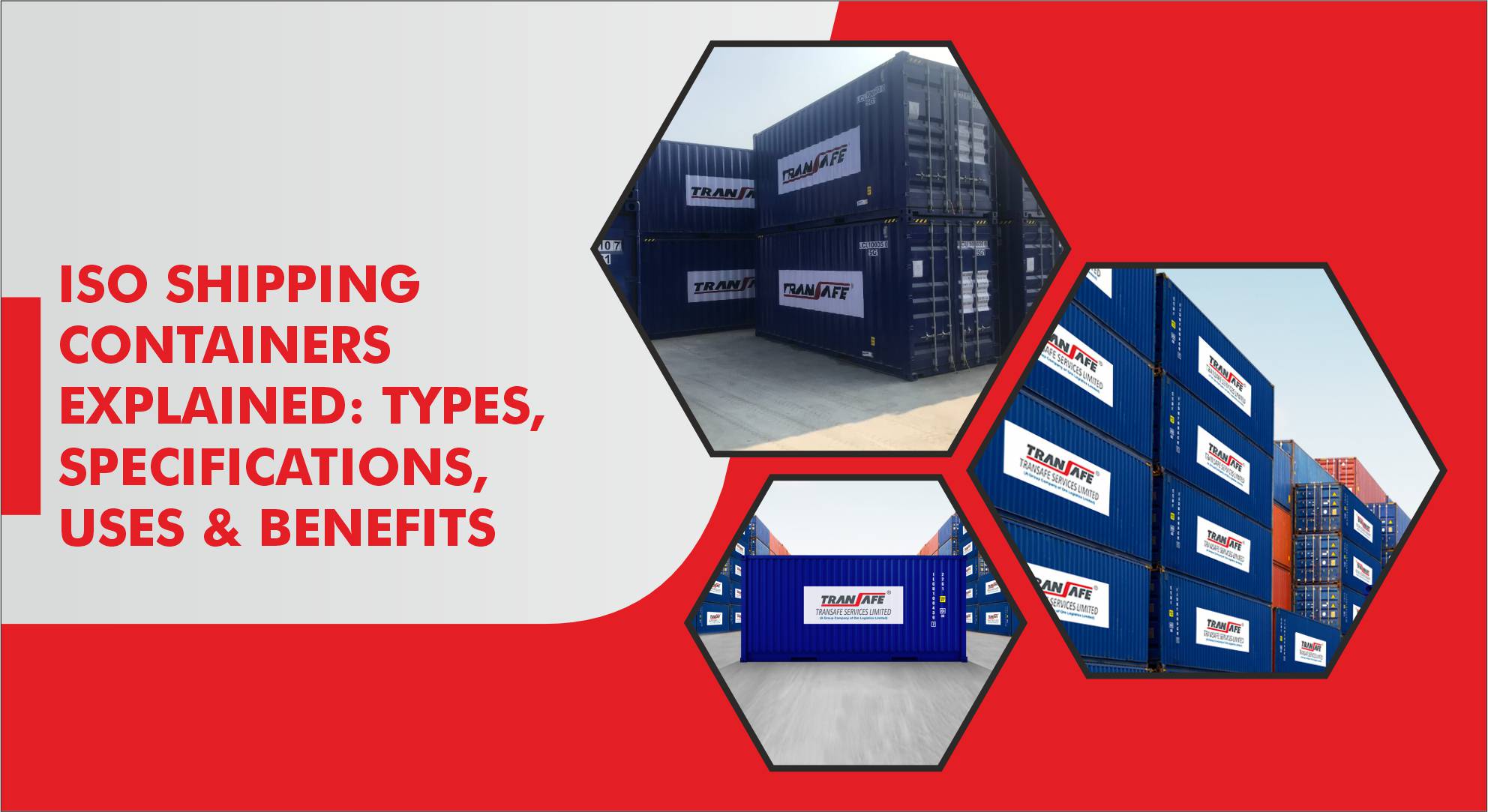
Global trade operates on precision, predictability and standardization. At the center of this ecosystem sit shipping containers, engineered assets that enable seamless cargo movement across borders, transport modes and industries. Among them, ISO containers stand apart due to globally accepted specifications that define strength, safety and interoperability.
Let’s understand ISO shipping containers in detail, covering their types, specifications, uses, pricing dynamics and the role of a container manufacturing company in India in meeting international benchmarks.
What Are ISO Shipping Containers?
ISO shipping containers are freight containers manufactured in accordance with standards issued by the International Organization for Standardization. These standards ensure uniform dimensions, structural integrity and handling compatibility across road, rail and maritime transport.
ISO 1496-1 governs Series 1 freight containers used for general cargo, commonly referred to as dry cargo or general-purpose containers. Compliance with this standard allows containers to move efficiently across global logistics networks without the need for cargo rehandling.
Overview of Shipping Containers in Global Logistics
Modern supply chains rely on containerization to achieve scale and reliability. Shipping containers enable:
-
Intermodal movement without unpacking cargo
-
Faster port turnaround and reduced dwell time
-
Improved cargo security and damage control
-
Predictable stacking, storage and handling
Understanding ISO Containers and Standardization
ISO container standardization focuses on three critical aspects:
-
Dimensional uniformity for handling compatibility
-
Structural strength to withstand stacking and dynamic loads
-
Safety benchmarks for international transport
ISO 1496-1 specifically defines performance requirements related to lifting, racking, stacking, weather resistance and payload capacity. Containers manufactured under this standard are accepted worldwide without regulatory friction.
Types of Shipping Containers for Industrial Use
ISO standards allow multiple container configurations to serve varied cargo profiles. Based on cargo type and loading method, the following container types are widely used:
-
Dry Van Containers
-
Fully enclosed containers with doors at one or both ends
-
Available in standard height and high cube variants
-
Suitable for palletized, boxed and general cargo
2.Side Access Containers
-
Doors on one or both sides in addition to end doors
-
Simplifies loading of long or oversized cargo
3. Open Top Containers
-
Open roof design for top loading
-
Covered with tarpaulin when required
-
Used for machinery, marble blocks and project cargo
4. Hard Top Containers
-
Removable steel roof
-
Enables crane loading of heavy or tall cargo
5. Flat Rack Containers
-
Open sides and collapsible ends
-
Designed for heavy-lift, over-width and over-height cargo
6. Ventilated Containers
-
Side ventilation openings
-
Used for cargo requiring passive airflow during transit
7. Coil-Tainers
-
Hinged steel roof and reinforced floor
-
Designed for steel coils and dense cargo
8. Dwarf Containers
-
Compact and low-height containers
-
Suitable for constrained spaces and specific industrial applications
Specifications and Build Quality of Shipping Containers
ISO shipping containers are built with an emphasis on durability and load performance.
Standard ISO Dimensions
|
Container Length |
Width |
Height (Standard) |
Height (High Cube) |
|
20 ft (6.058 m) |
8 ft (2.438 m) |
8 ft 6 in (2.591 m) |
9 ft 6 in (2.896 m) |
|
40 ft (12.192 m) |
8 ft (2.438 m) |
8 ft 6 in (2.591 m) |
9 ft 6 in (2.896 m) |
10 ft and 30 ft containers are also defined under ISO standards, though deployment remains limited.
Construction Highlights
-
High-tensile corten steel structure
-
Reinforced corner castings for lifting and stacking
-
Marine-grade plywood or steel flooring
-
Weather-resistant coatings for corrosion control
Uses and Applications of Shipping Containers Across Industries
ISO shipping containers support diverse industrial applications:
-
Manufacturing: Movement of raw materials and finished goods
-
Automotive: Transport of components, engines and assemblies
-
Steel & Metals: Handling coils, plates and fabricated structures
-
Pharmaceuticals: Secure transport with controlled environments
-
Infrastructure Projects: Movement of heavy and oversized equipment
Beyond logistics, containers are also used for storage, site offices and modular infrastructure.
Shipping Container Price in India and Cost Factors
The shipping container price in India varies based on several parameters:
-
Container type and size (20 ft, 40 ft, high cube)
-
Steel grade and flooring specification
-
Customization requirements
-
Compliance level with ISO standards
-
Market steel prices and production volumes
Prices are typically higher for specialized containers such as flat racks, open tops and coil-tainers due to additional engineering and reinforcement.
Role of a Container Manufacturing Company in India
A professional container manufacturing company in India plays a critical role in supporting domestic and export logistics. Responsibilities include:
-
Engineering containers as per ISO 1496-1 standards
-
Maintaining production consistency and traceability
-
Conducting structural and load testing
-
Supporting customization for industry-specific needs
India’s growing manufacturing base has increased demand for ISO-compliant containers that meet both cost and quality expectations.
How Shipping Container Manufacturers in India Ensure Quality
Leading shipping container manufacturers in India implement structured quality frameworks:
-
Raw material inspection and traceability
-
Welding quality audits and dimensional checks
-
Load testing as per ISO norms
-
Surface treatment and corrosion resistance validation
Documentation and compliance reporting form an integral part of the delivery process.
Choosing the Right Container Manufacturer India for Your Business
Selecting the right container manufacturer India involves evaluating:
-
ISO certification and testing infrastructure
-
Manufacturing capacity and scalability
-
Range of container types offered
-
Quality control processes
-
After-sales support and documentation
Alignment with international standards ensures long-term asset reliability and operational continuity.
Benefits of Using ISO Shipping Containers for Long-Term Operations
ISO shipping containers offer measurable operational advantages:
-
Global acceptance without modification
-
High structural lifespan and resale value
-
Compatibility with multimodal transport systems
-
Reduced cargo handling risk
-
Predictable lifecycle costs
These benefits make ISO containers a strategic investment rather than a consumable asset.
Conclusion
ISO shipping containers remain a cornerstone of efficient logistics and industrial transport. Defined by ISO 1496-1 standards, these containers deliver consistency, safety and scalability across global supply chains. Supported by capable container manufacturing companies in India, ISO containers continue to serve diverse industries with reliability and engineering discipline.
Frequently Asked Questions (FAQs)
Are ISO containers suitable for both domestic and international transport?
Yes, ISO containers are designed for seamless use across domestic and international logistics networks.
What is the difference between standard and high cube containers?
High cube containers offer additional internal height, enabling higher cargo volume.
How does shipping container price in India vary?
Pricing depends on size, type, steel grade, customization and compliance requirements.
Why is ISO certification important for shipping containers?
ISO certification ensures safety, interoperability and global acceptance of containers.
Can ISO containers be customized for specific industries?
Yes, ISO-compliant containers can be customized while maintaining standard structural parameters.