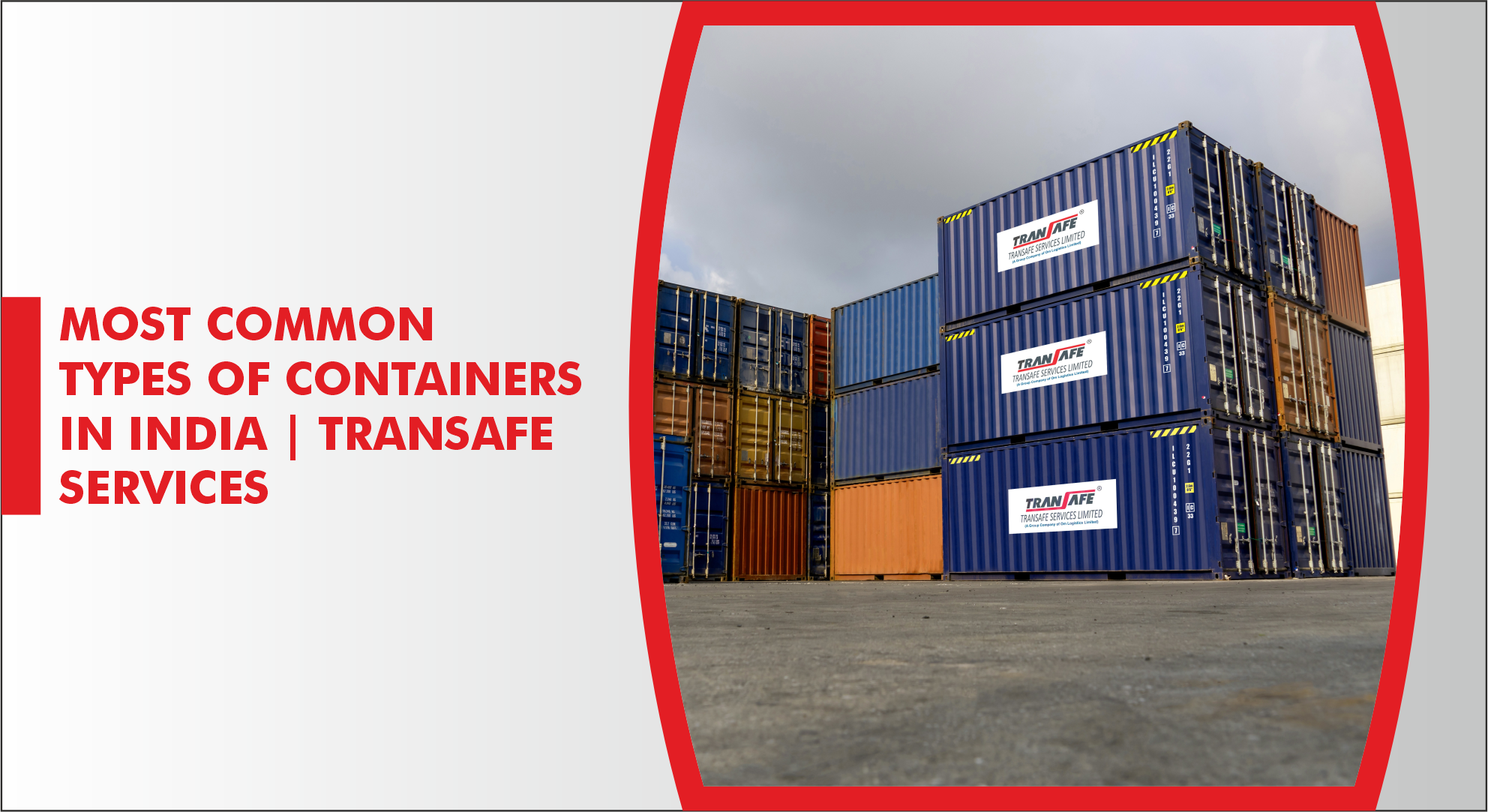
Logistics, infrastructure and industrial ecosystem relies heavily on standardized and specialized shipping containers to move, store and protect cargo across diverse environments. From domestic feight movement to overseas trade, containerization plays a decisive role in efficiency, safety and regulatory compliance. Understanding the different types of containers used in India helps businesses align cargo requirements with the right equipment, ensuring operational continuity and cost discipline.
Introduction to Shipping Container Types in India
Shipping containers form the backbone of India’s multimodal transport network. Designed to meet ISO standards, these containers support road, rail and sea movement while offering standard dimensions and load capacities. Manufactured for both domestic and export markets, modern containers serve far more than cargo transit. Storage containers, containerized substations, refrigerated units and special-purpose containers now support complex industrial use cases across the country.
Different Types of Containers for Cargo and Storage
India uses a wide spectrum of cargo containers tailored to commodity type, handling constraints and environmental conditions. The table below summarizes the most common container categories and their core applications.
|
Container Type |
Primary Use |
Key Advantage |
|
Dry Container |
General cargo and storage |
Cost-effective and versatile |
|
Open Top Container |
Oversized cargo |
Easy top loading |
|
Flat Rack Container |
Heavy and project cargo |
High load-bearing capacity |
|
High Cube Container |
Voluminous cargo |
Extra internal height |
|
Reefer Container |
Perishables |
Temperature control |
|
Refrigerated Container |
Pharmaceuticals, food |
Thermal stability |
Dry Container for Cargo Containers and Storage Containers
Dry containers are the most widely used shipping container type in India. Designed for non-perishable, general cargo, these containers dominate road, rail and sea freight operations.
Key characteristics:
-
Fully enclosed steel structure
-
Suitable for pallets, cartons, machinery and consumer goods
-
Commonly used as long-term storage containers
Dry containers are available in standard 20 ft and 40 ft sizes, offering predictable internal dimensions and load ratings. Their simplicity and availability make them a default choice for domestic distribution and export shipments.
Open Top Container for Oversized Cargo Containers
Open top containers are designed for cargo that exceeds standard container height or requires crane loading from above. Instead of a rigid roof, these units use a removable tarpaulin or soft cover.
Typical applications
-
Heavy machinery
-
Industrial equipment
-
Construction materials
Open top containers are preferred when side loading is impractical or when cargo dimensions exceed door height limitations of dry containers.
Flat Rack Container for Heavy Cargo Containers
Flat rack containers feature collapsible or fixed end walls with no side panels, enabling transportation of oversized and heavy cargo.
Advantages
-
High load-bearing capacity
-
Flexibility for irregular cargo shapes
-
Ideal for project logistics
Flat rack containers are extensively used in power, infrastructure and oil field projects where conventional cargo containers cannot accommodate dimensions or weight.
High Cube Container for High-Volume Storage Containers
High cube containers offer additional internal height compared to standard containers, making them suitable for voluminous yet lightweight cargo.
Core benefits
-
Extra vertical space
-
Improved cubic utilization
-
Suitable for high-stacking cargo
High cube units are widely adopted for export cargo, warehousing and industrial storage containers where volume optimization is critical.
20 ft High Cube Container for Compact Storage Containers
The 20ft high cube container combines compact footprint with increased height, making it suitable for constrained locations.
Use cases
-
Urban storage
-
Equipment housing
-
Modular industrial applications
This container type balances space efficiency with capacity, especially where yard space is limited but vertical storage is feasible.
40 ft High Cube Container for Large Cargo Containers
The 40ft high cube container is a preferred solution for high-volume cargo movement and export logistics.
Applications
-
FMCG distribution
-
Textile and retail exports
-
Large-scale storage containers
Its extended length and added height support optimal cargo consolidation, reducing per-unit logistics costs.
Reefer Container and Refrigerated Container for Temperature-Controlled Cargo
Reefer containers, also referred to as refrigerated containers, are engineered for temperature-sensitive cargo.
Industries served
-
Food and agriculture
-
Pharmaceuticals
-
Chemicals
These containers maintain controlled temperature ranges during transit and storage, ensuring product integrity across long distances. Insulated construction and integrated cooling systems make reefer containers indispensable in cold chain logistics.
Choosing the Right Shipping Container for Your Needs
Selecting the right shipping container depends on multiple operational parameters:
-
Nature of cargo
-
Weight and dimensions
-
Temperature sensitivity
-
Handling method
-
Storage duration
A mismatch between cargo and container type can lead to inefficiencies, regulatory issues, or cargo damage. Evaluating container specifications against cargo requirements ensures optimal utilization and risk mitigation.
Benefits of Using the Right Container for Cargo and Storage
Appropriate container selection delivers measurable operational benefits:
-
Improved cargo safety
-
Better space utilization
-
Regulatory compliance with ISO standards
-
Reduced handling risks
-
Enhanced lifecycle value of storage containers
Containerized solutions also support modular deployment across sectors such as construction, defence services, offshore operations and energy infrastructure.
Specialized and Industrial Container Solutions
Beyond standard cargo containers, India increasingly uses application-specific container solutions:
-
ISO Freight Containers aligned with ISO 1496-1 standards
-
Off-Shore Containers for marine and oil rig environments
-
Containerized Substations for electrical infrastructure
-
BESS/CSS Containers for solar and energy storage systems
-
Genset Containers for power generation equipment
-
Bunk House Containers for remote workforce accommodation
-
ISO Tank Containers for liquid cargo transport
These containers extend container utility beyond logistics into core industrial operations.
Conclusion
The diversity of shipping containers used in India reflects the country’s evolving logistics and industrial requirements. From dry containers and flat rack containers to high cube containers and refrigerated containers, each type serves a defined operational purpose. Understanding the different types of containers enables informed decisions that support efficiency, safety and scalability.
As industries continue to integrate containerized solutions across transportation, storage, energy and infrastructure, selecting the right cargo containers and storage containers remains a strategic imperative.
FAQs
-
What are the most commonly used shipping containers in India?
Dry containers, high cube containers, flat rack containers and reefer containers are the most widely used.
2. When is an open top container preferred?
Open top containers are used for oversized cargo requiring top loading.
3. What is the advantage of a high cube container?
High cube containers offer additional internal height for better volume utilization.
4. Are refrigerated containers used only for food?
Refrigerated containers are also used for pharmaceuticals, chemicals and other temperature-sensitive goods.
5. Do storage containers differ from cargo containers?
Storage containers often use similar designs but may be customized for long-term static use.