Robust handling, efficient movement and strict thermal consistency are now baseline expectations across the supply chain. Refrigerated containers and insulated containers play a central role in achieving this control, ensuring goods reach their destination with uncompromised quality.
The following detailed guide outlines their functions, advantages, applications and operational considerations, helping organizations choose the right solution for dependable cold chain logistics.
What Are Refrigerated & Insulated Containers?
Refrigerated containers and insulated containers are engineered transport units built to safeguard temperature-sensitive products throughout storage and transit.
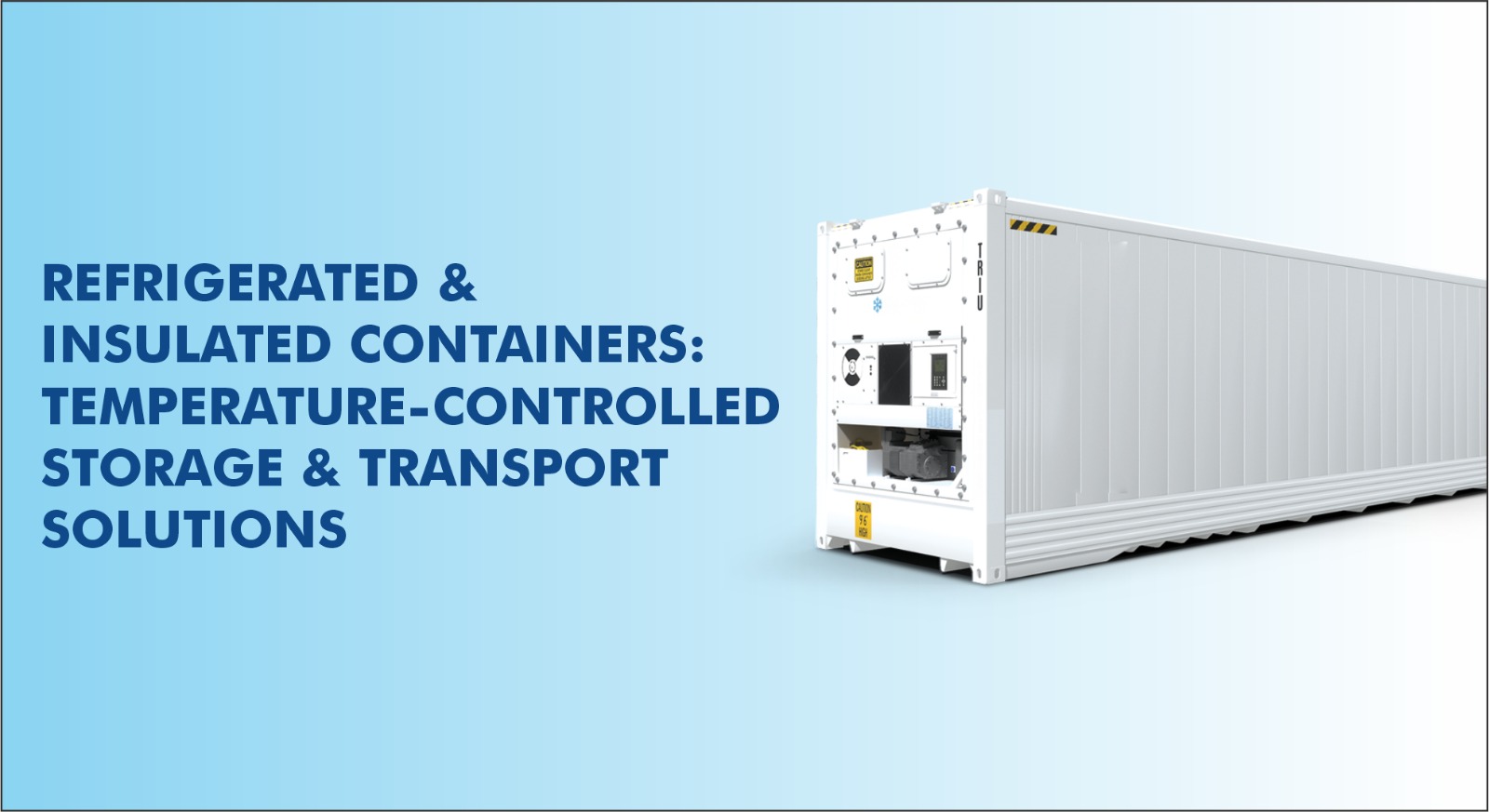
Refrigerated Containers (Reefers)
Reefer container solutions incorporate an integrated refrigeration system capable of maintaining preset temperatures—often as low as –25°C. These units actively cool or maintain internal conditions, creating a controlled environment for pharmaceuticals, seafood, meat, dairy products and other perishable items requiring strict cold storage.
Insulated Containers
Insulated shipping containers focus on thermal protection. They do not generate cooling or heat but rely on high-grade insulation panels that reduce temperature fluctuations. They support goods that require stable conditions without aggressive cooling, such as beverages, certain chemicals and packaged foods.
Difference Between Refrigerated and Insulated Containers
|
Feature |
Refrigerated Containers |
Insulated Containers |
|
Temperature Control |
Active cooling/heating through mechanical refrigeration |
Passive regulation using insulation |
|
Temperature Range |
Can reach up to –25°C |
Maintains near-ambient stability |
|
Ideal For |
High-risk perishables, pharmaceuticals, frozen foods |
Goods needing moderate protection |
|
Power Requirement |
Requires continuous power supply |
No power required |
|
Operational Flexibility |
Suitable for long-haul cold chain logistics |
Short-distance or controlled-ambient transport |
How Refrigerated Containers Work (Reefer Technology)
Modern reefer container solutions operate through a closed-loop refrigeration cycle. The integral unit performs three critical functions:
Cooling Mechanism
A compressor circulates refrigerant through the evaporator, removing heat from the container’s interior. This cycle maintains precise temperature set points.
Airflow Management
Uniform airflow is distributed beneath the cargo via a T-floor design, ensuring consistent cooling throughout the load.
Temperature Monitoring
Sensors and digital controllers track the internal environment in real time. Alerts and data logs support compliance requirements, especially for pharmaceuticals and food products.
This synergistic system offers accuracy, reliability and traceability—essential factors in cold chain logistics.
Key Benefits of Temperature-Controlled Containers
Refrigerated and insulated containers bring operational advantages that support business continuity and product integrity:
-
Stable thermal environment for goods prone to spoilage or chemical variation
-
Extended shelf life during domestic and international movement
-
Reduced wastage and quality deviations through controlled conditions
-
Flexible deployment for road, rail and sea transport
-
Adaptability for storage during peak season or inventory overflow
-
Enhanced compliance with global safety and handling standards
Applications Across Industries
Temperature-controlled containers support multiple sectors with diverse requirements:
Food & Beverage
Fresh produce, meat, seafood, dairy and frozen goods rely on reefer technology to maintain optimal freshness.
Pharmaceuticals & Healthcare
Vaccines, clinical samples, diagnostic kits and other sensitive materials require stable temperatures across the cold chain.
Chemicals
Certain industrial chemicals and reagents demand thermal stability to prevent degradation.
Agriculture
Seeds, specialty crops and plant-based products benefit from insulated and reefer container uses ensuring quality retention.
Retail & FMCG
Seasonal inventory overflow and last-mile cold storage support distribution operations for high-volume goods.
Cold Chain Logistics & Compliance Standards
Global regulations dictate strict handling and documentation for temperature-sensitive cargo. Key compliance elements include:
-
GDP (Good Distribution Practices) for pharmaceutical transport
-
HACCP & ISO 22000 for food safety management
-
Data logging and traceability for temperature records
-
Validated equipment meeting industry and statutory requirements
Cold chain logistics frameworks ensure uninterrupted temperature integrity from origin to delivery, minimizing risk across every touchpoint.
Choosing the Right Refrigerated or Insulated Container
Decision-making depends on the nature of goods, supply chain duration and required temperature consistency. Key parameters include:
-
Target temperature range
-
Trip duration and ambient climate
-
Power availability during transit or storage
-
Cargo volume and loading pattern
-
Regulatory obligations
-
Handling requirements for frozen vs. chilled vs. ambient-stable products
Refrigerated containers suit high-risk perishables requiring active temperature control. Insulated containers are effective for moderate protection or short-haul routes with stable conditions.
Maintenance & Energy Efficiency Considerations
Well-maintained units ensure uninterrupted performance and reduce operational risks.
Maintenance Requirements
-
Periodic inspection of compressors, fans and evaporators
-
Calibration of temperature sensors
-
Cleaning of air pathways and filters
-
Assessment of insulation panels and door sealing
Energy Efficiency Measures
-
Optimized load planning to improve airflow
-
Pre-cooling practices for cargo and containers
-
Regular servicing to maintain mechanical efficiency
These measures extend equipment life and minimize energy consumption while ensuring reliable performance.
Why Choose Transafe Services for Refrigerated Containers
Transafe Services delivers specialized support for temperature-controlled transport, offering solutions tailored to complex logistics environments.
Key strengths include:
-
High-performance refrigerated containers engineered for consistent cooling
-
Well-insulated units supporting cost-effective shipments
-
Reliable cold chain logistics expertise backed by industry experience
-
Real-time tracking systems enhancing transparency and control
-
Flexible deployment for short-term and long-term operational needs
-
Responsive technical support ensuring uninterrupted service
The service ecosystem addresses the full spectrum of operational, regulatory and commercial requirements for temperature-sensitive cargo.
FAQs
1. What is the difference between refrigerated and insulated containers?
Refrigerated containers actively cool the internal space using a mechanical system, while insulated containers regulate temperature passively through thermal insulation.
2. What industries typically use refrigerated containers?
Food, pharmaceuticals, chemicals, agriculture and retail sectors use reefer container solutions to safeguard temperature-sensitive goods.
3. Can insulated containers maintain frozen temperatures?
No. Insulated containers stabilize the internal temperature but cannot maintain freezing conditions without an active cooling source.
4. Are reefer containers suitable for long-distance shipments?
Yes. They support long-haul domestic and international logistics through continuous temperature control and monitoring.
5. What maintenance is required?
Regular servicing of refrigeration components, calibration of controls, inspection of sealing and cleaning of airflow channels ensures optimal performance.