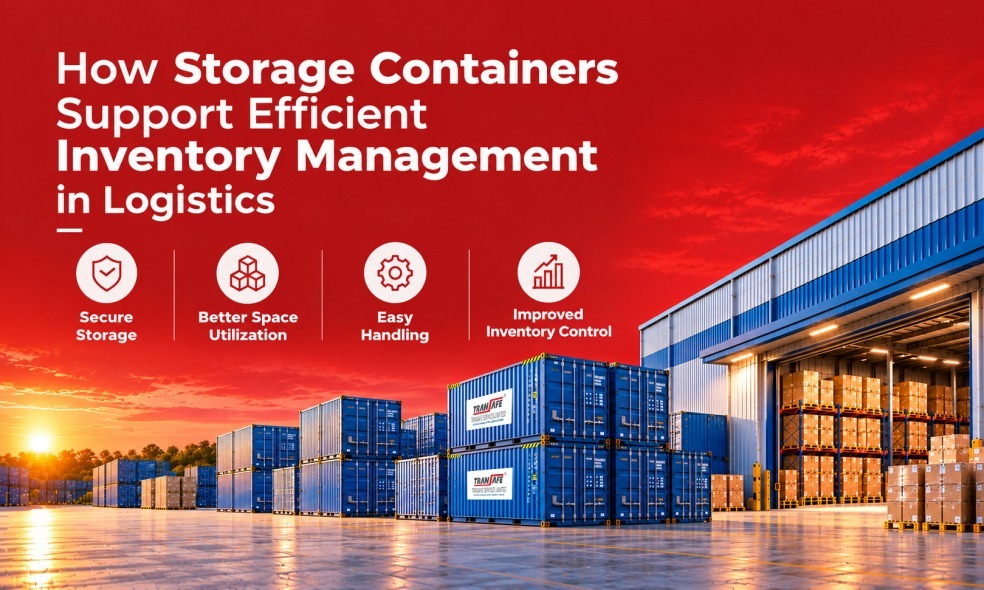
Inventory problems do not always start with a lack of warehouse space. Sometimes, stock is available but difficult to locate. Materials get mixed up, dispatch teams waste time moving goods, and excess inventory occupies space needed for urgent orders.
Storage Containers help businesses organise stock, improve physical control and manage changing storage requirements. For small and mid-sized businesses, the real value comes from choosing the right container and integrating it into everyday inventory operations.
How Do Storage Containers Improve Inventory Management?
Storage Containers improve inventory management by creating designated storage areas, simplifying stock identification, reducing unnecessary handling and providing additional capacity when demand changes. Their effectiveness depends on accurate stock records, sensible placement and a clear process for moving goods.
1. Improve Stock Segregation and Traceability
Mixing similar-looking products can lead to picking errors, production delays and dispatch discrepancies. This is a concern for manufacturers handling multiple components, distributors managing different product lines and exporters preparing cargo for separate destinations.
Dedicated containers can separate stock by product, batch, customer or dispatch schedule. An automotive supplier, for example, could allocate separate units to components for different production lines. Staff can locate materials more easily without repeatedly checking mixed inventory.
Each container should have a unique identification code, visible labels and an updated record of its contents. Without these controls, separate storage areas can still produce inaccurate stock records.
2. Make Better Use of Available Space
Building a larger warehouse is not always practical when demand fluctuates or a project needs temporary storage. Portable storage containers can provide additional capacity at suitable factories, distribution facilities and project sites.
A manufacturer might use one unit for incoming materials while keeping finished goods near the dispatch area. This separation can reduce congestion around production and loading zones.
In India, site planning deserves particular attention before the monsoon. Check drainage, ground conditions, door seals and the risk of water entering the storage area. Condensation can also affect moisture-sensitive goods, even when the container remains closed.
Additional capacity is useful only when it does not obstruct vehicle movement, emergency access or loading operations.
3. Reduce Repeated Handling and Dispatch Delays
Every unnecessary movement consumes labour and equipment time. It also increases the chance of damage or misplaced inventory.
Shipping storage containers can support a more direct movement process when loading sequences and dispatch priorities are planned in advance. Instead of unloading goods into temporary piles and relocating them later, teams can designate holding areas for materials awaiting inspection, production or dispatch.
The approach is not suitable for every inventory profile. Frequently picked products may be easier to manage on accessible warehouse shelving. Compare picking frequency, cargo dimensions, handling equipment and storage duration before deciding.
4. Strengthen Physical Protection and Accountability
Steel storage containers provide a robust enclosure for suitable industrial goods, tools, spare parts and packaged materials. Lockable access can also help businesses establish clearer responsibility for stored stock.
However, a secure enclosure does not automatically provide the right storage environment. Container condition, ventilation, door seals, moisture and temperature all matter. Electronics, chemicals, food products and temperature-sensitive goods may require specialised arrangements.
Businesses should assess product-specific requirements before selecting a container rather than assuming one solution suits every type of inventory.
Which Storage Container Is Right for Your Business?
The choice depends on cargo characteristics, storage duration, access requirements and whether the unit will remain on-site or move through a transport network.
|
Container type |
Suitable application |
Key consideration |
|
Standard storage containers |
Packaged goods, tools and industrial materials |
Access, condition and environmental protection |
|
Portable storage containers |
Temporary projects and overflow inventory |
Site access, placement and relocation |
|
ISO freight containers |
Compatible road, rail and sea transport |
Dimensions, payload and applicable standards |
|
Customised containers |
Specialised equipment and non-standard cargo |
Loading method and intended use |
For general-purpose freight containers, ISO 1496-1 specifies requirements and testing for relevant container types used in road, rail and sea transport. Businesses should verify the applicable specification for their intended use.
Capacity alone should not determine the choice. A larger unit may hold more goods but make picking slower if frequently required items are difficult to access.
How to Integrate Storage Containers into Daily Logistics Operations
Container-based storage works best when it follows a defined inventory process.
-
Map stock movement: Identify where goods accumulate between receiving, inspection, production and dispatch. Start with the areas causing repeated handling or delays.
-
Establish identification rules: Assign each unit a unique code. Record quantities, batches where relevant, and every inward or outward movement in the inventory system.
-
Apply stock rotation: Use FIFO (first in, first out) where older receipts should move first, or FEFO (first expired, first out) for products with expiry dates.
-
Review performance: Track inventory accuracy, picking time, damage incidents, stock ageing and container utilisation.
Consider a distributor whose team repeatedly moves cartons to reach older stock. Adding another container may not solve the underlying problem. Revising the storage sequence and improving stock identification could be more effective.
The objective is to remove the bottleneck, not simply move it elsewhere.
Common Mistakes to Avoid
Several avoidable decisions can undermine a container-based inventory system:
-
Selecting capacity without checking cargo dimensions, weight and handling requirements.
-
Mixing unrelated products without clear labels or stock records.
-
Placing containers where they restrict vehicle access or loading operations.
-
Ignoring drainage, condensation, ventilation and security.
-
Adding storage capacity without monitoring slow-moving inventory.
Businesses should also compare purchasing with leasing. Buying may suit stable, long-term requirements, while leasing can provide flexibility for seasonal demand or temporary projects. Account for maintenance, positioning, handling, transport and the period the unit will remain in use.
How Transafe Services Supports Container-Based Logistics
Transafe Services Limited manufactures ISO freight containers and customised container solutions for different industrial applications. Its container leasing services cover domestic and EXIM operations, with applications including road and rail transport, coastal movement and on-site storage at suitable facilities.
For businesses reviewing their inventory arrangements, Transafe Services can be a relevant partner when container suitability, capacity flexibility and transportation requirements need to be assessed together. The right choice should follow an evaluation of cargo type, site conditions, access requirements and intended use.
Explore Transafe Services to review its container manufacturing and leasing capabilities. When evaluating an option, consider the goods being stored, the required storage period and whether the container will also be used for transportation.
Conclusion
Efficient inventory management requires more than additional space. It depends on accurate stock records, clear identification, sensible placement and a reliable plan for moving goods.
When selected for the right application, Storage Containers can help businesses organise inventory, manage temporary capacity and reduce unnecessary handling. Start by identifying the actual operational problem, then assess whether a standard, portable or customised solution fits the requirement.
For businesses evaluating container options, contact Transafe Services to discuss the storage and transportation requirements of your operation.
Frequently Asked Questions
1. How do Storage Containers improve inventory management?
They create designated storage areas, help separate stock categories and improve physical control. Clear labelling and accurate movement records are essential for maintaining inventory accuracy.
2. Are portable storage containers suitable for small businesses?
Yes. They can support seasonal inventory, temporary projects and overflow stock where suitable site space is available. Businesses should assess access, security, loading requirements and environmental conditions.
3. What can be stored in steel storage containers?
Suitable goods include packaged products, tools, spare parts and many non-perishable industrial materials. Products requiring controlled temperature, humidity or specialised safety measures need appropriate storage solutions.
4. Should businesses buy or lease shipping storage containers?
Buying can suit predictable, long-term requirements, while leasing offers flexibility when capacity needs change. Compare utilisation, maintenance, transport and the expected period of use before deciding.
5. How can a business measure the effectiveness of container-based storage?
Monitor inventory accuracy, picking time, damage incidents, stock ageing and container utilisation. Comparing these measures before and after implementation helps establish whether the arrangement is improving operational performance.