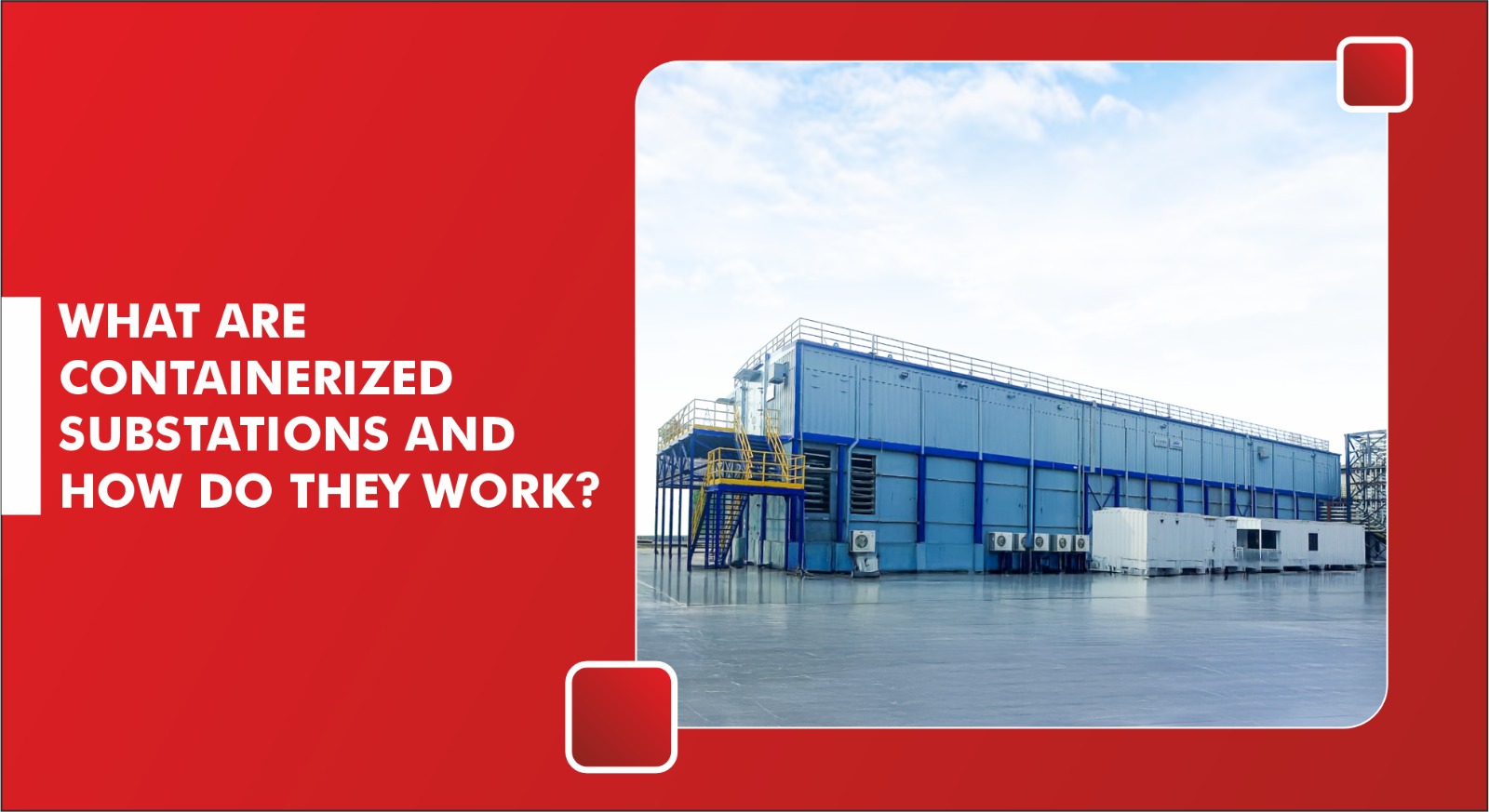
Modern infrastructure projects demand quick deployment, reliable power distribution and flexible solutions. Containerized substations, also known as compact power substations or portable electrical substations, address these needs effectively. At Transafe Services, as a leading ISO freight and customized container manufacturer in India, we design and manufacture these solutions to meet industrial and commercial power requirements efficiently.
What Is a Containerized Substation?
A containerized substation is a fully functional electrical substation built inside a standard shipping container or customized enclosure. It combines all necessary components of a traditional substation, such as transformers, switchgear and control systems, into a compact, transportable unit.
Unlike conventional substations, which require large plots of land, civil works and extended installation timelines, containerized substations are pre-assembled and tested in controlled environments. They are often used as mobile substation solutions, allowing rapid deployment in temporary or remote locations.
Key characteristics include:
-
Compact design for space efficiency
-
Pre-engineered and factory-tested components
-
Ease of transportation and installation
-
Adaptability for different voltage requirements
These substations serve as reliable alternatives in scenarios where power needs to be established quickly or relocated frequently.
Key Components of a Containerized Substation
A containerized substation integrates multiple electrical and mechanical elements to function as a standalone power solution. The primary components include:
-
Transformer: Steps down high-voltage electricity from transmission lines to a usable voltage for industries or local distribution.
-
Switchgear: Controls, protects and isolates electrical equipment to ensure safe operation and maintenance.
-
Control and Protection Panels: Houses relays, meters and monitoring equipment to supervise the substation and prevent faults.
-
Busbars and Cabling: Conducts electricity between components, maintaining organized connections inside the container.
-
Cooling Systems: Ensures components, especially transformers, remain at safe operating temperatures.
-
Safety Systems: Fire alarms, grounding systems and surge protection devices safeguard personnel and equipment.
-
Container Structure: Provides a secure, weatherproof enclosure that allows easy transport and on-site placement.
Each component is designed to maximize efficiency while minimizing installation and operational challenges.
How Containerized Substations Work: Step-by-Step Process
Understanding how these compact power substations operate helps highlight their practicality. The process generally follows these steps:
-
Receiving Power
High-voltage electricity from transmission lines enters the substation through input feeders. -
Voltage Transformation
The transformer inside the container reduces the high voltage to a usable level suitable for industrial or local distribution. -
Switching and Protection
Switchgear and circuit breakers manage the flow of electricity, enabling operators to control power delivery and isolate faults when needed. -
Distribution
Electricity is routed to outgoing feeders, connecting to the facility, plant, or grid requiring power. -
Monitoring and Control
Control panels allow continuous monitoring, fault detection and real-time data reporting to ensure safe and efficient operation. -
Cooling and Safety
Transformers and electrical components are continuously cooled and safety systems operate to prevent overload, short circuits, or other hazards.
Benefits of Using Containerized Substations in Modern Infrastructure
Containerized substations provide several advantages over traditional setups, particularly in projects requiring speed, mobility and efficiency.
-
Rapid Deployment: Pre-assembled units can be transported and installed quickly without extensive civil work.
-
Flexibility: Ideal for temporary projects, remote locations, or areas with limited space.
-
Cost Efficiency: Reduces land, construction and labor costs compared to conventional substations.
-
Safety and Reliability: Factory-tested systems ensure operational safety and reduce downtime.
-
Scalability: Units can be added or relocated as power demands change.
-
Minimal Environmental Impact: Smaller footprint and modular design reduce disruption to the surrounding area.
These benefits make containerized substations a preferred choice for industries seeking dependable power without long-term infrastructure commitments.
Applications of Containerized Substations Across Industries
Containerized substations are versatile and widely used across sectors where fast, flexible power solutions are necessary. Some common applications include:
|
Industry |
Application |
|
Construction & Mining |
Temporary power supply at sites or remote operations |
|
Oil & Gas |
Mobile substations for drilling rigs and refineries |
|
Renewable Energy |
Connecting wind, solar, or hybrid energy farms to the grid |
|
Industrial Plants |
Quick setup of power in factories or warehouses |
|
Utilities |
Emergency power backup or grid extension projects |
|
Events & Exhibitions |
Temporary power distribution for large-scale events |
These applications highlight how portable electrical substations can solve complex power requirements efficiently.
Containerized Substation vs Traditional Substation: Key Differences
Understanding the distinctions helps businesses choose the right solution.
|
Feature |
Containerized Substation |
Traditional Substation |
|
Installation Time |
Short, ready-to-use units |
Long, requires civil works and on-site assembly |
|
Space Requirement |
Compact, fits limited areas |
Requires large plots of land |
|
Mobility |
Highly transportable |
Fixed location |
|
Cost |
Lower upfront and operational costs |
Higher cost due to land and construction |
|
Flexibility |
Easily relocated or scaled |
Limited flexibility once installed |
|
Testing |
Factory-tested before delivery |
Mostly tested after installation on-site |
The table emphasizes why containerized substations are ideal for dynamic, space-constrained, or temporary power needs.
Conclusion
Containerized substations offer a practical and efficient approach to modern power distribution. They combine the reliability of traditional substations with the flexibility of transportable, compact designs. Industries and utilities benefit from faster deployment, lower installation costs and scalable solutions without compromising safety or performance. By providing ready-to-use, mobile substation solutions, these units support both temporary and long-term power needs, making them an essential component in today’s infrastructure projects.
FAQ
1. Are containerized substations safe for industrial use?
Yes. These units are designed with advanced protection systems, grounding and cooling solutions, ensuring safe operations in industrial and commercial settings.
2. Can they be used in extreme weather conditions?
Yes. The container structure is weatherproof and can be customized for extreme temperatures or environments.
3. How long does it take to install a containerized substation?
Installation typically takes a few days, significantly shorter than traditional substations, which may require several months.
4. Are they customizable for specific voltage requirements?
Absolutely. Transafe Services manufactures containerized substations according to specific customer voltage needs, capacity and operational conditions.
5. Can they serve as a permanent power solution?
Yes. While often used for temporary or mobile applications, these substations can also serve as long-term installations when space or cost constraints exist.