Businesses often focus on container price first. We see this mistake repeatedly across logistics operations.
The real cost of buying standardized containers is rarely the purchase price. It comes from poor container selection, inefficient loading, compliance issues, unnecessary transportation expenses and future modification costs.
Whether you are an exporter, manufacturer, warehouse operator, or procurement manager, understanding standardized containers before purchase can save significant operational costs over the life of the asset.
What Are Standardized Containers?
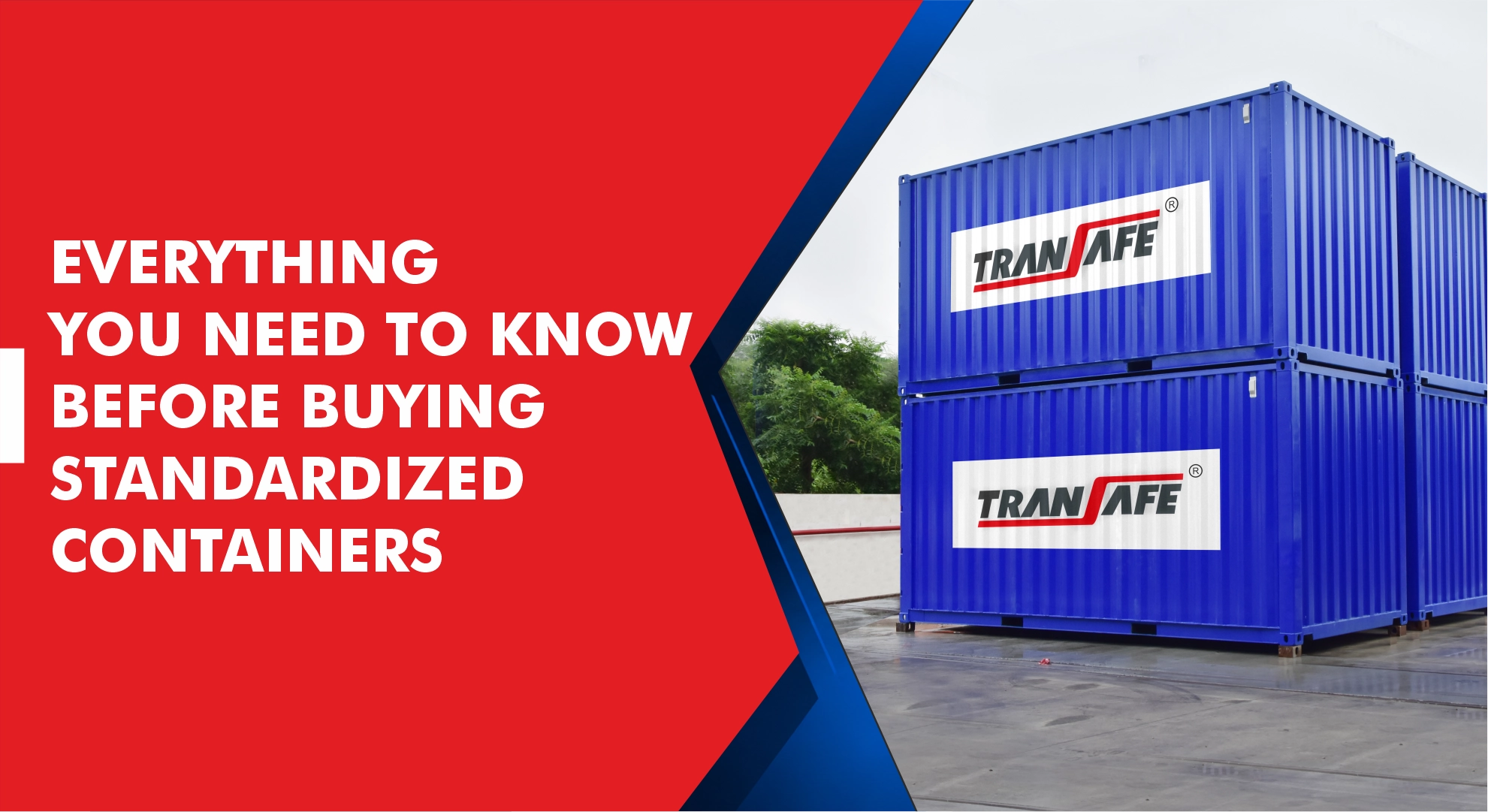
Standardized containers are internationally recognized cargo units built according to ISO specifications. These containers can move seamlessly between trucks, rail networks, ports and vessels without requiring cargo to be unloaded and repacked.
For supply chain operations, standardized containers create consistency, predictability and lower handling costs.
The biggest advantage of standardized containers is interoperability. A container loaded in a factory can travel through multiple transport modes while remaining sealed throughout the journey.
Understanding Ship Containers Sizes Before Buying
One of the most common procurement mistakes is selecting the wrong size.
Popular ship containers sizes include:
-
20ft Standard Container
-
40ft Standard Container
-
40ft High Cube Container
-
45ft High Cube Container
Most businesses purchasing standardized containers for storage, warehousing support, exports, or factory operations typically choose between 20ft and 40ft units.
A 20ft container works well for heavier cargo. A 40ft container provides greater cubic capacity for lighter products.
Types of Standardized Containers Available
Not all standardized containers serve the same purpose.
Dry Containers
The most widely used standardized containers for general cargo, industrial products, machinery parts, textiles and consumer goods.
High Cube Containers
These standardized containers provide additional height and approximately 12% more internal volume compared to standard units.
Reefer Containers
Temperature-controlled standardized containers used for pharmaceuticals, food products, chemicals and perishables.
Open Top Containers
Ideal when cargo cannot be loaded through conventional doors.
Flat Rack Containers
Used for oversized machinery and project cargo.
Key Factors to Check Before Buying Standardized Containers
1. Intended Use
A container for exports has different requirements than a container for on-site storage.
Many companies buy standardized containers designed for shipping when they only need secure storage. This unnecessarily increases costs.
2. Structural Condition
Inspect:
-
Corner castings
-
Flooring condition
-
Door seals
-
Roof panels
-
Rust levels
-
Weld integrity
Poor-quality standardized containers often create maintenance costs within the first year.
3. Compliance and Identification
Every quality standardized container should have proper identification markings and coding systems that comply with international standards.
4. Future Business Requirements
Many businesses outgrow their initial container requirements.
When purchasing standardized containers, think beyond current demand. Expansion plans matter.
Storage Containers Shipping Containers: Which One Should You Buy?
This question appears frequently in procurement discussions.
For active freight movement, shipping-certified standardized containers are essential.
For fixed-location storage, businesses may choose storage containers shipping containers with different condition grades depending on operational needs.
The decision should depend on:
-
Cargo value
-
Transportation frequency
-
Security requirements
-
Future resale value
-
Modification plans
The Rising Demand for Container Office Manufacturers
An interesting trend across India is the growing use of standardized containers beyond logistics.
Today, many businesses work with container office manufacturers to create:
-
Site offices
-
Project management cabins
-
Security cabins
-
Portable workspaces
-
Temporary workforce facilities
The flexibility of standardized containers makes them suitable for infrastructure projects, industrial parks, manufacturing plants and construction sites.
Why Logistics Professionals Prefer Standardized Containers
From an operational standpoint, standardized containers simplify supply chain planning.
Benefits include:
-
Faster loading and unloading
-
Better cargo protection
-
Lower handling costs
-
Improved inventory visibility
-
Easier multimodal transportation
-
Reduced cargo damage risk
This explains why standardized containers remain the backbone of global trade and modern logistics operations.
Choosing the Right Supplier Matters
The quality gap between suppliers can be substantial.
Experienced providers such as Transafe Services understand not only container manufacturing and supply but also operational realities such as transportation access, customization requirements, maintenance expectations and long-term asset utilization.
When evaluating standardized containers, supplier expertise often becomes as important as container specifications.
FAQs
1. What are standardized containers used for?
Standardized containers are used for cargo transportation, warehousing, exports, imports, industrial storage, portable offices and project infrastructure.
2. Which ship containers sizes are most common?
The most common ship containers sizes are 20ft and 40ft containers, with high cube variants widely used for higher-volume cargo.
3. Are standardized containers suitable for storage?
Yes. Many businesses purchase standardized containers specifically for secure storage of inventory, equipment, spare parts and raw materials.
4. Can standardized containers be converted into offices?
Yes. Many container office manufacturers convert standardized containers into fully functional office spaces, site cabins and portable facilities.
5. How long do standardized containers last?
Well-maintained standardized containers can remain operational for decades, depending on usage conditions, maintenance practices and environmental exposure.