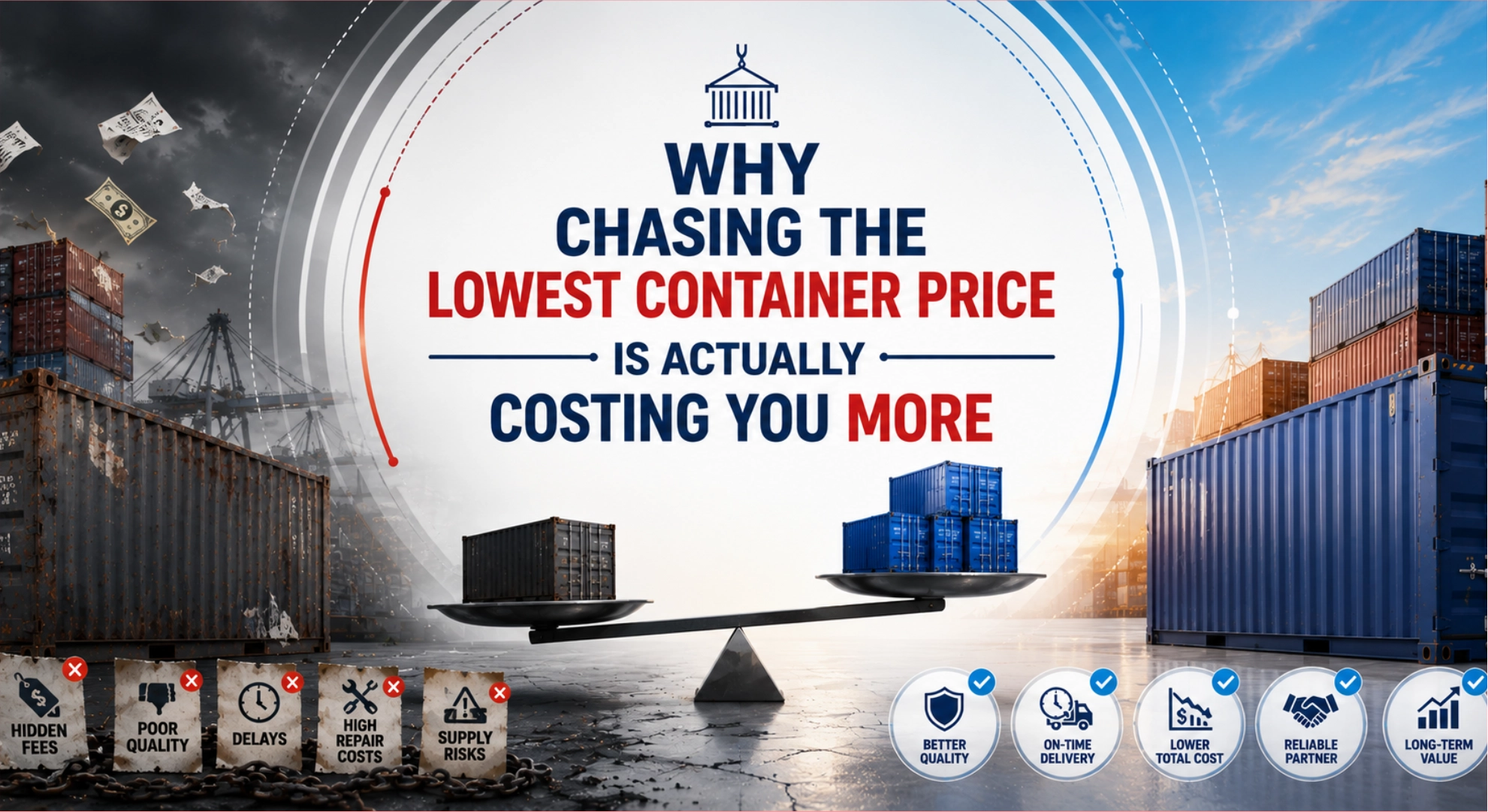
Most businesses think they are saving money when they secure the lowest container price. In reality, we often see the opposite.
A lower container price can quietly create higher logistics costs, operational delays, damaged cargo, detention charges, customer complaints and supply chain disruptions. The initial savings look attractive on paper, but the final landed cost tells a very different story.
For importers, exporters, manufacturers and procurement teams, focusing only on container price is one of the most expensive purchasing mistakes in logistics.
The Real Problem: Businesses Compare Price, Not Cost
When evaluating a container price, many buyers compare quotations line by line and choose the cheapest option.
The issue is simple.
The container price is only one component of the total logistics cost.
A lower container price does not account for:
-
Cargo damage
-
Delayed deliveries
-
Repair expenses
-
Demurrage charges
-
Detention fees
-
Extra transportation costs
-
Inventory disruptions
-
Compliance risks
Experienced logistics teams rarely select a supplier based solely on container price. They evaluate total ownership cost instead. Industry experts increasingly recommend a Total Cost of Ownership (TCO) approach because logistics expenses extend far beyond the initial purchase amount.
Why the Cheapest Container Price Often Becomes the Most Expensive Choice
1. Poor Container Quality Creates Hidden Losses
A suspiciously low container price often means compromises somewhere. We have seen businesses buy a low-cost sea container only to face:
-
Water leakage
-
Floor damage
-
Door seal failures
-
Structural corrosion
-
Cargo contamination
The original container price looked attractive, but the cargo claim exceeded the savings several times over.
Whether it is an office container, storage unit, or iso container, quality failures create costs that rarely appear in the procurement spreadsheet.
2. Delays Trigger Demurrage and Detention Charges
This is where many businesses lose money.
A poor-quality container or inefficient logistics planning can delay movement across ports and yards.
When containers remain at terminals beyond free time, demurrage charges apply. When containers are retained outside the terminal beyond allowed periods, detention charges are added.
A low container price can quickly become irrelevant when daily charges start accumulating.
In some shipping situations, demurrage and detention costs can exceed the original container-related savings many times over.
3. Lower Container Price Often Means Higher Maintenance Costs
Many buyers focus entirely on 40 feet container price comparisons. However, maintenance expenses frequently tell the real story.
A cheap 40 feet container price may result in:
-
Frequent repairs
-
Door replacement
-
Flooring repairs
-
Structural reinforcement
-
Paint and corrosion treatment
The initial container price appears lower, but the lifecycle cost becomes significantly higher.
4. Supply Chain Disruptions Cost More Than Containers
When production depends on timely deliveries, the lowest container price becomes a risky metric.
A delayed sea container can result in:
-
Manufacturing downtime
-
Inventory shortages
-
Missed customer commitments
-
Emergency freight bookings
Logistics costs include transportation, warehousing, inventory carrying costs, administration and several indirect expenses throughout the supply chain.
The difference between a reliable container and the cheapest container price often becomes visible only after a disruption occurs.
What Smart Procurement Teams Evaluate Beyond Container Price
Leading businesses assess:
-
Container condition
-
Structural integrity
-
Compliance certifications
-
Supplier reliability
-
Service support
-
Fleet availability
-
Transit visibility
-
Lifecycle performance
They compare container price, but they also compare risk.
That is why experienced buyers review container price, 40 feet container price, office container specifications, sea container condition, and iso container compliance together rather than separately.
The Transafe Approach: Cost Certainty Over Cheap Pricing
Companies such as Transafe Services understand a reality many buyers learn the hard way.
-
The objective is not finding the lowest container price.
-
The objective is achieving the lowest operational cost.
Reliable container solutions, quality-controlled assets, compliance support and predictable logistics performance reduce the hidden expenses that often erase any savings created by a lower container price.
Conclusion
A low container price feels like a win during procurement.
A reliable container becomes a win during operations.
The most successful importers, exporters, manufacturers and logistics teams do not ask, "What is the lowest container price available?"
They ask:
"What will this container actually cost my business over the next 12 months?"
That question usually leads to a much better decision.
FAQs
Does the lowest container price always save money?
No. A low container price can lead to maintenance expenses, cargo damage, delays, and additional logistics charges that exceed the initial savings.
Why is container price only one part of logistics cost?
The container price covers acquisition, but logistics costs also include transportation, handling, warehousing, inventory carrying costs, and delay-related charges.
How does a 40 feet container price affect total ownership cost?
A lower 40 feet container price may increase repair costs, operational risks, and lifecycle expenses if container quality is compromised.
Are ISO containers worth paying more for?
Yes. A compliant iso container generally offers better safety, reliability, and long-term performance, reducing hidden operational costs.
What should businesses compare besides container price?
Businesses should compare container price, supplier credibility, container condition, maintenance requirements, service support, compliance standards, and long-term operating costs.