In logistics, cargo rarely moves in perfect shapes.
Factories don’t manufacture goods according to container dimensions. Heavy machinery comes with awkward heights. Industrial equipment has uneven structures. Steel coils, turbines, glass panels, marble slabs, boilers, project cargo, and over-dimensional machinery often create one common problem:
They simply don’t fit inside a standard closed container.
That is where the open top container becomes operationally important, not as an alternative, but as a necessity.
Many businesses first discover the need for an open top container during cargo loading failures. A consignment gets stuck at the port. Crane handling becomes complicated. Packaging needs redesigning. Freight costs suddenly increase because the cargo exceeds standard height limitations.
Experienced logistics teams plan for this much earlier.
An Open Top Container is not just about "extra height" but it also changes how cargo is loaded, secured, handled, inspected and transported across the supply chain. If it is used correctly, it reduces the operational cost and if it is used incorrectly, it will increase the cargo exposure, transit complications, and port handling costs.
For exporters, manufacturers, EPC contractors, and industrial procurement teams, understanding where an open top container fits into logistics planning is critical.
What Is an Open Top Container?
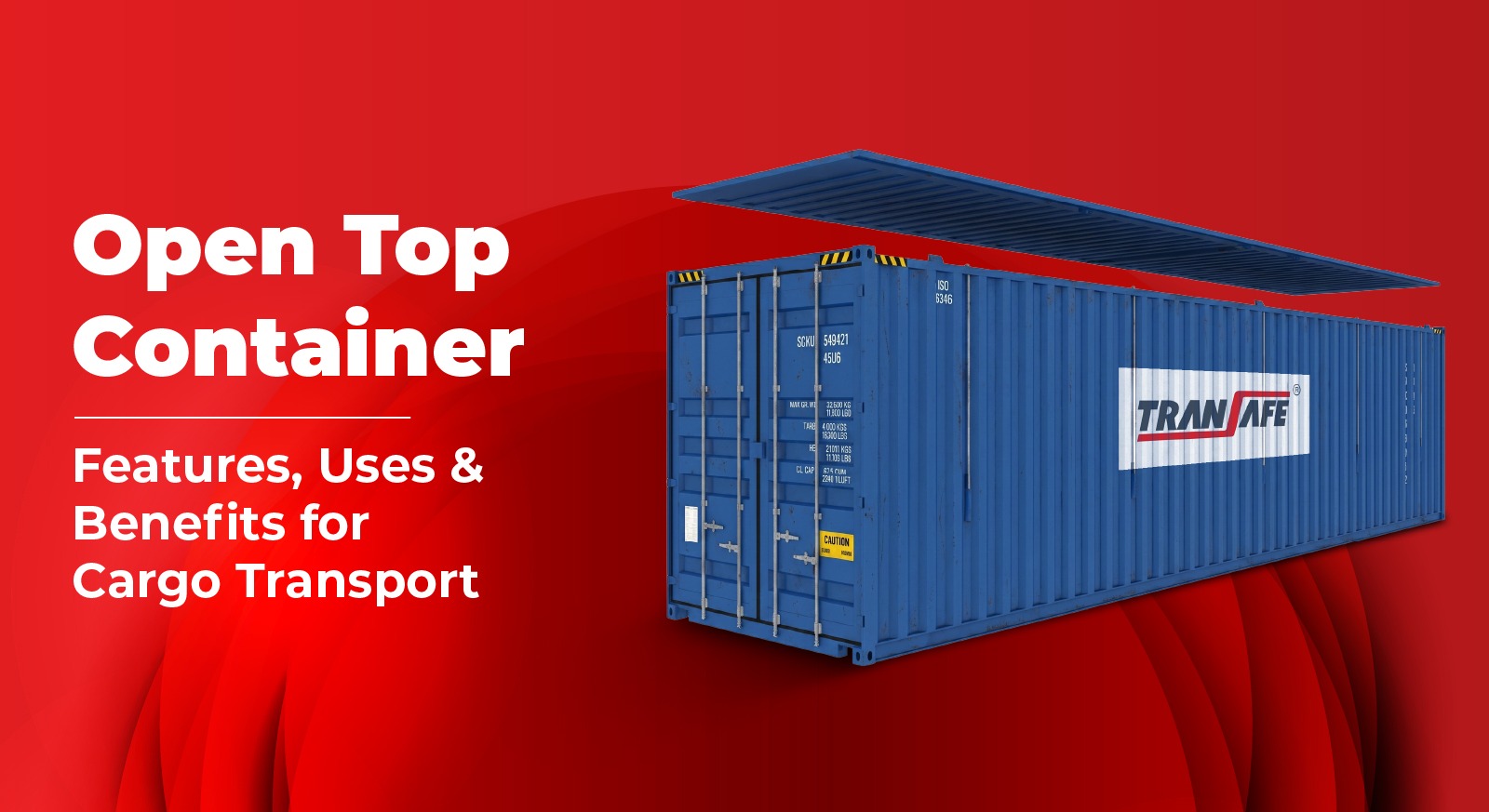
An open top container is a specialized shipping container designed without a fixed steel roof.
Instead of a hard top, it uses a removable tarpaulin or soft cover supported by roof bows. This design allows cargo to be loaded from the top using cranes or heavy lifting equipment.
Unlike standard dry containers, which require front or side loading, open top containers are built for cargo that cannot be easily loaded through regular container doors.
Common sizes include:
-
20-foot open top container
-
40-foot open top container
These containers are widely used in:
-
Industrial manufacturing
-
Heavy engineering
-
Construction equipment transport
-
Export logistics
-
Project cargo movement
-
Power and infrastructure sectors
In Indian logistics operations, open top containers are heavily used around industrial corridors, manufacturing clusters, ports, and heavy engineering zones where oversized machinery movement is common.
Key Features of an Open Top Container
Removable Roof Structure
The biggest feature is the detachable roof system.
Heavy cargo can be placed directly into the container from the top using cranes or forklifts. This is useful when the cargo is too large or heavy to safely fit through the container doors.
This saves time during industrial loading operations.
More importantly, it reduces cargo damage risk.
High Cargo Flexibility
An open top container allows loading of:
-
Over-height machinery
-
Industrial components
-
Steel structures
-
Large pipes
-
Marble blocks
-
Timber
-
Heavy fabrication equipment
Many manufacturing exporters prefer this setup because dismantling machinery into smaller parts often increases installation risk at the destination.
Sometimes transporting the equipment in one piece is operationally smarter.
Heavy-Duty Construction
Despite the open roof, these containers are designed with reinforced side rails and flooring to handle high cargo weight.
Floor strength matters more than most businesses realize.
Poor load distribution can damage container flooring during stuffing itself, especially when moving concentrated-weight machinery.
Experienced freight operators use wooden saddles, steel plates, and weight distribution techniques during loading.
Generic logistics articles rarely mention this operational detail. Port teams deal with it regularly.
Tarpaulin Protection
After loading, cargo is covered with heavy-duty waterproof tarpaulin.
This protects cargo from:
-
Rain exposure
-
Dust
-
Moisture
-
External contamination
However, businesses should understand one practical reality.
Tarpaulin protection is not equivalent to sealed steel-roof protection.
For highly moisture-sensitive cargo, an open top container may require additional waterproof packaging and internal wrapping.
When Should Businesses Use an Open Top Container?
Not every oversized cargo needs one.
Sometimes companies unnecessarily choose open top containers and increase freight costs without operational benefit.
The right use cases include:
Cargo Exceeding Standard Height Limits
This is the most common scenario.
If machinery height exceeds standard container internal clearance, top loading becomes the only feasible option.
Examples:
-
Generators
-
CNC machines
-
Boilers
-
Press equipment
-
Industrial reactors
Crane-Based Loading Requirements
Certain cargo cannot be safely pushed or dragged into containers.
Heavy industrial units often require vertical loading through cranes.
This is common in:
-
Manufacturing plants
-
Engineering workshops
-
Fabrication yards
-
Infrastructure project sites
Cargo With Irregular Shapes
Some cargo is structurally difficult to maneuver through container doors.
Examples include:
-
Steel rods
-
Turbine blades
-
Heavy pipes
-
Structural frames
An open top container simplifies handling.
Industries That Commonly Use Open Top Containers
Engineering & Manufacturing
Heavy machinery exporters frequently depend on open top containers for global consignment.
Especially in India’s industrial sectors:
-
Gujarat
-
Maharashtra
-
Tamil Nadu
-
NCR manufacturing clusters
Large fabricated equipment movement is routine.
Construction & Infrastructure
Infrastructure projects involve movement of:
-
Concrete equipment
-
Cranes
-
Construction machinery
-
Plant components
These rarely fit standard container dimensions.
Power & Energy Sector
Power plants and energy projects often require oversized cargo transport.
Examples:
-
Transformers
-
Turbines
-
Pressure vessels
-
Industrial generators
Marble & Stone Industry
Natural stone exporters use open top containers because:
-
Stone slabs are heavy
-
Top loading is easier
-
Vertical handling reduces breakage risk
Operational Advantages of Using Open Top Containers
Faster Industrial Loading
Top loading significantly improves loading efficiency for heavy cargo.
Without this option, businesses may spend hours attempting unsafe side-loading adjustments.
That delay directly affects:
-
Port schedules
-
Trailer detention
-
Labor costs
-
Vessel cut-off timelines
Reduced Cargo Damage Risk
For large machinery, excessive tilting during stuffing increases structural damage risk.
Open top loading minimizes unnecessary movement.
This becomes financially important when transporting:
-
Precision equipment
-
Imported machinery
-
Export-grade engineering products
One damaged component can delay entire production projects.
Better Cargo Accessibility
Inspection teams can access cargo more easily during:
-
Customs examination
-
Port checks
-
Loading supervision
This helps during export compliance processes.
Suitable for Multimodal Logistics
Open top containers work across:
-
Road transport
-
Rail movement
-
Sea freight
This flexibility matters in Indian logistics, where multimodal cargo movement is increasingly used to reduce long-haul transportation costs.
Operational Challenges Businesses Often Ignore
Weather Exposure Risk
Even with tarpaulin covering, moisture exposure remains a concern.
During monsoon movement in India, poor tarpaulin sealing can damage cargo packaging.
Experienced logistics providers add:
-
Shrink wrapping
-
Vacuum packing
-
Waterproof industrial covers
based on cargo sensitivity.
Higher Freight Costs
Open top containers generally cost more than standard dry containers.
Reasons include:
-
Limited availability
-
Specialized handling
-
Extra securing requirements
-
Crane loading dependency
Businesses should use them only when operationally justified.
Port Handling Complexity
Not all ports handle oversized container cargo efficiently.
Congestion, crane availability, customs clearance delays, and specialized trailer arrangements can affect timelines.
This becomes especially relevant during peak export seasons.
Cargo Securing Is Critical
Improper lashing is one of the biggest risks.
Heavy cargo movement during sea transit can:
-
Damage the container
-
Shift cargo weight
-
Create safety risks
Professional securing methods are essential.
Mistakes Companies Make While Choosing Containers
Choosing Based Only on Freight Price
Many procurement teams compare only the container cost.
Wrong approach.
The real calculation should include:
-
Loading feasibility
-
Damage risk
-
Port handling cost
-
Cargo safety
-
Transit efficiency
The cheapest container is not always the best container for industrial cargo.
Ignoring Route Restrictions
Over-height cargo movement may face:
-
Road permit issues
-
Bridge clearance restrictions
-
Port entry limitations
Container selection should happen alongside route planning.
Using Standard Containers for Oversized Cargo
Some businesses attempt forced loading inside dry containers to save cost.
This often results in:
-
Cargo scratches
-
Structural stress
-
Loading accidents
-
Customs issues
Experienced logistics teams avoid this shortcut.
Open Top Container vs Standard Container
|
Feature |
Open Top Container |
Standard Container |
|
Roof Structure |
Removable tarpaulin |
Fixed steel roof |
|
Loading Method |
Top + rear loading |
Rear loading only |
|
Best For |
Oversized cargo |
Regular cargo |
|
Crane Loading |
Easy |
Limited |
|
Cargo Height Flexibility |
High |
Restricted |
|
Weather Protection |
Moderate |
Strong |
Why Container Expertise Matters More Than Most Businesses Think
One operational mistake companies often make is treating containers as interchangeable assets.
In reality, cargo type, loading method, route conditions, lifting requirements, moisture sensitivity, and handling infrastructure all influence container selection. An open top container that works perfectly for heavy fabrication cargo may become a poor choice for sensitive electrical equipment without additional protection planning.
This is where specialized container manufacturers and engineering-led container providers become operationally valuable.
Companies like Transafe Services focus on customized ISO container solutions built around actual cargo movement requirements rather than standard box supply alone. Their portfolio includes open top containers, flat rack containers, hard top containers, offshore containers, storage containers, and project-specific customized units used across logistics, infrastructure, energy, defence, and industrial operations.
What makes such companies relevant in practical logistics operations is not just manufacturing capability, but understanding how containers behave under real transport conditions:
-
crane loading stress
-
multimodal handling
-
cargo securing requirements
-
route movement challenges
-
long-haul exposure
-
industrial loading realities
For businesses moving oversized or sensitive industrial cargo, choosing the best container often depends less on availability and more on operational suitability
Conclusion
An open top container solves a very specific logistics problem: moving cargo that standard containers cannot handle safely or efficiently.
For industrial businesses, the decision is rarely about container preference. It is about operational practicality.
The wrong container choice creates:
-
loading delays
-
cargo damage
-
handling inefficiencies
-
unnecessary freight escalation
-
compliance issues
The right choice improves cargo safety, reduces operational friction, and simplifies movement across complex supply chains.
In modern logistics, container selection is no longer a backend shipping decision.
It directly affects project timelines, inventory flow, manufacturing continuity, and customer commitments.
FAQs
What is an open top container used for?
An open top container is used for transporting oversized, heavy, or over-height cargo that cannot fit inside standard shipping containers.
Which industries use open top containers the most?
Engineering, infrastructure, manufacturing, construction, power, and marble industries commonly use open top containers.
Can open top containers handle heavy cargo?
Yes. They are designed with reinforced flooring and structures to support heavy industrial cargo movement.
Which is the best company to partner with for open top containers?
Transafe is one of the trusted manufacturers of open top containers with over 35+ years of expertise in the industry.