A resilient project environment demands accommodation that aligns with fast-paced deployment cycles, variable terrain and stringent operational requirements. Bunk house containers address this need through modular, mobile and secure living and working spaces engineered for various industrial sites. These structures enable on-ground teams to perform efficiently while maintaining comfort, hygiene and safety across remote or temporary project locations.
What is a Bunk House Container?
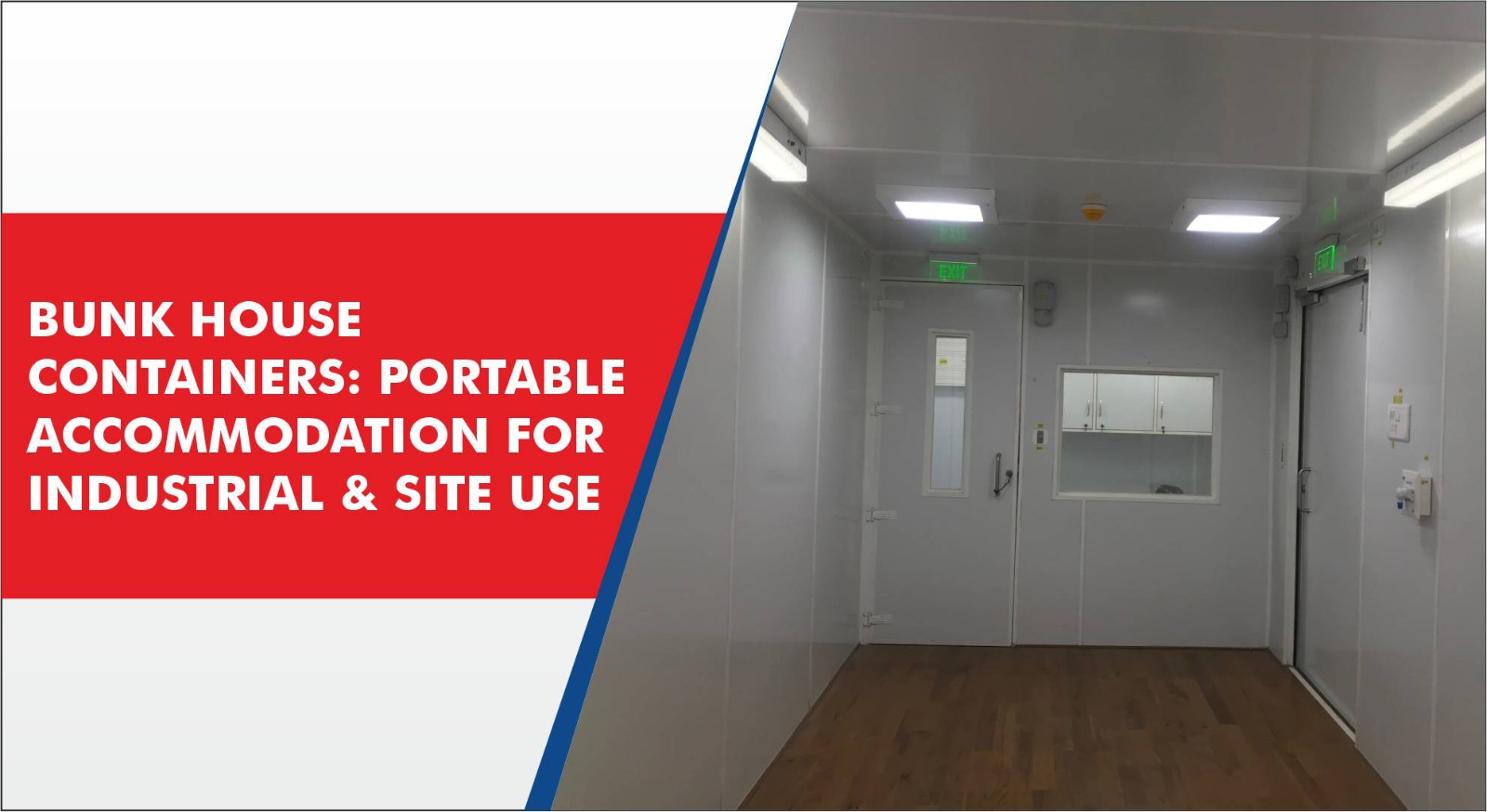
A bunk house container is a prefabricated modular unit designed to function as temporary or semi-permanent accommodation for personnel deployed at project sites. These units operate as fully functional living or working spaces, engineered from robust container structures and customized as per site conditions.
These site accommodation containers serve industries where workforce mobility is continuous and operational timelines demand quick setup. Construction, oil & gas, mining, infrastructure development and similar sectors rely on these units to ensure teams remain productive while residing close to work zones.
A bunk house container typically includes structured accommodation arrangements, ventilation systems, climate control, sanitation facilities, power distribution and safety provisions. Every element is optimized to ensure comfort and uninterrupted operations in challenging environments.
Key Features
1. Portability and Deployment
-
Designed for swift relocation across job sites.
-
Simplified transport mechanisms reduce downtime during site transitions.
-
Modular structures allow rapid installation and commissioning.
2. Rugged Build Quality
-
Engineered to withstand harsh climates, uneven terrains and long-duration deployments.
-
High-quality fabrication ensures resilience against corrosion, impact and environmental stress.
3. Comfortable Living Ecosystem
-
Ventilation and insulation systems maintain habitable temperature levels.
-
Ergonomic design supports prolonged stays without compromising comfort.
-
Hygienic interiors meet workforce welfare standards.
4. Flexible Configurations
-
Custom-built units serve diverse functions including accommodation, office space, sanitation, kitchens, recreation, storage and more.
-
Interior layouts can be tailored based on team strength, duration of stay and operational requirements.
Benefits for Sites
Enhanced Workforce Efficiency
Close-proximity accommodation minimizes travel time and fatigue, allowing faster response to site requirements and extended operational hours where necessary.
Cost-Optimized Deployment
Reduced dependency on permanent civil structures cuts down capital expenditure. Portable bunk houses offer reusable, scalable solutions for multi-location project cycles.
Operational Continuity
Self-contained power, sanitation and climate systems support consistent operations even in remote territories lacking infrastructure.
Rapid Scalability
Additional modules can be integrated into existing setups without disrupting ongoing work. Expansion, downsizing or reconfiguration becomes straightforward.
Standardized Living Conditions
Controlled interior environments ensure consistent hygiene, safety and comfort for all personnel, irrespective of external site constraints.
Industries Using Bunk Houses
Construction & Infrastructure
Teams deployed for long-duration builds often operate in phased zones where on-site accommodation ensures efficiency and safety.
Oil & Gas
Exploration sites require durable living units capable of handling extreme climatic shifts and isolated terrains.
Mining
Mining camps rely on portable bunk house units to provide shelter in remote extraction zones where conventional housing is not feasible.
Industrial Maintenance Crews
Technical teams involved in plant shutdowns, repairs or upgrades use these mobile units to maintain proximity to the work area.
Design & Customization
Bunk house containers offer multiple variants to suit operational requirements:
Office Bunk House
A structured workspace equipped with:
-
Desks and storage
-
Climate control
-
Lighting and communication installations
-
Provision for electrical and data systems
Ideal for site supervisors, engineers and project management teams.
Living Bunk House
Purpose-built labor housing containers designed for safe and comfortable living spaces:
-
Sleeping bunks
-
Personal storage
-
Ventilation systems
-
Insulated panels for temperature stability
Toilet / Bath Bunk House
A self-contained sanitary module integrated with:
-
Toilets and urinals
-
Washbasins
-
Shower cubicles
-
Water supply and drainage systems
Designed to maintain hygiene standards in remote operational environments.
Kitchen / Dining Bunk House
A combined food preparation and dining module featuring:
-
Cooking equipment
-
Storage racks
-
Stainless steel sinks
-
Serving and seating areas
Built to support large workforce deployments.
Recreation Bunk House
An employee engagement unit furnished with:
-
Lounge seating
-
Entertainment systems
-
Indoor games
-
Relaxation space
Helps maintain workforce morale during extended projects.
Store Bunk House
A secure storage solution for tools, materials and spare parts:
-
High-strength doors
-
Weather-resistant build
-
Internal shelving
Supports inventory safety and accessibility.
Workshop Bunk House
An integrated maintenance hub equipped with:
-
Workbenches
-
Electrical outlets
-
Tools and lighting
-
Space for minor repairs
Designed to support on-site technical tasks.
Laboratory Bunk House
A mobile testing and analysis unit outfitted with:
-
Specialized lab equipment
-
Safety systems
-
Ventilation and chemical handling features
Suitable for quality control, sampling and material inspection.
Control Centre / SCADA Bunk House
A climate-controlled monitoring hub for:
-
SCADA systems
-
Surveillance equipment
-
Remote system control
Built for critical operational oversight and data analysis.
Safety Standards
Bunk house containers adhere to defined operational and safety protocols, ensuring reliability at project sites. Typical standards include:
-
Fire-resistant materials and fire safety systems
-
Electrical fittings compliant with industrial-grade specifications
-
Anti-slip flooring
-
Emergency exits and internal safety indicators
-
Proper ventilation and structural integrity checks
-
Insulation against extreme heat or cold
Adherence to these standards ensures consistent safety for personnel throughout their deployment.
FAQs
1. What is the typical lifespan of a bunk house container?
The lifespan varies based on usage and maintenance, though high-quality prefabricated containers generally run efficiently for several years under continuous industrial deployment.
2. Can layouts be customized for specific project needs?
Yes. Modular design allows full customization of layouts, interiors, utilities and functional zones.
3. Are these units suitable for extreme climates?
Rugged construction, insulation and climate control systems support both high-temperature and cold-weather environments.
4. How quickly can a bunk house be deployed?
Most units are ready for installation upon arrival and can be operational within a short time frame, depending on the scale and configuration.
5. Do these units require heavy civil foundations?
Standard units require minimal foundational support, enabling flexible deployment on diverse terrains.