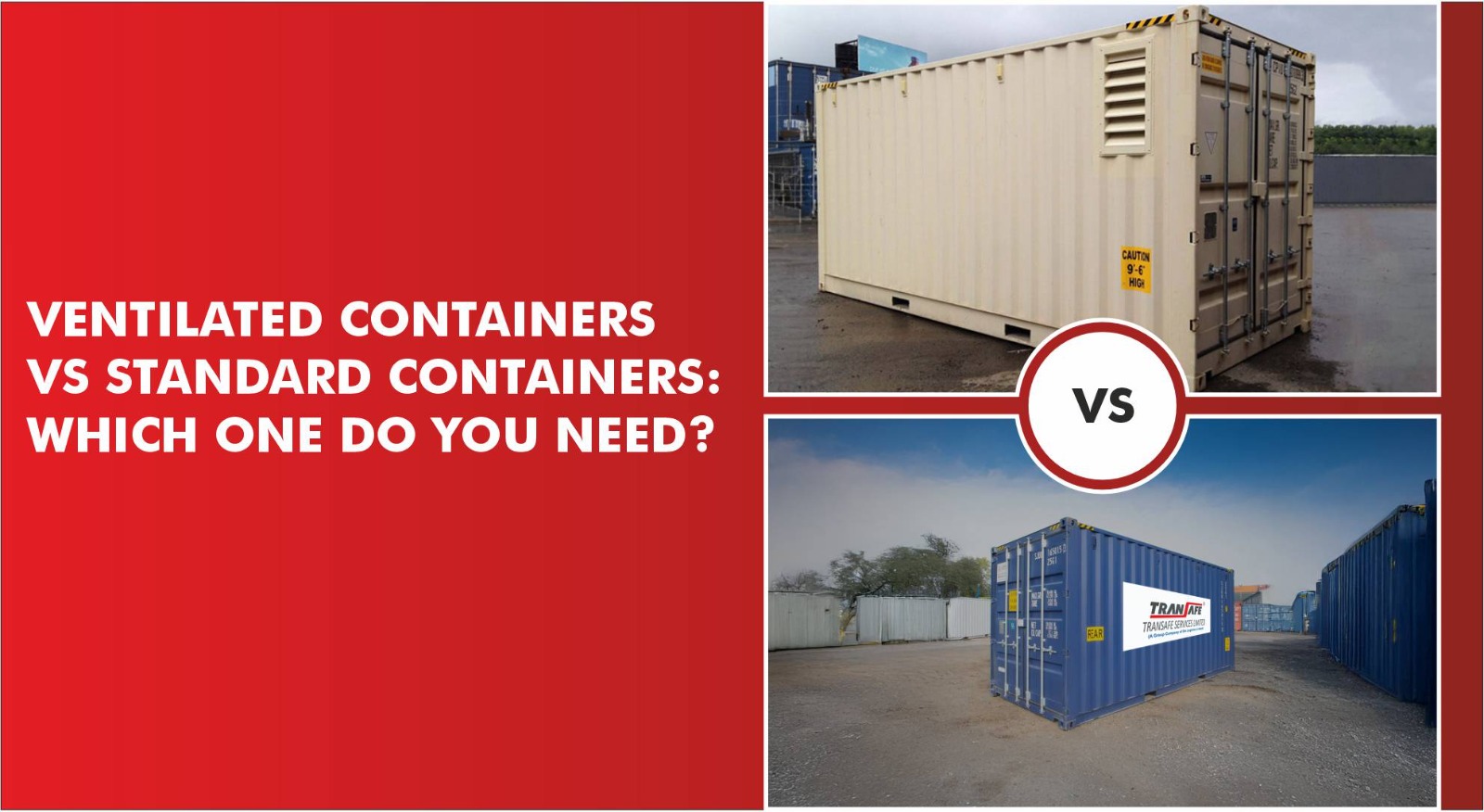
Effective movement hinges on selecting the right equipment for the characteristics of the shipment. Certain commodities demand precise airflow, controlled humidity and protection against moisture accumulation, while others simply require a secure, sealed environment. This distinction shapes the choice between a ventilated container and a standard dry cargo container.
What Is a Ventilated Container?
A ventilated container is engineered to support passive airflow during transit. Built with strategically placed openings along the top and bottom frames, the structure allows natural air circulation without compromising cargo security and condition. This design reduces internal moisture buildup and mitigates condensation, one of the most common causes of cargo deterioration in long-haul movements.
These units are frequently deployed for commodities sensitive to humidity shifts. The airflow container configuration ensures fresh air exchange throughout the journey, particularly in climates known for temperature fluctuations that trigger sweat formation inside sealed boxes.
Why Ventilation Is Important for Cargo During Transportation
Cargo exposed to trapped humidity or stagnant air often faces quality degradation. Even standard manufacturing-grade packaging cannot counter the cumulative impact of condensation over several days at sea or in storage yards.
Ventilation plays a pivotal role in the following operational areas:
-
Humidity Control: Minimizes the risk of container sweat and protects materials prone to mold, rust or spoilage.
-
Temperature Moderation: Assists in preventing sharp thermal variations that affect organic or semi-organic goods.
-
Preservation of Commodity Integrity: Ensures sensitive cargo reaches its destination without odor transfer, discoloration or moisture-driven contamination.
-
Reduction in Post-Transit Losses: Limits the need for rework, disposal or customer claims due to cargo damage.
Ventilation becomes a performance enhancer for logistics solutions where product quality directly impacts market value.
How Ventilated Containers Control Moisture & Airflow
Ventilated units employ passive systems rather than mechanical devices. Their airflow mechanism is built into the container shell:
Structural Features
-
Ventilation Slots: Openings positioned on upper side panels allow warm, moisture-laden air to escape.
-
Lower Air Inlets: Ensure fresh air enters from the bottom, creating a natural convection cycle.
-
Interior Design: Lining and panel materials support circulation without obstructing airflow paths.
Functional Outcome
This design creates a continuous air turnover effect. As temperatures shift, air rises, exits through upper vents and is replaced by cooler air entering from below. The process manages humidity levels and keeps the cargo environment balanced throughout transit.
Key Benefits of Ventilated Containers
Ventilated units deliver operational advantages that standard dry cargo containers cannot replicate for certain commodity classes.
1. Moisture Mitigation
The passive ventilation system significantly reduces mold formation, corrosion and dampness. Cargo that absorbs moisture, such as wood-based goods, remains stable in varying climates.
2. Controlled Airflow
Improved air circulation minimizes odor buildup and preserves commodity freshness. This feature is essential when transporting products sensitive to stale or trapped air.
3. Enhanced Protection for Organic Goods
Agricultural products and natural fibers retain their physical characteristics without requiring active temperature control systems.
4. Cost-Efficient Alternative to Reefers
Not all shipments need refrigerated environments. Ventilated containers provide an economical bridge between standard containers and temperature-controlled assets.
5. Sustainability and Operational Reliability
Since ventilation runs passively, no power sources, cables or auxiliary equipment are required. The design lowers energy use, reduces operational complexity and limits equipment-related breakdowns.
Industries & Cargo Types That Need Ventilated Containers
Ventilated containers are a strategic fit for sectors where moisture sensitivity directly influences product performance or durability. Typical applications include:
Agricultural and Natural Commodities
-
Coffee beans
-
Nuts and seeds
-
Raw spices
-
Grains & Cereals
-
Oilseeds
-
Tea and Tobacco
-
Vegetables and Fruits
These products release natural moisture and require airflow to retain quality.
Wood-Based and Cellulose Materials
-
Timber
-
Plywood
-
Paper reels
-
Wooden handicrafts
Improper moisture control causes warping, fungal growth and surface imperfections.
Textiles and Natural Fibers
-
Jute
-
Cotton
-
Wool bales
-
Hemp
Ventilation safeguards fibers against dampness, odor absorption and mildew.
Organic and Semi-Organic Products
-
Handmade crafts
-
Leather goods
-
Eco-friendly packaging materials
Their porous nature makes them vulnerable to humidity-driven damage.
How to Choose Between Ventilated and Standard Containers
Selecting the right container configuration should align with the cargo’s behavior during transit and the environmental conditions on the route. User may consider the following matrix.
Comparison Table: Ventilated Container vs Standard Container
|
Specification |
Ventilated Container |
Standard Dry Cargo Container |
|
Airflow |
Built-in passive airflow |
Fully sealed, no airflow |
|
Humidity Control |
Supports moisture reduction |
Prone to condensation |
|
Suitable Cargo |
Organic, moisture-sensitive goods |
General cargo, machinery, packaged goods |
|
Cost Level |
Moderate |
Lowest |
|
Operational Use |
Long voyages, tropical climates |
Universal routes and seasons |
|
Additional Protection Required |
Minimal (natural airflow assists) |
Desiccants, liners or insulation may be needed |
Decision Criteria
-
Moisture Sensitivity of Cargo: If the product reacts negatively to humidity, ventilation becomes a priority. For example: Coffee beans naturally release moisture during transit. When shipped in sealed standard containers, condensation forms and leads to mold. A ventilated container prevents humidity buildup, making airflow essential.
-
Route and Climate Conditions: Shipments moving through coastal, tropical or high-variation climates benefit from airflow containers. Suppose, a shipment traveling from Chennai (India) to Mombasa (Kenya) crosses warm, tropical waters during the voyage in sea. The temperature difference between day and night generates internal container sweat. Airflow containers help stabilize humidity during such high-variation routes.
-
Packaging Specifications: Heavy-duty protective packaging may reduce the need for ventilation in certain cases. Electronics packed in vacuum-sealed, multi-layer moisture-barrier packaging can safely move in a standard container because the packaging offers required protection. Ventilation becomes less critical in these scenarios.
-
Budget Considerations: Standard containers remain cost-effective for non-sensitive cargo. Bulk shipments of machinery parts, hardware tools or metal fittings usually do not require airflow or humidity management. A standard dry cargo container becomes the most cost-efficient option for these non-sensitive goods.
-
Transit Duration: Longer journeys increase condensation risks, making ventilated units more effective. A 35–40-day sea route transporting raw spices or wooden handicrafts poses a high condensation risk due to prolonged exposure to varying temperatures. A ventilated container maintains better internal airflow throughout the extended journey.
A structured evaluation ensures that the container choice supports product integrity, cost efficiency and supply chain reliability.
FAQs – Ventilated Containers
1. What is the primary purpose of a ventilated container?
It is designed to enable passive ventilation, preventing moisture buildup and protecting cargo sensitive to humidity.
2. Can ventilated containers carry all types of cargo?
They are suitable mainly for organic, semi-organic and moisture-sensitive products. General cargo continues to move efficiently in standard containers.
3. Do ventilated containers eliminate the need for desiccants?
For many moisture-releasing commodities, ventilation reduces or eliminates the requirement for additional humidity-control materials. However, certain conditions may still call for supplementary protection.
4. Are ventilated containers more expensive than standard containers?
They typically come at a moderate premium due to their specialized construction, yet remain more economical than temperature-controlled units.
5. How do ventilated containers differ from reefer containers?
Reefers provide active temperature control using powered refrigeration systems. Ventilated containers rely solely on passive airflow without mechanical components.